But I tell you, in this you are not right,
For God is greater than man.
Why do you complain to him that he answers none of man’s words?
For God does speak – now one way, now another –
though man may not perceive it.
In a dream, in a vision of the night,
when deep sleep falls on men
as they slumber in their beds,
He may speak in their ears
and terrify them with warnings,
To turn man from wrongdoing
and keep him from pride,
To preserve his soul from the pit,
His life from perishing by the sword.
Or a man may be chastened on a bed of pain
With constant distress in his bones,
So that his very being finds food repulsive
And his soul loathes the choicest meal.
His flesh wastes away to nothing
And his bones, once hidden, now stick out.
His soul draws near to the pit,
and his life to the messengers of death.
Yet if there is an angel on his side
As a mediator, one out of a thousand,
To tell a man what is right for him,
To be gracious to him and say,
“Spare him from going down to the pit;
I have found a ransom for him” –
Then his flesh is renewed like a child’s;
It is restored as in the days of his youth.
He prays to God and finds favor with him,
He sees God’s face and shouts for joy;
He is restored by God to his righteous state.
Then he comes to men and says,
“I sinned, and perverted what was right,
But I did not get what I deserved.
He redeemed my soul from going down to the pit
And I will live to enjoy the light.”
God does all these things to a man –
Twice, even three times –
To turn back his soul from the pit,
That the light of life may shine on him.
The diet, the savings, the house cleaning, the time with children, the smile we’ve purposed to give the husband — SISTERS! Let’s do more than plan for someday!
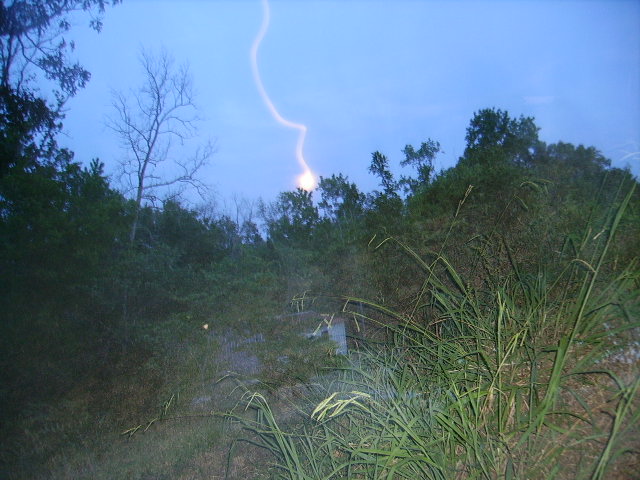
We have a valley behind our house in which is nestled a small guesthouseand a potting shed. We often sleep in the guesthouse, ourselves, because . . . um . . . because we can sleep better there. It’s quieter there. Simpler.
One night the moon was rising over it, behind a fantastical mist, and I attempted a few shots of it.
I was pretty sure I would make mistakes.
I have no idea how I got it, but here it is.
I discarded several attempts, due to my lack of knowledge about how to make a good picture of this sight. However, I think I did capture the essence of the beauty of the valley in one mistake:
I caught the moon in action.
All my life, I’ve thought it was just rising and shining, but here we clearly see that it actually comes and goes. I actually caught it in the very act of dropping in. Of course, it brings quiet and dreams with it, right?
A friend and I were discussing blanching before freezing when she asked, “Do you have to?”
In an emergency, many foods you ordinarily would first prepare, you may freeze raw and untreated. Don’t expect them, though, to last over three months because blanching destroys the enzymes that induce ripening. Some vegetables, when not blanched, will continue maturing, though frozen. Unblanched okra, for instance, will become woody over time, in the freezer. So use these foods quickly. The foods must be perfect and unwashed. Freeze soft things before wrapping for protection from freezer flavors.
One friend only shells (does not wash) her surplus field peas and freezes them in one huge plastic bag. They separate easily. She measures, washes, and cooks as usual. She says they taste exactly the same but she does use the unblanched ones first.
I have found that you may treat the following produce this way if it has not been washed: whole tomatoes, whole apples, whole plums, whole carrots, whole peppers, edible pod peas, shelled field peas, and whole okra. All are for cooking only, except plums make good frozen treats. Be sure you remember you haven’t washed them before you use them.
The reasoning behind not washing vegetable before freezing is that they have a natural protective coating that helps ward off drying and if you freeze them wet, they will be impossible to separate for individual use. In the case of beans, this is not a factor, if you will immerse the entire package in warm water to rinse, later. Just think. If it is waxy, don’t wash it. If you want to freeze individually and bag later, it’s okay. Do not freeze anything with bad spots. How will you remove them once frozen? Just think. More info, starting here.
Two foods that you should always blanch and freeze are corn and greens. These two also taste pretty bad when canned, and take a lot of time and heat. One food that even the freezer books say we should not freeze is potatoes. I do not know why, because I have never tried it. I know, frozen potatoes are available in stores, but do they taste good? I’ve never tried them, either! Potatoes are best stored raw or canned.
To clean your kitchen after canning, just roll up the towels you used for covering surfaces, throw them into the washer and wipe the counter tops. You’re done! Then when canned foods are completely cool, remove bands and run the filled jars through the rinse cycle of your dishwasher. This removes the sticky film, from juices leaked in pressure cooking, which molds in the cabinets. These molds can enter the jar when you open it. They also make bad odors in your food storage area and attract bugs.
Now, DRUMROLL PLEASE, the real reason you read this far — The Recipes!
The following recipes come from several requests for instructions for making various sauces to use up excess tomatoes, etc. Also there are a few recipes for foods mentioned this week. Hope you enjoy making, storing, serving, and eating them as much as we do!
Homemade Mustard
1 3/4 c. white vinegar
2 onions chopped fine
1/2 c. mustard seeds
1/4 t. white pepper
2 t. soy sauce
2 T. white sugar
1 t. turmeric
Puree all ingredients in blender. Bring to a boil over low heat in a heavy pan, stirring continuously with a wire whip. Stir and simmer for 5 minutes. Seal in hot jars with hot lids. Place in boiling water bath for 5 minutes. Keeps very well. Yield: about one pint.
Homemade Catsup (not store bought!)
10 lb. ripe tomatoes
3 onions
2 bell peppers, red or green
1 clove garlic
3/4 c. brown sugar or honey
2” stick cinnamon
1 t. peppercorns
1 t. whole cloves
1 t. allspice berries
1 t. celery seed
1 c. cider vinegar
1 T. salt (opt.)
2 t. paprika
1/4 t. cayenne
Puree vegetables in blender, OR: chop, cook, and sieve them. Bring to a simmer. Put whole spices into a bag and add all other ingredients. Cook very slowly until very thick. Remove the bag. Seal in hot jars with hot lids. Hot water bath for 15 minutes. Yield: 2 – 3 pints. This is a good recipe for the crock pot, if you keep adding the juice until all is cooked down. It is too big for a crock pot at first, but becomes of manageable size eventually. The actual cooking takes all day on the stove top.
Tomatilla Salsa (A great use for small green tomatoes from dying vines)
5 1/2 c. chopped tomatillas OR green tomatoes
1 c. chopped onion
1 c. chopped jalapenos
(wear gloves and use ventilation!)
4 cloves garlic, minced
2 T. minced cilantro (opt.)
2 t. cumin
1/2 t. salt
1/2 t. cayenne
1/4 c. lime juice OR 1 g vitamin C tablet
Bring all to a boil in a large pot. Simmer 10 minutes. Seal in hot jars with hot lids. Place in boiling water bath for 15 minutes. Yield: about 2 pints. I cannot over-emphasize the importance of being careful with fresh hot peppers! I have made this using a food grinder, too, and it is much easier on the hands and lungs. You can grind the whole cayennes if you like, and have interesting red flecks in this lovely green condiment. The flavor when raw is sublime, but HOT. After cooking, the natural burning flavors of onion and garlic will have sweetened, though, so do not be alarmed at the raw flavor — just enjoy.
Pico de Gallo Sauce
1 chopped onion
2 chopped jalapenos
3 chopped tomatoes
salt to taste
2 branches chopped cilantro (leaves)
Mix. Refrigerate for 2 hours. Serve with chips. OR: Boil for 20 minutes, seal in hot jars with hot lids, and place into boiling water bath for 15 minutes. Yield: about 1 pint.
Pear Preserves
8 c. pears, peeled and chopped
2 c. brown sugar or honey
2 T. butter
Stir pears and sugar over medium heat until greatly reduced and thickened (2 to 4 hours). Add butter and serve over ice cream. OR: Omit butter and seal in hot jars with hot lids. Place in boiling water bath for 15 minutes. Yield: about 2 pints. This is another good one for the crock pot.
Very Quick Blackberry Sauce
1 pint frozen blackberries
1 c. sugar
1 c. water
2 T. cornstarch
Place 1/2 c. of the blackberries with other ingredients into small saucepan. Stir and bring to slow boil, mashing berries to color the sauce. Simmer until very thick. Add rest of frozen berries. Sauce will set very quickly and be cool enough to use immediately, with all berries instantly thawed. Delicious on cheesecake or pound cake. This recipe will only work with berries that have been frozen raw and are fairly easy to separate. Makes about 2 cups. Serves about nine. Also, try using 3 T. cornstarch to make a topping for a pie.
Potato Pancakes
1 qt. canned potatoes
1 egg
1/4 c. corn meal
1/4 c. self-rising flour
1/2 chopped onion (opt.)
salt and pepper to taste
oil
Grate potatoes including skins into bowl. Add rest of ingredients. Stir well. Fry in 1/2” medium-hot oil until well-browned and firm in middle, turning once. Drain on paper towel. Serve hot with honey, if desired. Serves about six.
Never Fail Meringue
1 T. cornstarch
2 T. sugar
1/2 c. water
3 egg whites
6 T. sugar
1/8 t. salt
1/2 t vanilla
This is a little tricky to time perfectly, but worth it to me. Cook cornstarch, 2 T. sugar, and water over medium heat, stirring, until thick and clear. At the same time, beat egg whites until soft peaks form. Add 6 T. sugar, salt, and vanilla, gradually. Beat until stiff. Continue beating while slowly adding hot cornstarch mixture. Beat until stiff. Apply to pie that has hot filling. Bake at 350 degrees for 15 – 20 minutes. I like this one because I don’t feel so much as if I’m eating raw egg.
Ladies, if there is the least, remotest possibility that your potatoes, carrots, beets, etc., were grown in soil fertilized with commercial chicken manure, you really ought to hire the soil tested. The reason is that commercially grown chickens were, in the past, fed arsenic. It is harmless to them, even increases production, passing through the chicken, remaining in the droppings a long time, contaminating the soil.
It is fatally poison to humans. Cows have died from eating grass with arsenic laden soil clinging to it.
“They say” arsenic does not enter the plant, but it is imperative to remove ALL the dirt.
However, root crops will fail in raw storage, if you scrub them all nice and clean. So, do you bring arsenic into your root cellar? Do you scrub and can those veggies? You have to decide. Ask your County Extension Agent for free tests and pamphlets and the latest advice on these matters.
If your soil is O.K., you can do what I love doing—put the perfect potatoes and carrots, unwashed, into root storage and can the strange ones (the two-legged carrots and the potatoes with noses). Then as winter progresses and the cellar storage begins to dysfunction, can the things that are still good enough. You don’t lose as much in root storage, that way, but also don’t waste effort on unnecessary canning.
To can potatoes and carrots, most books tell us to peel them first. I just scrub my own home-grown veggies, because I like to eat the peel and it has many of the vitamins. First use a hose on them outdoors, to get most of the dirt. A patio or sidewalk is good for this. Then use a brush and clean water.
A friend of mine makes a few jars of diced potatoes all ready for quick potato salad or stew. I like mine as whole as possible for grating into potato patties. Canned carrots are best sliced, though I put up a few pints of tiny ones (fingerlings) whole. These I use for gifts or special company.
Wash ALL washable food before using. Think about using a little soap, too. Unscented home-style bar soap cleans apples, celery, potatoes, etc., just fine.
If this idea amazes you, think: who picked, wrapped, boxed, unboxed, unwrapped, and displayed your apple? You don’t know! Did any of these six people have a cold or the flu? Probably! Does the grocery store or produce truck have roaches? Of course!
Ant-climbing-on-apple-flowers__41042 (Photo credit: Public Domain Photos)
Even if you grew the fruit yourself, never sprayed it, and picked it yourself, you can be pretty sure that your tree has ants, roaches, and at least two types of flies. They can spread disease; it’s a fact.
One favorite way to store many fruits is in jams. Apples and pears go into applesauce and pear sauce, which we use like jam, too. (Make pear sauce just like applesauce.) We can a few peaches and pears. Try pears with a 1/4” piece of ginger root in the jar. Pear preserves are a real treat over vanilla ice cream.
Also, freeze a few bags of slightly sugared, sliced peaches and use them for blender ice cream or shakes, which are easy to make with chilled milk and frozen fruit.
I freeze blackberries whole. Just wash, drain, and package.
When you wash small produce, such as peas or snapped beans, use two sinks. Scour sinks clean and fill with water. Add produce to one sink. Stir gently with your hands and then transfer from that sink to the other. Drain and refill first sink while stirring the other. Continue until used water is clear.
While you are transferring, try this method for estimating the jars you’ll need: pick up as much as you are able in a double handful; count it as about one pint.
Before I forget:
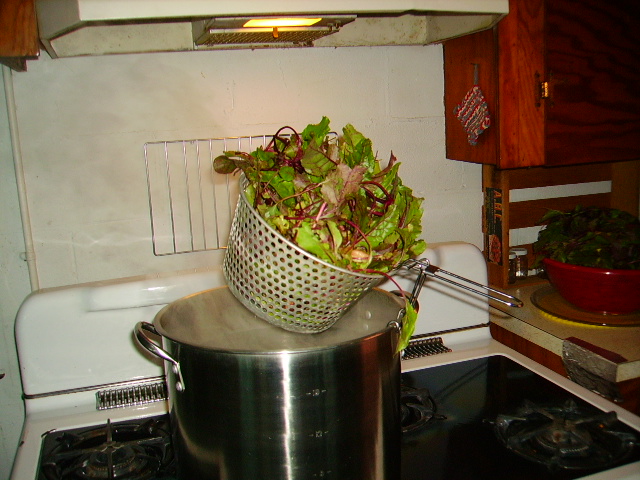
Wash greens in the automatic washing machine.
Use Vitamin C for fruit preserver. (One 500 mg tablet per gallon of water.)
She was holding back tears of frustration. It had failed, again.
Every time she’d tried to duplicate her mother’s lemon pie, all she could produce was lemon soup.
She had asked her mother.
The many possible explanations made her head swim.
Were the eggs too small, too old, or too cold?
Was the cornstarch under-ripe, or were the lemons over-ripe?
Was the water filtered? The sugar sifted?
How many times she’d watched Mother make that pie! She mentally ticked off the ingredients, desperate for a clue . . . .
She forgot one ingredient.
No, she did not omit anything on the recipe card. Actually, she forgot to examine carefully one item that she always, unthinkingly, added to her mother’s formula.
Human saliva.
Yes, in her youthful ignorance of scrupulous hygiene, she always sampled the pie filling with the same spoon, several times. Her family often shared apples, ice cream cones, and drinking glasses, she reasoned. No one would care, or even know.
M-m-m! So delicious! Sure hope it sets up this time…
If you have ever fed a child from a jar of baby food and refrigerated the left-overs for later, you may have had the same experience of soupy consistency. The food isn’t exactly spoiled—just somewhat digested. God created the enzymes in saliva expressly for that purpose and they work very well.
Cleanliness in the kitchen is of crucial importance. The lack of it is considered rudeness. In this country, a guest has a right to decline to eat where food is not protected from contaminants. You wouldn’t expect a person to eat a helping of casserole with a fly on it, right?
That’s because of the germs.
The battle against germs must be fought on all fronts, though. The ice-cube that hits the floor, the meat juice on the cutting board, the dust in the vent hood, the film on the refrigerator handle, and the licked spoon are some of the prime targets in this battle.
And if you think your hands are pretty clean, I challenge you to try this for one day: rinse them a little and then dry on the same white towel each time you begin to work in the kitchen.
The importance of cleanliness skyrockets, though, with the added factor of food storage. I mean, why bother to preserve dirty food? It is especially important to realize the part that germs, enzymes, etc., can play in the failures experienced in dry storage and raw storage. Uncooked food stuff can save your life or kill you, depending on its quality.
Generally, home dried food that is quick-dried and then stored frozen is safe. Some of it is delicious. Peaches are superb. If you dry food out-doors, though, do use netting to protect it from insects and do not choose a day when dust is blowing everywhere. If you use a mechanical dehydrator, clean it between uses. Check it for six-legged occupants. In fact, if you know that your house is not bug-free, you should clean every utensil you need for each meal.
When you prepare foods for storage, clean your kitchen counters and tables first. Use an ammonia based spray, dish water, baking soda, or vinegar. Any of the extreme acid or alkaline substances usually does a good job of killing and removing bacteria, etc. Then spread clean towels over the work surfaces you plan to use. I use towels from garage sales and bleach them often.
Next wash the utensils. The colander is dusty, the tongs are rusty, and the cutting board is musty!
I hope you have a wooden cutting board because they are the most sanitary.
Wash the jars, carefully. Hold them up to a light to check for little bits of last year’s food. Wash the bands and flats. (Especially the flats, because they have direct contact with the food, just like the jars. They can have metal filings, stray bits of rubber, mildew and roach hairs on them. Ick.)




 Home's Cool!