Posted in Blessings of Habit, Home School, Inspiring, Who's the mom here?

It’s School Time.

English: Motivations regarded most important f...
Motivations regarded most important for homeschooling among parents in 2007. Source: 1.5 Million Homeschooled Students in the United States in 2007 Issue Brief from Institute of Education Sciences, U.S. Department of Education. December 2008. NCES 2009–030 (Photo credit: Wikipedia)

School is almost upon us for the year. That means it is high time to look at your school choices.

Especially if you are unhappy with your collective school, you need to think about slipping out of that situation and readying yourself and your children for schooling at home. 

I hope you’ve spent quality time thinking about your children and their future. I hope you’ve inspected a bit of curriculum and even used my curriculum guide, which begins here.


You have hardly a month for organizing your life around a new normal.

You need to start now.

Your curriculum company and your children will be grateful if you do not wait until the week before school begins (as too many other people do) to place your order, expecting it to arrive timely. Timely arrival follows timely ordering. Like, hurry…

Okay.

With that in mind, I’d like to direct you to the homeschooling posts on this site, created just for you, for inspiring, motivating, guiding, and helping you make the transition.

Oh, and if you just need a booster and wish someone would give the beginning lectures to you all over again, hey, help yourself to these! You are welcome!

Why we don’t want them there in the first place:

My Sweetest Homeschool Memories; 5 pages!

To help you with inspiration and incentive:

Traditional Education

From Infancy to the Four-Year-Old, begins here and continues for 3 more pages.

To guide your choices and other decisions:

What Homeschooling is Like; 2 pages.

Do NOT Try Homeschooling (a trick title, but you’ll like this); 3 pages.

Is There Life After Homeschool? Yes!

To help figure out what curriculum you need:

A 5-Page Curriculum Guide by an Unbiased Person (me) (I love them ALL! and I am not to be sold.)

Okay. There is a LOT more on this site. Just use my search engine to search “homeschool” and you will find all sorts of help.

Have fun!

And don’t forget: Home’s Cool!

Posted in Blessings of Habit, Inspiring, Who's the mom here?, Wisdom

The Blessings of Habit—Requiring

This is the hardest part.

Teeth of a model.If a child continuously needs reminders, “forgets” on purpose, he needs more than another reminder.

He needs requirements.

Children do not automatically walk in goodness, contrary to popular opinion.

Some want to stay in bed in the morning.

Some want to skip brushing their teeth.

Some want to play during chore time.

Dogs eat a lot of homework. We know it is better for them if they have good sleep, cleanliness, and work habits. Our good plans for them cross their wills. That is why God put them in homes with parents.

Parents can place requirements on children for their own good. This is common knowledge in all cultures, except the permissive. People who follow the original ways of requiring children to act sensibly, have produced sensible offspring.

Stating the obvious is necessary, these days. I believe my children will always practice brushing their teeth daily, because they are accustomed to having white, clean-feeling teeth, so brown, fuzzy teeth bother them. The same is true for bathing, eating healthful foods, and Bible reading. Oh, they may experiment with departure from the absolute best, but they also will sense a difference, a loss, and choose the right way.

They are not born this way. We require it of them.

The child who habitually eats cake and cola will not sense the ill feeling from it in adulthood. The child who habitually reads anything but the Word will not miss the Word as an adult. The difference between those generalities is most usually the differing requirements they faced as children.

Who wants to raise a loud, interrupting, unhealthy, illiterate adult with crumbling teeth and no knowledge of the sacred? Draw your lines and require your children to heed them. Help them have the excellent gift of good habits.

___________________

(Photo credit: Wikipedia)

Posted in Blessings of Habit, Inspiring, Pre-schoolers, Who's the mom here?, Wisdom

The Blessings of Habit –- Basic Beginnings

Stick to basics in the beginning.

Our children can reap what God intended from good habits, if, by the time our babies are crawling, we’ve had the pleasure of instilling good habits into them.

For instance, we know we should keep them out of the cooking area, so we train them to stay out. Sometimes this is the first clash of wills between the darling babe and the soft mom. It can seem like war, if Mom doesn’t know how to:

Train in Good Habits

  1. Habit training
    Habit training

    In the beginning, for instance, we must teach a child what “hot” means, to fear when a thing is hot, and to trust our word on the matter. Use a hot light bulb and tell him “NO—HOT!” Act like you’re preventing him, but let him touch it briefly. Ask if he wants to repeat. If you see unwillingness, it’s a sign the child knows what you mean. If he cries, keep telling him it’s hot.

  2. Anger and yelling do not help; they hinder. Anger is for the devil, not for teaching; yelling is for long distance, loud environments, or extreme emergencies, not for teaching.
  3. Consistent firmness is the key. If you do not have time to be consistent, use a playpen or high chair to confine and thereby protect the child, or enlist a helper. “No” must mean “no”. If you are too lazy to be consistent, thinking about burn scars on your baby should help you feel stronger.
  4. You must not cave in to crying. Crying sometimes is a good way for a baby to communicate. Crying to get one’s way is bad. Do not teach the child that crying to get his way is good.
  5. Draw the line where you want, and make it stick. In our kitchen, one cabinet was permissible, but the rest of the kitchen was off-limits, during cooking. At crawling age, a child can grasp this.

Overcome Picky Eating Habits

We know we don’t want picky eaters and do want well-balanced diets, so we train them to eat. This can be another war, a bigger one, again avoidable, if Mom knows how to begin:

  1. Be sure you do not serve food your husband will not eat when he is present. Save it for when he is gone. Be sure he understands this is a time of training, both in obedience and in habit, and you need his backing.
  2. Make a new rule that every person will take at least a bite of every food on the table and eat that one bite all gone, no exceptions.
  3. Anyone who complains about one bite, gets two bites. This is all done very pleasantly, not in a way that causes mealtime to be a war.
  4. All food must be gone, not just pushed around, before getting any seconds or any dessert, again, all communication is friendly, matter-of-factly.
  5. The only consequence is no other food offered at that meal. Eat one bite (or two for the grumpy) of everything if you want seconds of anything. End of discussion.

You likely are seeking the next step, here, but that is all there is. This process, based upon natural hunger, applied consistently, teaches the child to like all foods and to clean the plate.

All their lives, my children were afraid around off-limits things and unafraid of green things on the plate. It was good.

Posted in Blessings of Habit, Home School, Inspiring, Who's the mom here?, Wisdom

The Blessings of Habit–Part 1

Do Your Kids Have Habitual Blessings?

Light switch habit
Light switch habit

“Hey! Turn that back on!” I heard from the hallway one day.

It had happened again.

We have taught our children, from the time they were young, to turn off lights as they leave a room. Someone had turned out the light while there was someone still in that room.

It was a case of what I like to call “good habit—bad timing”.

It takes 21 days to form a good habit.

How amazing that the brain, once trained, knows what to do on its own! Eventually we no longer have to think about what to do and how to do it.

Imagine if you had to reinvent tying your shoe, each time you did it. We can turn off a light without thinking, even without looking at the switch. We can be thinking about the next task in the next room while we finish the task in the current one.

The mind is wonderful!

During an exercise class, I heard a phrase worth remembering:

“That which is used, develops; that which is not used atrophies.”

At that time, I did not know the meaning of the word “atrophy”, so I guessed it meant the opposite of “develop”. Since our family has a motto of knowing, instead of guessing, it bothered me I didn’t know for sure, so I looked it up.

So many habits go into each action…

Think of all the habits working in this experience:

  1. The phrase, repeated, became a reminder of the good of learning, repetition, and training.
  2. The habitual use of English caused me to guess correctly at the meaning of a word in context.
  3. The habit of exercise, itself, gave me a lifelong urge to keep moving, partly spurred on by thoughts of atrophy.
  4. Our habit of being sure of facts caused me to bother with a dictionary.
  5. A family habit of returning a thing to its place enabled me to find the dictionary.
  6. A habit of working alphabetically caused me to turn to the front of that huge book.

Imagine life without habits!

How difficult it would have been for me to benefit from the experience had I not had all those habits! Oh, the drill, supplied by faithful adults, that formed them in me!

The sad thing is that some children who lack faithful training might be learning to hate exercise instead of fearing atrophy. We have many such children living among us, these days—lacking drill in good habits—and this loss causes many problems. They never reap any benefit from life’s normal experiences. They become abnormal.

And we have to make up for their loss all around us.

Our children do not have to be among them, though. The home is the perfect environment for instilling good habits.

Let’s do it!

_______________

More tomorrow.

(Photo credit: Wikipedia)


Posted in Home School, Who's the mom here?, Wisdom

Trouble-Shooting Reading Skills

Ever wonder if your child is learning disabled?

Or not?

Ever wonder if the person who diagnosed a neighbor’s child was actually qualified or certified or licensed to make such a diagnosis?

Or even cared?

Do you wonder if the difficulties your child is having are because of your teaching?

Or if you are imagining things?

The Real Need.

Only a little fine-tuning, applied to your teaching, can let you know what is going on. You can actually know. And this type of teaching is do-able only in a one-on-one teaching environment, such as a home school. Your baby is in the right place

How can you tell if your child is misdiagnosed as learning-disabled?

Of course, since I also am not a licensed learning pathologist, either, I also cannot make, nor change, a diagnosis.

However, as a mom who has taught all sorts of children for over thirty years, certified or not, licensed or not, I have learned a few facts the hard way. You can learn how to help your child, with the tricks I have picked up along the way.

And I’m eager to share with you.

Definitions are in order.

Too often, a tragically neglected fact is that many children cannot read well because they cannot see well. According to US Law #94192, a vision problem is not a learning disability:

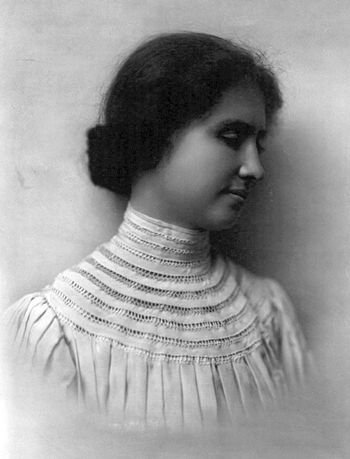
Helen Keller was not learning disabled.
Helen Keller. –Wikipedia.

Helen Keller was NOT learning disabled!

If anyone in your family has close-up vision problems, it is important to have your child’s eyes checked. The “Big E” vision triage chart is not enough. When a child has trouble reading, you need an ophthalmologist. The nurse in your pediatrics clinic just will not do. Neither will the optometrist who measured and made your glasses. Only an ophthalmologist is an M.D., is what you need.

DO NOT assume that the non-professional learning gurus in your life have examined this essential matter. (Do not even assume this simple assumption with professionals.)

Many professionals have an attitude these days that goes something like: “That is outside of my area of expertise,” which translates: “That is not my problem.”

Surely you are aware that asking your child to read if he cannot see is asking him to do something that is physically impossible for him.

For a Lifetime.

We need to remember: Learning to read is a life-long process.

Pick up a book you read in your childhood and notice how much of the plot you missed. Of course, although you were well able to read back then, you now read with even better comprehension. You did not have phonics lessons all those years, yet you improved, just with practice.

The same is true of your child. No matter how skilled or unskilled you may think he is, he will improve with time, just by reading. An important choice you can make to help a child improve reading skills is to relax and let him read. Whether aloud or silently, whether solo or in concert with someone else, practice makes perfect.

Age Matters.

With a very young learner, the problem also could be in the realm of readiness.

I have a friend whose husband became ready to read when he was a senior in high school. He made straight “A’s” that year, after struggling and nearly failing every previous year.

Not all children wait that long, but many do not become ready until they reach puberty.

Others are ready at around age nine.

To overcome this problem in all its ramifications, it probably is best to read to your student while pointing to the print all the while.

Usually there will be some ability to find and recall words, via normal phonics methods. Knowing where to look for them in the book will help with independent study. Believe me, the non-reader sneaks peeks at books when you are not looking. The day comes when all the puzzle pieces will fall into place for him, and he senses this. Keep providing him with pieces.

Yes, it is a little harder for you, but because of this added difficulty, you can know that home is where your student belongs. Who else would care enough and have the time?

Speeding Reading Readiness.

Did you know you could provide exercises that speed the onset of readiness?

Much of simple childhood play does exactly that. Fun activities that require transferring big motion from side to side, repeatedly, are what you need.

Riding a bicycle or tricycle, skating, running, walking, and crawling are examples.

Also, aiming activities help, such as ball or ring throwing, or bowling.

You will find that most children enjoy most of these activities and will never guess at the reading help they gain. Please allow and encourage them to play big, often, and long, to the point of acquiring some ability.

While you are at it, make sure your child’s “handedness” is accurately defined and that he is preferring his dominant hand.

Glaring Problem.

Some children understand phonics and their eyes focus adequately but have another big problem commonly called “glare management”, or, more properly, “glare mismanagement”.

This obstacle is easy for even the novice teacher to identify because the child reads well for five to fifteen minutes, then begins to break down. This is a sign of eye tiredness, which can indicate a glare problem.

Sometimes, if he has the option, this child also will choose not to work or play on a computer, for the same reason.

To understand glare problems for yourself, try to find a magazine article printed in white on a black background. Just see how ready you are to skip the information on that page. Your tired eyes will tell you that you do not need to know anything that requires so much effort to absorb, although there is nothing wrong with your learning ability.

If your child’s eyes check out okay at the doctor’s, it may be time to experiment with the lighting, both of the room and of the paper.

When I have a child showing symptoms of glare problems, I immediately do two things:

First, I turn off all fluorescent lighting (and all screen lighting, such as a computer or TV might provide) and move the child near a bright window, but not in direct sun.
Second, I break reading lessons into fifteen-minute or even smaller portions.

If I see dramatic improvement in the attitude of the child and in reading comprehension, I know I have found the problem. After that, it may be enough just to continue with those two changes.

However, usually I will also experiment with colored acetate page covers. This is simply dark-colored “cellophane”, easily found at specialty gift-wrapping centers. Try several colors, and please make your color choice based upon the child’s preference and performance. Frame your child’s “color” in a simple cardboard frame, to make it sturdier, if you want, or you can order a set of these framed covers for a high price from educational sources.

For some children, it may be preferable to try to find “sunglasses” that have the right color in the lenses. If this works for you and your child, it is fine, as long as the lenses are not warped.

What else?

Your child may be able to focus well in any light but still have eye immaturity troubles, in that his eyes may jump around on the page. If a student does not need glasses, does not respond to light changes, totally grasps and applies phonics, but is still “just slow”, I recommend a mask.

A mask?

Yes, a mask, but NOT for the child. You may need to mask the reading material.

If it helps, you can easily make several, which you will likely prefer to do. Here’s how:

  1. Obtain a piece of white card stock, like a 3×5 note card, although bigger is better.
  2. Measure how tall and long is a line of print in your child’s reading material.
  3. With a razor, cut out a window in the middle of the card, to accommodate those dimensions.
  4. Allow your child to use this card to mask all but the line he is actually reading. See if it helps.

I have a friend whose teenage son could not “pass” the achievement test for homeschoolers, once required in our state. Although his math skills were great, the problems were in story form and his reading was too slow. Once he began using a page mask, they knew that it was what he needed during those tests. He “passed” after that, with a high score. Such a simple thing made all the difference for them.

Is There More? Yes.

One practice that I always recommend, even to moms whose children show no reading difficulties, is memory work.

I assume all of us are all memorizing Bible verses, but I like to include other works, too, such as favorite poems, famous speeches, the Preamble, etc. We take all those pieces with us all our lives and we are glad of it.

For the child who is not yet reading, though, for whatever reason, it becomes even more important, because the disciplined syntax and vocabulary of educated days-gone-by can become like a backbone for his verbal experience. If he cannot read zillions of great books, or, maybe even the Bible, he needs this cultural input.

A Few More Hope-Giving Words About the Bible:

More than one preacher grew up unable to read, and yet, God-called to preach. Once each of them faced God, in faith for the ability, God miraculously supplied his need to read the Bible. Incidentally, more than one of these men was unable to read any other books. God could do this miracle again, but it would not happen in the life of the child who already could read, would it? While you must keep trying, please do not ever give up hoping, either.

Stop False Assumptions.

Do not assume that your child is learning disabled based upon mere statements from past “teachers”.

If your child schools in your home, God has given him a new teacher, one who knows him better than anyone else ever could.

Make doubly sure that he is receiving what he truly needs, based on correct assessments.

You can take the simple steps above to re-evaluate and make corrections as needed.

Whatever God has for your child will be His best.

Posted in Christian Persecution, Home School, Who's the mom here?

Amazing Gall


The oldest working lighthouse in the US, built...The dead are buried.

The wounded are learning a new normal.

Those who are left with this ominous weight on their shoulders have been formed into a committee to figure a way to keep kids safe that all of us might have to follow. Yikes.

Although this committee is assigned to improve safety at public schools, it is trying to extend its tentacles into home schools, too.

Read here.

_______________

Photo: The oldest working lighthouse in the US, built in 1764 (Photo credit: Wikipedia)


Posted in Christian Persecution, Home School, Who's the mom here?

Fear of Man

The fear of man bringeth a snare: but whoso putteth his trust in the LORD shall be safe. Prov 29:25 (KJV)

HMS FEARLESS

Whenever Scripture draws the line for us, between godly and ungodly fear, the fear of man is presented as the opposite of the fear of God. There is no Scriptural way around it; the fear of man goes nowhere and the fear of God is the only safe choice. As is recorded in Isaiah 8:11-14a, “For the LORD spake thus to me with a strong hand, and instructed me that I should not walk in the way of this people, saying, ‘…neither fear ye their fear, nor be afraid. Sanctify (regard as holy) the LORD of hosts himself; and let him be your fear, and let him be your dread. And he shall be for a sanctuary…’” (KJV)

Here, Isaiah is saying that to fear someone is to regard him as holy. Whom do we call holy? Perhaps we think we believe that God is the only holy one, but perhaps we are deceiving ourselves into a false sense of sanctuary. Do we fear others besides God? Do we dare to sanctify them or declare them holy?

Fear of man equals idolatry because God says to fear only Him, to make only Him holy. Do we obey? Maybe we should look at a few fears that are common to home schoolers and see.

Fear of Requirements:

Whose requirements or standards do we hold to when we educate our children, and whose requirements do we despise? Whom do we place over them as masters? Jesus says:

“No man can serve two masters: for either he will hate the one, and love the other; or else he will hold to the one, and despise the other. Ye cannot serve God and mammon…. Therefore I say unto you, Take no thought…And why take ye thought … Therefore take no thought…But seek ye first the kingdom of God, and his righteousness; and all these things shall be added unto you. Take therefore no thought …” Matt 6:24-34

Notice in this passage that Jesus was not forbidding us to have two masters. No, rather, He was simply stating the truth: You cannot have two masters. It is impossible. It will never happen. You will hate or despise one of them.

Every master has a “master plan”, his own goals for his own pleasure. Whether he is in charge of a family, a factory, or a federation, he will think he knows what to do and will want to make it happen. That is why he is called the master.

We could make two long lists of the Lord’s goals and the goals of the world and one thing would become certain: The goals of the world are diametrically opposed to the Lord’s goals. It follows that the world’s educational goals are also in opposition to Godly educational goals.

It is important to see, as Jesus taught, that you cannot walk the fence between God and the world.

You will fall off, and when you recover, you will discover that you are not where you really wanted to be.

We need to come down off the fence and turn towards God’s goals. We would surely profit from knowing what these goals are. (It is important to see that goals are not the same as tools. Curriculum is a tool and should never be our master. People who let their curriculum master them often stop home schooling.)

Let us look at a current, worldly definition of the goals of education, from Webster’s New World Dictionary, from 1960:

Education – 1. the process of educating, especially by formal schooling; teaching; training. 2. knowledge, ability, etc. thus developed. 3. a) formal schooling. b) a kind or stage of this, as a medical education. 4. systematic study of the methods and theories of teaching and learning.

Obviously, worldly educational goals are based upon accumulation of “knowledge” and focused very simply upon “facts”. As long, therefore, as an idea can somehow seem to be “proved”, it will be master. This is why worldly education is so full of “facts” of questionable substantiation; it must have them to survive and to appear to have legitimacy.

This is also why the truth, which must be believed in order to carry its full weight, is rejected; it is not fun or easy, and may be misrepresented as “non-factual”. It is also why worldly educational standards have become superficial and sequence based. (You must read in first grade, do fractions in 4th, biology in 9th, etc. Good character often matters little, if at all.)

Worldly education has its basis in academics, as if the more “facts” you memorize, the better prepared you will be for life. God’s people should know better than that. Actually, if we examine a Godly definition of education, we see a marked difference:

Education – The bringing up, as of a child; instruction; formation. Education comprehends all that series of instruction and discipline which is intended to enlighten the understanding, correct the temper, and form the manners and habits of youth, and fit them for usefulness in their future stations. To give children a good education in manners, arts, and science, is important; to give them a religious education is indispensable; and an immense responsibility rests on parents and guardians who neglect these duties. –Webster’s 1828 Dictionary

Notice the huge difference. A Godly definition of education mentions forming, disciplining, enlightening, and correcting the child. The goal is his future tangible usefulness, and is presented as impossible without religion. If you think about the preceding two definitions of education, and if you think about what the Word says about education, you can see that not all education lines up with the truth.

The important thing is to ask yourself, “Does my education line up with the truth?”

Educate yourself about this question, in order to educate your students better. Maybe you do not feel like bothering with studying what true education really is, but maybe that is why your children do not feel like bothering with studying at all?

Maybe you feel like you do not have the time, but you have greater possibility of having time to deal with the questions, than you will if you wait to deal with the problems you will have with your children if you do not. They will act neglected because that is what they will be, and the “default setting” for any generation of children who are neglected, is the worldly standard of that time.

Go back to Webster’s older definition of education, above, to see who bears the blame if this happens to your children.

Can you see that if you spend all your educational time mastering lists of factoids, you will be throwing the baby out with the bath water? Many, many extremely well educated people met all the requirements for the well-educated, yes, and their parents likely felt they would “go far” because they were so bright. Nevertheless, they are of no real use today because their success is just so much striving in the wrong direction.

They regarded worldly requirements as holy and feared to transgress them.

Is that the way for us? Do we want to fear man and his requirements? If we do, we will give place to many more fears. You see, the fear of man and his requirements (the opposite of the fear of God and His commands) is the basis for many other fears. These other fears are some of the most commonly given reasons for parents losing the Christian home school vision and, tragically, quitting.

Fear of standardized testing:

Of course, we want high test scores; who doesn’t? Why do we want them, though? When pressed, will we say that we desire to see if our children are keeping up?—Keeping up with what? —With the world’s goals, that is what.

It is imperative for home educators to realize that the standard raised on standardized tests is very, very low. It indicates the merest proficiency in the least important discipline—factoids. Yet, we allow a high score on these tests to make us feel secure about our home school. We think all is well, sometimes despite the fact that both mom and child may feel like quitting.

On the opposite end of the spectrum, a child who actually is excelling may receive a low score instead of the blessing of celebrating his excellence. A young friend of mine, who enjoys imitating Dickens, received a low English score on one such test. To a high level of writing skill, she must add the generosity to change style, just for those tests. She is humble enough to adopt the insipid style of the computer-critiqued, just for a day; therefore she will succeed.

I repeat: Because she is humble, she will succeed. Of course, she did not learn this humility from the world.

Another child came home from testing, informing his mom, “All the important things are not on the test.” If our children can see this, then it is time we did, too.

Mastery?

We call the tests “standardized” because they introduce a standard, a desired outcome, a goal, a master plan. They who would master us lack only that we should fear them. Our attitude should be as Paul said:

“For we dare not make ourselves of the number, or compare ourselves with some that commend themselves: but they measuring themselves by themselves, and comparing themselves among themselves, are not wise.” 2 Cor 10:12 (KJV)

If you think those words were meant only for missionaries, but not for you, then you do not realize how God-ordained it is to teach a child.

Fear of higher math/science:

Have you ever said this? “I don’t feel comfortable teaching higher math.”   It is just a nicer way to say, “I am afraid.” Whomever we fear will master us. Parents who hesitate to allow a child to study a book that is not on his “level” also have decided to allow a worldly standard to master them. Yes, it is okay to teach chemistry to your freshman and biology to your sophomore, if you want to.

Who cares?

Only the world, that’s who. The world does not know whether it might be exactly what your child needs. We all must face these age-old realities very soon:

  • Worldly teachers do not know everything there is to know about teaching.
  • There is more than one right way to be the master of a school.
  • Mistakes can be very good tools but need not be our masters.
  • Education that comes down from our true Master is much more than spoon-feeding facts.

Fear of gaps:

We laughingly call this “gapaphobia”, but it is not funny. We need to realize that gapaphobia is a cruel master.

You can never finish filling in gaps because no one but God knows everything.

All people have educational gaps, no matter what they do.

You will never be able to overcome your fear of gaps by becoming educated more fully.

The solution is to choose your gaps. The privilege to choose your own children’s gaps is reserved for home educators, only. While the world is mourning over gaps in the moral teaching of its children, we should be rejoicing over the gaps in the worldly teaching of our children. We can and should choose to leave worldliness gaps in our curriculum, and to be certain to leave no Godliness gaps.

We are free to avoid one of the worst gaps, the one many worldly students have: dullness and boredom of soul because of failure to discover a Godly life purpose.

Discovering your God-given life purpose helps you determine the rest of your gaps.

Will you become a nurse? Best leave gaps elsewhere besides math.

Were you hoping to become a law enforcer? Better spend extra time in Constitutional studies.

Pray that the Lord would reveal what His purpose is in your child’s life. That will help you both determine where his gaps should be. How could a worldly teacher know this? How could a worldly curriculum address it?

Train up a child in the way he should go: and when he is old, he will not depart from it. Proverbs 22:6 (KJV)

Fear of authorities:

Yes, God tells us to obey our governing authorities, and we should hold them in honor.

Yes, our situation might require record keeping or a special watch on our legislature. Some view these activities as normal where wise citizens uphold their part of the government in this country.

We need to be sure we fear God, though, rather than man. Sometimes the “authorities” who try to make us fear them instead of fearing God, are trying to master us, and are not under authority, themselves. Sometimes they, themselves, are not honoring the law that is over them. Sometimes they are breaking the law, and it would be wrong to aid or abet them.

From the news anchorman who tries to bring us to public trial, to the caseworker who tries to make illegal entry, to the neighbor who makes anonymous and slanderous reports of truancy, we must not fear them. When we take ourselves out from under the fear of man, we also take ourselves out from under man’s often inferior protection. We must see that when we fear God, He protects us, and we are so much safer! God holds the hearts of our authorities in His hand and turns them any way He wants. (See Proverbs 21:1)

Fear of college entrance:

What scares you more than “The TRANSCRIPT”? Did you know that typing a transcript is about an hour’s work? Wherefore fear? I used to fear “The DIPLOMA”, until I realized that nearly everyone I know, educated or not, has a diploma.

And the colleges know this too. Colleges do not care if you have a diploma because they know that it is meaningless. (It takes even less time to fill out a diploma; you can buy a pad of 25 of them for $10.00.) In some of the best colleges, freshmen may join the Honors learning track without the highest scores on the ACT/SAT, if they are home educated.

Colleges know that home educated children are what they really want and the ACT is not the “end-all” that we fear: It is time we moms figured this out, ourselves. Educate your child diligently, according to what God has shown you, do your best, and relax.

Fear of neighbors/family:

This fear can seem harder to overcome until we see the truth clearly: Our friends’ and family’s objections are merely their voicing of their fears. It is easy to realize that they want some reassurance or proof that all is ok. They look at themselves, fear that they would not measure up if they were in your place, and project those fears onto your situation and decisions.

The way to deal with fearful neighbors and family who are drilling you is first, not to be afraid, and second, to hand them some reassuring home school pamphlets. Take their fears seriously, admit that you also once feared the wrong things, and ask for their prayers that you would fear God instead of man. This way establishes the basis of honesty in your relations, witnesses to them, establishes God’s authority over your children, and may even gain you more prayer support.

Fear of each other:

This is about the “presentation night”, “or closing program”, and any other time you are not sure you or your children will appear to measure up.

Yes, other Godly moms teach differently, get great results, and act sure of themselves. Fearing them, though, is just fear of man, again.

How tragic that the ones who should be supporting each other would fear each other!

Stop it!

Take your eyes off her and put them on the Lord. Ask Him how you could serve her, learn from her, or work together with her…then do what He tells you. This is fear of God, instead of man, which will set you free.

The cure:

The fear of man bringeth a snare: but whoso putteth his trust in the LORD shall be safe. (Proverbs 29:25) (KJV) Fear of man keeps our eyes off God. Trusting God helps us focus on what matters to Him and insures our safety.

Trust is the cure.

Trust in the LORD with all thine heart; and lean not unto thine own understanding. In all thy ways acknowledge him, and he shall direct thy paths. Be not wise in thine own eyes: fear the LORD, and depart from evil. (Proverbs 3:5-7) (KJV) Fear of man leaves us directionless and open to evil. Trusting God places us in His right path.

Trust is the cure.

He shall not be afraid of evil tidings: his heart is fixed, trusting in the LORD. (Psalm 112:7) Fear of man expects a bad report. Trusting God gives the steadfastness that is built upon much greater expectations.

Trust is the cure.

“Trust and obey, for there’s no other way to be happy in Jesus, but to trust and obey.” (“When We Walk with the Lord” by John H. Sammis, 1887.)

Trust is the cure. Go to God. Ask Him to capture your heart and set it at ease.

If any of you lack wisdom, let him ask of God, that giveth to all men liberally, and upbraideth not; and it shall be given him. (James 1:5) (KJV) Then He “…will restore to you the years that the locust hath eaten…” (Joel 2:25) (KJV)

_____________________

HMS FEARLESS (Photo credit: Wikipedia)


Written in conjunction with  Leah Stewart. Leah and her husband Randy live on their farm in Arkansas. They always home schooled their two children, who now are grown. She enjoys speaking to and encouraging home schoolers.