Posted in Blessings of Habit, Health, Homemaking, Inspiring, Photos, Who's the mom here?, Womanhood

Get All You Can–Can All You Get, Part 1

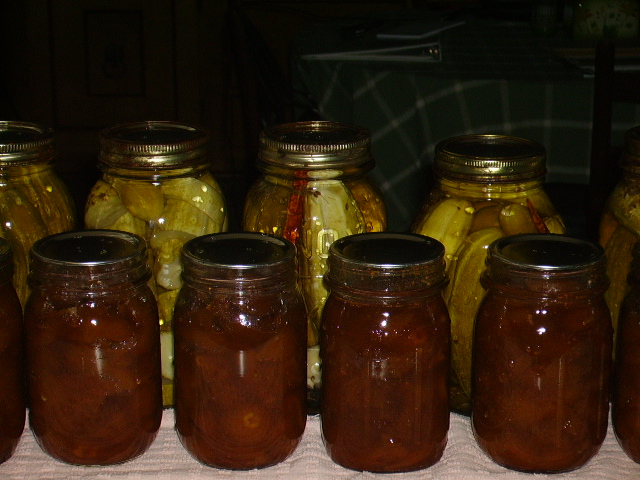
pickles and fig preserves
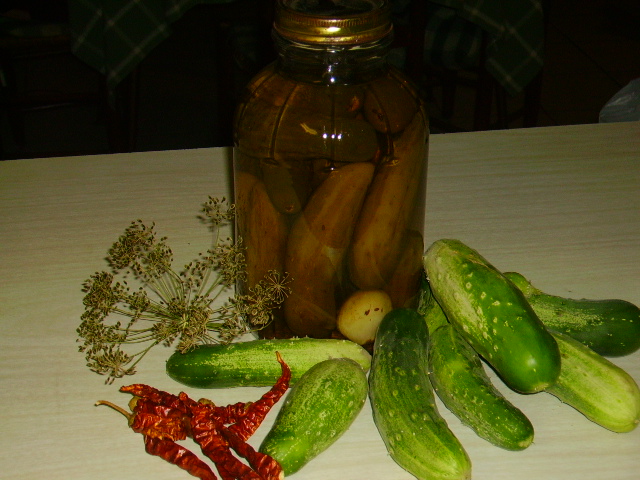
Pickles and Fig Preserves!

Introduction

You put beans, salt, and boiling water into a jar, cap with a hot lid, set it in a pressure pan that has a couple of quarts of water in it, apply the lid and the pressure gauge, turn on the heat, wait a while, turn it off, take the jar out, and you are done. What could be easier? People do this all the time!

Yet it took us about 4000 years or so to figure it out. The idea of canning, itself, did not come about until the early 1800’s. Tin cans were first used in the U.S. in 1839. Mr. John Mason invented the canning jar in 1858.

Before then, we starved a lot.

There are many advantages to cooking food at all. Many foods become much easier to chew and swallow. Imagine eating a raw roast! Cooking also often improves digestibility. Eating a nice big helping of delicious raw peas would put you through abundant abdominal agony!

Although cooking usually also improves the flavor of foods, we often prefer some foods raw, or fresh-frozen, such as strawberries: the canned ones are like mush. Still–if your only choice is between overly soft strawberries and NO strawberries, you begin to see the advantage.

Almost any type of food can be canned, though some with less success. Fruits are canned at 5 pounds of pressure for a short time because their acidity makes them less apt to spoil and their fragility makes them disintegrate easily. Vegetables are more rugged and less acid, so they require 10 pounds for around 30 minutes. Meats must be very thoroughly cooked and so are placed under 10 – 15 pounds of pressure for about 90 minutes.

The purpose of the pressure is to achieve higher temperatures: The water in the pressure pan boils at 240 degrees (instead of the normal 212 degrees) under 10 pounds of pressure, the secret of the short cooking times.

To prepare food for canning you must first clean it. Beans, peas, etc., may simply be rinsed several times. Greens require at least seven rinses. Carrots, potatoes, etc., must be well-scrubbed with a brush. Even your own organically grown, guaranteed unsprayed apples must be carefully washed because ants, roaches, and flies crawl on them all the time. These creatures spread staph, strep, fungus, and yeast diseases.

After cleaning, cut the food into bite-size or jar-size pieces. Most foods do not need peeling but beets and tomatoes usually do. Some people also blanch food before packing it into the jars. The purpose, then, is to get more into the jar with slightly softer vegetables. Beets, potatoes, peaches, and tomatoes peel more easily when blanched.
Tomorrow, Part 2: The Mechanics

Posted in Blessings of Habit, Good ol' days, Homemaking, Inspiring, Pre-schoolers, Who's the mom here?, Womanhood

You CAN Can – Help!

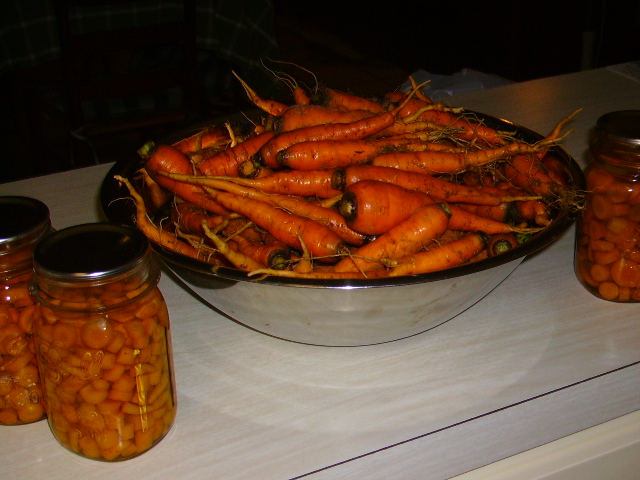
carrots
Carrots!

Canning, Gardening, and Kids – Oh, MY!

Since we’ve been on the subject of canning all week, let’s talk about canning and children.

Children who are old enough ought to help. Little ones ought to stay away. Too much is going on for you to trust yourself to watch them carefully. All that blanching and lugging jars adds a safety factor with which they are too young to cooperate, and one act of confusion or disobedience could be disastrous.

So draw a line and make it stick. This is a time when high chairs, play pens, door gates, etc., are proper for the safety of precious little ones.

Let me tell you how we enlisted our children’s help in the garden when the days were blistering hot. We woke them at daylight, and had them dress quickly and go directly to the garden with us. Everyone had an assignment, only 30 – 45 minutes worth of work.

Each one managed his own row, which he kept weeded and proudly displayed to guests. Really, the garden looked good.

The youngest one’s work was to play nearby without walking on garden plants or eating dirt.

Then it was back to the house for our reward. On these days we would have treat-type breakfasts such as cantaloupe and ice-cream, oatmeal raisin cookies, fruit juice popsicles, strawberries on cereal, frozen chocolate-dipped bananas, cheesecake with blackberry sauce—whatever they considered rare and delightful. They loved it! They knew how hot the world would be by 10:00, and they seemed to appreciate my organizing things this way.

Then if we HAD to work in the heat, we would take quart jars of ice water with us and drink straight from the jar. They loved this, too. When such hot work was done, their daddy would throw them squealing into our large stock tank (which was kept for the children, only, and was un-licked-upon by any livestock) and they had water play in their work clothes.

These types of rewards were the heartbeat of our children’s summer gardening memories. They are adults, now, and still remember it with smiles, still do gardening, themselves.

Sometimes they fussed a little or grew competitive, but often the sweet sounds coming from the early morning garden rivaled those of the birds.

Tomorrow: recipes for the surplus!

Posted in Blessings of Habit, Good ol' days, Homemaking, Inspiring, Recipes, Who's the mom here?, Womanhood

You CAN Can – Six Tricks More!

pickles
Pickles!

To continue the tricky list from yesterday’s post:

7. To rinse the spines off cucumbers without cutting your hands, use a washcloth, which protects you and is faster and gets them cleaner.

8.  In an emergency, apples, bell peppers, and tomatoes may be frozen whole and raw (untreated). They must be perfectly spotless, unwashed, and in an airtight bag or container. They must be used within six months and they should be used for cooking only. Thaw tomatoes one at a time under running water for a few seconds. Skin should slip off easily, then core and pop it into your chili or whatever. For apples, thaw slightly at room temperature, peel or not, slice off of the core for pies, sauce, etc. Open, clean and chop bell peppers, frozen, or stuff and bake.

9. If you have plums galore, try freezing them whole and unwashed. Teach your children to love “plum-sicles” (and to wash them before they eat them.)

10.  If you end up with more fruit juice than you have sugar or time, boil it, cool it, and freeze it in clean milk jugs, ¾ full. The jugs should have securely fitting lids. I made jelly with juice that had been frozen for a couple years and it was absolutely as wonderful as fresh. Allow about 24 hours for a gallon jug to thaw at room temperature.

11.  To tell if apples and pears are ripe, cut one open. If the seeds are white, it is too early. If they are black, the fruit is ready.

12. The eensy fruits off your flowering crab apple tree make wonderful apple jelly and incredible, rosy, tart applesauce. I love it to serve with meat instead of cranberry sauce.

Tomorrow: Gardening, Canning, and Children!

Posted in Blessings of Habit, Homemaking, Inspiring, Recipes, Womanhood

You CAN Can – Six Tricks!

you can do it
You CAN Do It

Six Tricks

In case you face canning–or freezing or drying–with more dread than cheer, here are some tips that will brighten your day and lighten your load:

1.  Greens can be washed in the washing machine. Do not overload it, use the gentle cycle, cold water, NO SOAP. They will tear a little, but we’re going to cook and chew them, right? you needn’t spin them; they float. And the sand sinks. Yea!
2.  To keep fruit from darkening, try using a Vitamin C tablet crushed into the holding water instead of expensive fruit preserving preparations from the store. One 500 mg tablet is enough for one gallon of water. It keeps pears, apples, peaches, etc., just as pale and fresh as the moment they were first sliced. For hours.
3.  When cutting the core from quartered fruit, start at the bottom end of the slice (blossom end) and cut toward the top. You will have significantly fewer broken quarters.
4.  To separate halves of drupes (plums, peaches, etc.) slice to the pit along the naturally occurring crease all the way around the fruit. Then twist the two halves in opposite directions. Voila!
5.  Chop fruit for jam in the blender. Briefly. It is so much faster.
6.  For quicker sun-drying, place fruit between two framed screens and set on top of the luggage rack of your car, parked in the hot, hot sun.

Tomorrow: Six MORE Tricks!

Posted in Blessings of Habit, Good ol' days, Health, Homemaking, Inspiring, Who's the mom here?, Womanhood

You CAN Can!

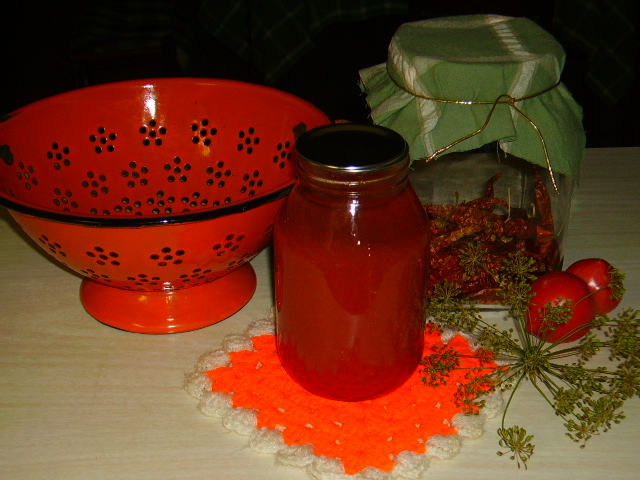
Rotel, carrots, pumpkin, tomatoes, beets, tomato soup, pickles, and green beans
Rotel, carrots, pumpkin, tomatoes, beets, tomato soup, pickles, green beans, and more pickles.

I remember canning.

Mama had jars, lids, rings, spoons and pans all over her huge kitchen. She let me hand her the “rings” (screw bands) which I wore like bracelets up and down my then skinny arms. The temperature in there had to be at least 100 degrees, but I do not remember that. I remember her praise when I managed to stay focused on my job and hand her the ring on time. I felt so grown up.

I also remember disappointments, especially the cherry jelly that turned out like taffy. MY we loved that. I remember our neighbor, Eula, tanned and in flip-flops, who made her own catsup. And dear old Mrs. Secrest, who always gave me hand-pumped cold drinks from the well inside her dark, quiet house.

For some reason I’ve kept those memories fondly. I’ve tried to resurrect them in my own adult life. I do canning. I make jelly and catsup. We have a well. I want this for my children’s heritage. I wonder why.

It’s not just that the food is better. It’s not only that it is more healthful. And it is not simply that I grew up with it.

It is the soil–the harvest–the glorious, breath-taking heat–the oceans of perspiration replenished by oceans of teas and juices. It’s working together, sharing . . .

Oh! I know what it is! It is the fellowship with those who have gone before and those who are to come, stepping into my place in a long, long line of real people living a real life, marching to the rhythm of summer.

So all my children and I would march down to the garden to harvest God’s blessing for each day.

I hope you will join us. Then together we will all put back something for those special winter days when only that which is straight from the garden will do.

Tomorrow: Six Tricks to Get You out of the Canning Kitchen Faster!

Posted in Blessings of Habit, Health, Home School, Homemaking, Pre-schoolers, Who's the mom here?, Wisdom, Womanhood

How to Take Care of Your Eyes – Rest!

Close your eyes and it will go away!This is my favorite treatment for every problem–just close your eyes! Maybe it will go away!

In the case of eye health, this is definitely true.

But no one tells us.

Study this set of posts. Link to them. Copy-paste them for your fridge. Someone you know needs this information!

Resting

When we do not get enough sleep, eye health breaks down. Do not let this happen to you.

1.  The only time your eyes get a rest or a chance to self-heal at all is when you close them. Open your eyes and they are on the job. Just as never resting would weaken a  soldier, so never sleeping could weaken the two guards you call your eyes. A good nightly amount is eight hours. If you cannot get that for some reason (sick children, etc.) then pay more attention to daily resting.

2.  You may need a timer for this one, at first. Every time you work for 50 minutes, rest your eyes for ten. This includes computer work, yes, but any reading or crafting is work for your eyes, no matter how fun it is. Give them a break.

3.  You know how tired eyes feel to you, When your eyes feel overly tired, try this: lie down and cover your eyelids with cool cucumber slices. Chamomile tea bags, boiled, cooled, and squeezed out, work too. Let the soothing compresses take you away!

So now you have it: Four ways to make for better eye health: nutrition, exercise, detoxify, and rest. Let’s all get going on taking care!

Okay, now comes the part we have to say in this lawsuit-happy world: This post is meant to inform and to satisfy curiosity, only, and is not a substitute for medical advice. Consult your doctor for information concerning your conditions. Much effort has been made to assure this information is accurate, however, medical research is always changing the facts, and new findings may supersede currently accepted data. I am NOT a doctor, only quoting several of them.

Posted in Blessings of Habit, Health, Home School, Inspiring, Pre-schoolers, Who's the mom here?, Wisdom, Womanhood

How to Take Care of Your Eyes – Eliminate the Toxic!

Fluorescent lighting is poison to your eyes.I knew it! I just knew it! We have more eye troubles these days because more facets of our environment are bothering our eyes. I just knew it.

And, oh boy! It is politically incorrect to admit this.

Is that why this is not on billboards, nationwide?

Study this set of posts. Link to them. Copy-paste them for your fridge. Someone you know needs this information!

Poison to Your Eyes

The eyes are physical parts of our physical bodies. Since they are so sensitive that they can communicate thoughts and emotions, we might think of them as ephemeral. But they are physical, influenced by light, something Einstein would be first to tell us we do NOT fully understand. And they have a few things to communicate to us about their preferences, too.

If you are in charge of children, you hold the keys to their continued eye health. You are duty-bound to make good eye health happen for them. Teach this to them and make it a permanent part of their overall health.

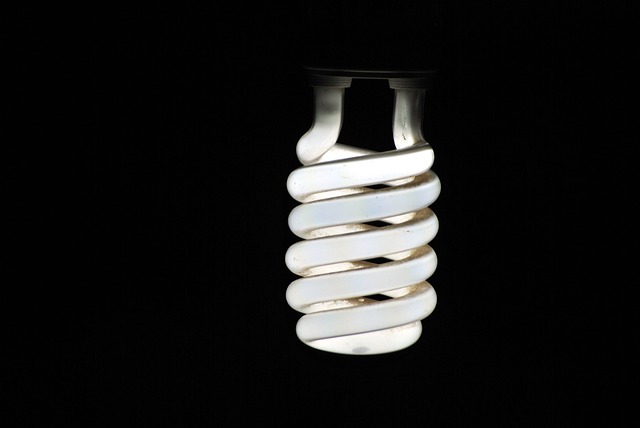
Lighting. Lighting is toxic? Yes, some lighting is toxic to several parts of the body, but we will concentrate on the effects to the eye. Flourescent, computer, and TV light is totally stressing to the eye and can even lead to glaucoma. We take for granted the accuracy of our eyes, but the truth is, they have to re-focus and re-compute every time a flourescent blinks, every time the stripe goes past on a screen, even if they are not looking directly at the screen or lightbulb. For this reason, many people, and most children, do poorer work when in the presence of these types of light. Eliminate them.

The best light for working is reflected or filtered sunlight. Halogen is next, if carefully filtered. Then comes incandescent, also very workable. The rest are bad. Period.

However, never look AT the sun, and always have sunglasses ready, should you be outdoors very long, especially on overcast days, when more sunlight can beam directly into the eye. A little reflected sunlight actually can do good, adding vitamin D, but don’t overdo.

Allergens. Although you may not have a classic allergic reaction to them, the fumes from new carpet, new paint, overheated cars, etc., harm more than your lungs. If you must install these things in your home, open the windows and use a fan to draw in real air. Ditto for tobacco smoke. If your favorite shopping place installs them there, shop elsewhere, or AT LEAST leave the children behind for a while until the fumes subside.

Also, when you turn on the tap, first thing in the morning, does it smell to the skies of chlorine? It quite likely is chlorine gas. Time for the fan and the open window, again. Let the water run and leave the room until it smells like–water.

Swimming pools and spas. Usually these either have chlorine, bromine, or bacteria in them. Wearing goggles is a good solution for those who have to swim in chemicals and bacteria, although removing them and doing yesterday’s massages every half hour is a good idea.

Heating and air conditioning. Dry air is not really a toxin, but harms the eyes as if it were. Use a humidifier and saline drops made for the eye when you are in these environments. Spend more time outdoors: you were made for it.

Dim lighting. Doing visual work without proper lighting is like moving bricks without gloves, or hiking barefoot. Body parts wear out, and unlike a cut hand or foot, the eye does not self-repair well. Always use a good light when you work. When you are reading or writing, the light should fall over your less dominant shoulder. (Left for righties; right for lefties.) Require this of your children, too.

Rubbing the eyes. A little goes a long way with this habit. Unlike the eye massage from yesterday’s post, rubbing the eye squashes the eyeball. Not so good. It also can introduce bacteria. Not so good. And, horrors!, if you have a foreign object in the eye, rubbing can worsen your plight. Just don’t go there and don’t allow the children to, either.

Use a warm wash cloth to remove crust or mattering, not a fingernail. Use a folded corner of tissue and/or sterile eye drops to remove foreign objects from the eye. Or go to a doctor, WITHOUT RUBBING, PLEASE.

Coming tomorrow, Lord willing: Resting–Resting–1,2,3, Resting!

Okay, now comes the part we have to say in this lawsuit-happy world: This post is meant to inform and to satisfy curiosity, only, and is not a substitute for medical advice. Consult your doctor for information concerning your conditions. Much effort has been made to assure this information is accurate, however, medical research is always changing the facts, and new findings may supersede currently accepted data. I am NOT a doctor, only quoting several of them.