Posted in Blessings of Habit, Inspiring, Pre-schoolers, Who's the mom here?, Wisdom

The Blessings of Habit –- Basic Beginnings

Stick to basics in the beginning.

Our children can reap what God intended from good habits, if, by the time our babies are crawling, we’ve had the pleasure of instilling good habits into them.

For instance, we know we should keep them out of the cooking area, so we train them to stay out. Sometimes this is the first clash of wills between the darling babe and the soft mom. It can seem like war, if Mom doesn’t know how to:

Train in Good Habits

  1. Habit training
    Habit training

    In the beginning, for instance, we must teach a child what “hot” means, to fear when a thing is hot, and to trust our word on the matter. Use a hot light bulb and tell him “NO—HOT!” Act like you’re preventing him, but let him touch it briefly. Ask if he wants to repeat. If you see unwillingness, it’s a sign the child knows what you mean. If he cries, keep telling him it’s hot.

  2. Anger and yelling do not help; they hinder. Anger is for the devil, not for teaching; yelling is for long distance, loud environments, or extreme emergencies, not for teaching.
  3. Consistent firmness is the key. If you do not have time to be consistent, use a playpen or high chair to confine and thereby protect the child, or enlist a helper. “No” must mean “no”. If you are too lazy to be consistent, thinking about burn scars on your baby should help you feel stronger.
  4. You must not cave in to crying. Crying sometimes is a good way for a baby to communicate. Crying to get one’s way is bad. Do not teach the child that crying to get his way is good.
  5. Draw the line where you want, and make it stick. In our kitchen, one cabinet was permissible, but the rest of the kitchen was off-limits, during cooking. At crawling age, a child can grasp this.

Overcome Picky Eating Habits

We know we don’t want picky eaters and do want well-balanced diets, so we train them to eat. This can be another war, a bigger one, again avoidable, if Mom knows how to begin:

  1. Be sure you do not serve food your husband will not eat when he is present. Save it for when he is gone. Be sure he understands this is a time of training, both in obedience and in habit, and you need his backing.
  2. Make a new rule that every person will take at least a bite of every food on the table and eat that one bite all gone, no exceptions.
  3. Anyone who complains about one bite, gets two bites. This is all done very pleasantly, not in a way that causes mealtime to be a war.
  4. All food must be gone, not just pushed around, before getting any seconds or any dessert, again, all communication is friendly, matter-of-factly.
  5. The only consequence is no other food offered at that meal. Eat one bite (or two for the grumpy) of everything if you want seconds of anything. End of discussion.

You likely are seeking the next step, here, but that is all there is. This process, based upon natural hunger, applied consistently, teaches the child to like all foods and to clean the plate.

All their lives, my children were afraid around off-limits things and unafraid of green things on the plate. It was good.
Posted in Blessings of Habit, Home School, Inspiring, Who's the mom here?, Wisdom

The Blessings of Habit–Part 1

Do Your Kids Have Habitual Blessings?

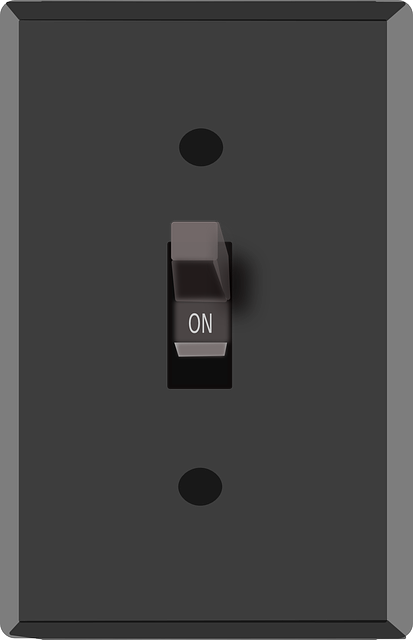
Light switch habit
Light switch habit

“Hey! Turn that back on!” I heard from the hallway one day.

It had happened again.

We have taught our children, from the time they were young, to turn off lights as they leave a room. Someone had turned out the light while there was someone still in that room.

It was a case of what I like to call “good habit—bad timing”.

It takes 21 days to form a good habit.

How amazing that the brain, once trained, knows what to do on its own! Eventually we no longer have to think about what to do and how to do it.

Imagine if you had to reinvent tying your shoe, each time you did it. We can turn off a light without thinking, even without looking at the switch. We can be thinking about the next task in the next room while we finish the task in the current one.

The mind is wonderful!

During an exercise class, I heard a phrase worth remembering:

“That which is used, develops; that which is not used atrophies.”

At that time, I did not know the meaning of the word “atrophy”, so I guessed it meant the opposite of “develop”. Since our family has a motto of knowing, instead of guessing, it bothered me I didn’t know for sure, so I looked it up.

So many habits go into each action…

Think of all the habits working in this experience:

  1. The phrase, repeated, became a reminder of the good of learning, repetition, and training.
  2. The habitual use of English caused me to guess correctly at the meaning of a word in context.
  3. The habit of exercise, itself, gave me a lifelong urge to keep moving, partly spurred on by thoughts of atrophy.
  4. Our habit of being sure of facts caused me to bother with a dictionary.
  5. A family habit of returning a thing to its place enabled me to find the dictionary.
  6. A habit of working alphabetically caused me to turn to the front of that huge book.

Imagine life without habits!

How difficult it would have been for me to benefit from the experience had I not had all those habits! Oh, the drill, supplied by faithful adults, that formed them in me!

The sad thing is that some children who lack faithful training might be learning to hate exercise instead of fearing atrophy. We have many such children living among us, these days—lacking drill in good habits—and this loss causes many problems. They never reap any benefit from life’s normal experiences. They become abnormal.

And we have to make up for their loss all around us.

Our children do not have to be among them, though. The home is the perfect environment for instilling good habits.

Let’s do it!

_______________

More tomorrow.

(Photo credit: Wikipedia)


Are you just now beginning a school in your home?

And: Are you shocked at what you’ve discovered?

Not so very long ago, (about thirty years, or so) we began homeschooling in the middle of the school year.

It can be tough.

Or it can be total joy.

Or it can be both.

I’m here to encourage you: You can do this. You can make it a beautiful combination of toughness and joy.

How it is with your child's new school!
How it is with your child’s new school!

I can show you how.

What follows are links to a five-part series of actual steps you can take to maximize your experience, and your student’s experience, as you wander through this new land called “Homeschool”.

1. The first step is already done: Bringing your child home is the first step.

For better or worse (It’s better, I promise!) you are now the 100% proud owner of a somewhat used child. Here’s how to spruce up your new acquisition and enjoy a great start-up and lots of remaining miles!

2. You will have a long time to get your whole school right, but you have only now to get now right. 

When you have a couple of weeks behind you, start taking a closer look and planning for the entire journey. No sense in running out of gas or getting lost. It’s time for detailing and getting a map.

3. Yes, “perks” are very important in a home school. Actually, they are important to everyone…

The wax job that makes for smoother sliding through the environment. What to, and not to pack for the journey and how to squeeze it all in.

4. Yes, he needs you; that is why God made parents.

Changing the oil; getting the junk out of the radiator, and a decent set of tires can make all the difference in the world! You’ll go further and be more sure of arriving at all!

5. The home-schooled student truly does have every advantage.

Those who get the most out of any trip are those who invest their entire beings into it. Is it time for you to make a major investment of your whole heart?


Why You Would Kill a Christian

Killing Christians is a practice as old as Christianity. Those who practice it do nothing more than imitate their predecessors. Predecessors who attempted but failed to snuff out the life of our faith in its infancy.

The practice of persecution is hard for some to understand but it’s actually an understandable act. In fact, I can think of at least ten reasons to kill a Christian.

You’ll probably enjoy reading more here.

The Christian Martyrs' Last Prayer
The Christian Martyrs’ Last Prayer (Photo credit: Wikipedia)


Enhanced by Zemanta

The First Thing?

I’ve not made a major announcement of my grandchildren on social media, before.

Today is different.

Our tenth grandchild and sixth granddaughter arrived today at 5:30 a.m.

She was only a tad late, and had attempted to get here all week long. Had all the pro’s fooled.

So finally, we relax, our worried prayers turning to exclamations of joy.

Finally we enjoy the sweet fruits of our lovely children’s labors, all nine months and eight days, plus 12 hours of it.

It’s a wonderful day to be born!

Posted in Blessings of Habit, Categorized!, Wisdom

Do You Live with an Editor?

I can find anyone’s mistake.

Writer
Writer

When folks misuse an adjective as an adverb, I mentally add, “-ly!” Yes, I mentally add the exclamation point; cannot let it go.

When someone picks up the wrong fork for his salad, I have to concentrate on my own salad or I forget to eat it.

When a word is misspelled in a published book, I mark it, if it’s my own copy.

When clothing colors are a bad match, when a car needs detailing, when a handprint (or, worse, a nose-and-forehead print) appears on my storm door, I notice it all. (And I say “for-red”, not “for-head”.)

If you find plates upside-down at the beginning of the service line in a self-serve restaurant, I’m the one who did that. Those plates needed rewashing.

My kids can tell you: I’m precise about particulars. They learned how to diagram sentences. They learned to distinguish between the “i”, the “:”, and the “!” in math. They learned the new names of the new countries in eastern Europe.  They learned to spell before I let them learn to type, which came before I let them learn to use our computer.

They learned to say “-ly!”, mentally, whenever appropriate.

I cannot imagine how stressful that must have been. I worry about it, although I always attempted to make learning fun and exciting.

In fact, one of my kids recently told me of his thankfulness at being forced to learn spelling and typing first.

He’d looked around.

Someone else was hunt-pecking at a keyboard, someone employed to sit there and hunt-peck. He told me of his astonishment and the difficulty he had in concentrating on his own business. Hmm.

I am training myself to let some of it go, though. Wish I’d trained my kids to do that, too. It’s heavy, all this noticing and editing of other peoples’ goofs. Sometimes I just smile and keep going.

After all, I can spot anyone’s mistake.

Anyone’s but mine.