Basement of Diocletian’s Palace Nederlands: (Photo credit: Wikipedia)
Know Where to Go
Have a safe place. If you have a basement, that’s the place. Go to the side or corner where the tornado is COMING FROM. (If a tornado lifts the house a bit and then drops it a bit further away, you will not be under it, supposedly. Another somewhat safe place is supposed to be inside any super-reinforced structure, such as a stairway closet, hallway, or shower stall.
Stock the Safe Place
One fresh gallon of water for each person.
High energy snacks.
Up-to-date medications, or copies of prescriptions.
Flashlights with fresh batteries. Candles and matches in watertight containers.
Protective headgear for each person. Hail happens during tornados; bricks fall. A bike helmet is better than nothing. A thick mattress is nice, too.
A radio that works by battery or crank. Fresh batteries.
Light jackets for everyone. You don’t want to be too hot, but it will probably rain.
Diapers, wipes, and formula if you have a baby. Renew this as baby grows: keep it current.
Spare set of car keys.
Have a Plan
Know where you will meet, if separated. (Choose several places in case one blows away.)
Know whom you will call (someone outside your area) for an info base.
Make rules for tornado watches. (Everyone put on sturdiest shoes and jeans. Everyone put one keepsake in the basement. Move cars under hail shelter. Etc.)
Make rules for tornado warnings. (Everyone stays indoors. Everyone be aware [no headphones on, etc.] Everyone make sure nothing obstructs path to basement, etc.)
Make rules for take cover. (Go directly to basement, put on your helmet, and get under the mattress, now. Do not stop for anything.)
Drill your take cover plan, exactly like a fire drill. Practice helps! Also, should you be injured or incapacitated in any way, the children may still know what to do.
If you can, have a bed or two in your basement and put the children to sleep down there, with shoes on, when the nights are dangerous. This saves endless trouble and worry. If you can add a few toys, they can play down there, too, when the days are dangerous. If you have no toilet in the basement, you may want to add a small pot, too.
Okay, there you have some ideas to get you started.
My siblings and I slept in the basement many nights, to the sound of the radio broadcasting the cities and counties in the path of some tornado. Some nights I remember being lifted down those stairs, still half-asleep. Some mornings I awoke to the sounds of my parents readying for another day, upstairs.
The basement was the one my parents built immediately after that infamous tornado in Ruskin Heights.
Today I’d like to explain what was wrong with what we did.
Few people took tornadoes as seriously as they should have. ALWAYS TAKE A TORNADO SERIOUSLY; IF YOU WANT TO CHASE OR WATCH THEM, GET THE TRAINING, FIRST.
There were very few sirens and they were not systematic in their sounds. LEARN WHAT THE VARIOUS TONES AND PATTERNS OF YOUR EARLY WARNING SYSTEM MEAN. ALSO, DEMAND THAT YOUR AREA SOUND SIRENS ONLY FOR EMERGENCIES AND PRESCRIBED TESTING, NOT FOR SETTING CLOCKS OR CELEBRATING.
It was against some law or policy to issue tornado warnings over radio, although a Mr. Audsley did so, that night in 1957, risking his job to save lives. ALWAYS LISTEN TO RADIO, OR BETTER YET, TO A DOPPLER-BASED WEATHER RADIO STATION. HAVE A RADIO THAT WORKS DURING BLACKOUTS.
Few people knew what to do. Our hiding under a table was as futile as our running across lawns was dangerous. KNOW HOW TO BE SAFE, WHICH PORTIONS OF ANY BUILDING ARE GENERALLY SAFER IN A TORNADO, AND HOW YOU CAN BE SAFER IF CAUGHT OUTDOORS.
We were barefoot or nearly barefoot. WHEN YOU REALIZE A TORNADO MAY BE ON ITS WAY, PUT ON YOUR MOST STURDY SHOES AND SOME SOCKS, STURDY JEANS, AND A STURDY SHIRT. MAKE YOUR CHILDREN DO THE SAME.
Although helmets for children were not available over 50 years ago, today we also should store helmets in the basement or safe place during tornado weather, one for each family member.
Many people were caught bathing. NEVER BATHE DURING LIGHTNING OR TORNADOES.
Although Kansas and Missouri are notorious, worldwide, for hosting tornadoes, few people were ready with a plan and supplies. WE HAVE LEARNED HOW TO FACE TORNADOES WITH PREPAREDNESS. RENEW YOUR PREPAREDNESS PLAN AND SUPPLIES AT LEAST EVERY SPRING.
We were shocked at the far-reaching effects. DEBRIS CAN LAND ANYWHERE. WATCH OUT FOR FALLING DOORS, TRICYCLES, ETC.
People were injured by the aftermath. DO NOT TOUCH DOWNED WIRES OR GO NEAR THEM—ELECTRICITY CAN JUMP. IF YOU SMELL GAS, EVACUATE IMMEDIATELY AND DO NOT LIGHT OR START ANYTHING OR CAUSE ANY SPARKS, EVEN ELECTRIC SPARKS. DO NOT GO INTO WRECKED BUILDINGS WITHOUT HEADGEAR. ETC.
Although phones were different back then and most were down, today we must: MAKE ONLY ONE PHONE CALL TO AN OUTSIDE FRIEND OR RELATIVE AND ASK HIM OR HER TO FORWARD YOUR STATUS. LEAVE THE LINES OPEN FOR THOSE WHO NEED EMERGENCY CARE.
I remember my mother’s voice that evening: It warbled.
And though I was only six years old, I knew the warble came from utter terror. We were running as fast as a heavily pregnant woman with three children ages 2-6 could run. She was watching the sky more than the path to the gate, carrying my sister, holding my brother’s hand, and sort of warbling to me, “Oh, run, hurry, RUN!”
I dug my toes into my flip-flops and ran.
I knew it was a tornado up there, whatever a tornado was. I looked up, too, and stumbled.
Mom scolded me sharply. “Don’t look up! Don’t look up! Don’t look up!” She seldom scolded sharply. It hurt my feelings but I knew it was no time for hurt feelings. Her words were like a mantra, a warbled charm against bad omens . . . don’t look up, don’t look up . . .
But, when I had looked up I was puzzled. It looked just like clouds.
Then I had seen a door. And when, disobeying, I looked up again, I saw a tricycle.
We were headed to our neighbor’s house. My mom screamed for them to let us in. We cowered under their huge oaken table, in the dark, with our mother’s arms encircling us. I heard my mom praying, so I prayed too. We cried and pleaded with God to protect us. I did not know what to be scared about, but my mom’s fear was plenty for us both.
The neighbor calmly stood on his front porch and watched the sky. His wife wrung her hands and paced through the house. I remember her shoes and feeling sort of dumb lying on the floor under her table while she walked by. I thought of a Little Rascals episode in which the children hid under furniture.
Then it was over. We went home. My mom talked for days about the foolishness of standing on the front porch to watch a tornado go by, summoning new terror at each telling.
It was over, yes, for us, but for the victims it still goes on. The forty-four dead would be burried. The over 500 injured would tell their stories.
Our firstborn son was bookish. From an early age, he could “read” himself to sleep. (They were pre-school picture books.) He loved lining toys in rows and dressing like and imitating his daddy. He was a visual learner.
My friend had two boys who disliked reading, although they loved a good story and she could hold them enthralled for hours if she read to them. Having difficulties with bookwork, they aced the hunter-education class, which was all lecture. They were auditory learners, picking up most input through the sense of hearing. Which explains why her sons could hear Mom calling for chores better than mine could?
Some children love to learn by touch. They love science experiments, lap books, and many other sorts of projects, whereas my kids cringed at them, resented the time they seemingly wasted. Math manipulatives greatly help tactile learners, even if it’s just Popsicle sticks. Coloring a picture of a horse can teach them more than hearing or reading a description of one, but riding a horse will teach even more.
I had one child who learned the most by talking about it. Oh, he could read okay, but until he reproduced what he had learned, his lesson was not done. He was one who also learned better when moving, so when he bogged down as an older child, he would slide over the piano and pound out some Rachmaninoff and then could study better. And then he proceeded to become a computer whizz.
What lesson do WE learn from these learners?
All of our children may look alike, but have extremely different insides.
Our daughters may look like us but have their dad’s personalities.
A perfectly excellent curriculum may not work for one child as well as it did for the others.
Einstein and Edison could both be immensely successful, although one was bookish and the other was not.
Institutionalized teaching of scores of children via the same methods will never work.
All of which statements are another good reason to homeschool.
I love babies. Their clean, new innocence makes me want to hold them, smell them, touch them.
I know I am not the only one. Every day, someone wants to chuck a baby’s chin, stroke a baby’s arm, or hold someone else’s baby. In the store, at church, even total strangers smile and want to see the baby or hold their children up so they can see him. Even stodgy, yuppie types give half a smile and nod to the babe-in-arms.
What makes most people give goofy faces and noises to extract a smile back from a baby?
Why—when newborns look basically like little old men—do we croon about how beautiful they are?
And when they get fat and develop a glistening dribble of spit on the lip, why do we exclaim how adorable they are?
I think it’s because we naturally protect. Our nature causes most of us to envelope the innocent and helpless. Some think of the potential lying in that baby carrier and all the life ahead of it. We imagine how confused we must have felt when we were that size. We think of this small bundle as incapable of wrongdoing, worthy of protection and advancement.
Our thoughts mirror those Socrates called for in his dying words, that our children justly deserve our input during their journey to be our rulers.
We naturally call up thoughts like Plato expressed in his Republic, that the beginning is the most important part of any work, for that is when the character is formed.
We echo Aristotle’s Rhetoric where he says pity may well up in those who think we may eventually find some sort of good inside a person.
Even in Homer’s Iliad, we find:
He stretched his arms towards his child, but the boy cried and nestled in his nurse’s bosom, scared at the sight of his father’s armor, and the horsehair plume that nodded fiercely from his helmet. His father and mother laughed to see him, but Hector took the helmet from his head and laid it all gleaming upon the ground. Then he took his darling child, kissed him, and dandled him in his arms…
The thought of a ferocious warrior, removing his armor for a baby, rings true in our hearts. We may not realize we have such bold and universally defended thoughts. However, although written a bazillion years ago, this tender scene resonates with most of us, much as meeting a stranger’s helpless baby in an elevator does.
The fact is that every human with a truthful heart cares about a baby.
We can even say that about dogs: often they sense, they know.
The protection due a baby can alter what we would expect their reactions to be, can surprise us, as does the reaction of a seeming iron-clad soul in a chance meeting with a baby.
This week I must devote entirely to several speaking chores. So I thought you would enjoy viewing the introductions to my presentations. Here they are in their approximate final draft. Enjoy!
RNLI at Boat Race 2012 (Photo credit: Annie Mole)
Raising children is like a boat race:
You never feel ready
You always feel watched
It’s hard to change your mind
Disasters can happen
Too often, a bad beginning can cause a disastrous ending.
What can we do to ensure we are even in the right boat?
Since we are SO FAR from the shore, what are some boat safety rules?
A. We can examine our attitudes. Many begin this race badly, with a bad attitude when they board the good ship homeschool.
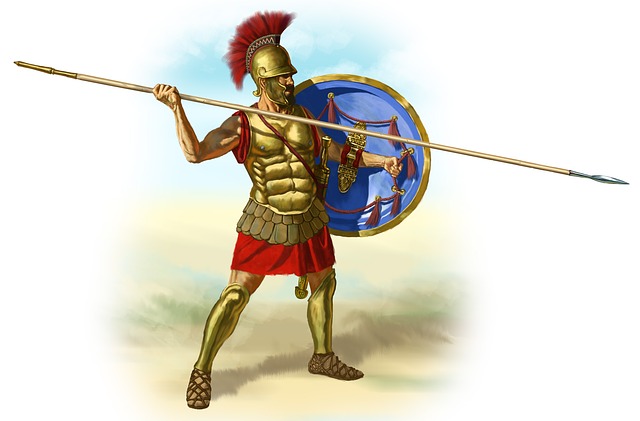
Sometimes people begin home schooling because of a bad teacher experience. Often these parents are angry and the thrust of their actions is intended as a javelin thrust into some teacher or educational system.
They just want to rock the boat . . . .
We all need to get used to the fact that the State Institutions are failing everywhere. It is not personal. It just is a cosmic failure, such as comes every time we build a cosmic house of cards.
Those who begin for this reason, alone, often stop just as dramatically as they began, when they, for some reason, decide putting their child in a State Institution is not really such a bad idea, after all.
Some parents begin because the child is failing. Whether he is unable to learn, or simply untaught where he is, the parent decides to take the plunge because of embarrassment or natural protective instincts toward the child. This reason also fails the parent quickly, because soon as the child homeschools, he does better.
Amazing!
The parents allow this progress to lull them into a false sense of security. They opt for State Institutionalization for their beloved child, after all, thinking the problems were a false alarm.
They change boats in the middle of the race, and slow the progress of both methods.
The third reason is more stable. These people do not become quitters as easily.
They are the ones who begin because they see the rightness, the necessity of it. They see God’s commands to teach our own children. They see the State Institutions growing constantly more hostile to morality.
They see ketchup as a vegetable and “two mommies” as a norm, or even a goal.
These frightening observations rivet them and they realize homeschooling as a part of being a family,
homeschooling as a part of the decision to have children,
homeschooling even as a part of the decision to marry.
It’s just the natural, normal result, for them, of being alive and desiring to succeed.


 DEBRIS CAN LAND ANYWHERE. WATCH OUT FOR FALLING DOORS, TRICYCLES, ETC.
 I remember my mother’s voice that evening: It warbled.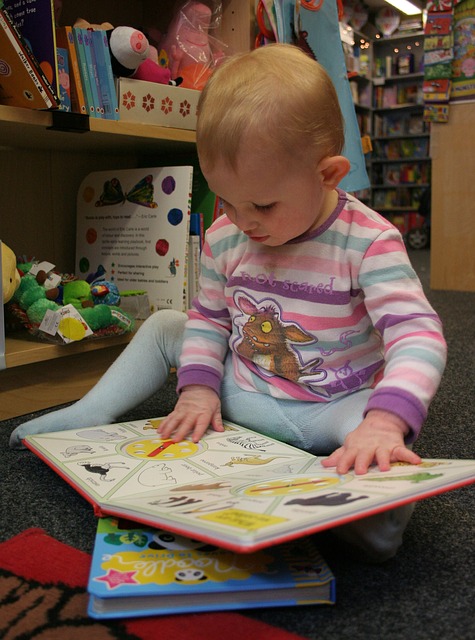

 Home's Cool!