Posted in Home School, Inspiring, Sayings, Wisdom

Do NOT Try Homeschooling.

I often get asked about the one piece of advice I would give to all home schoolers. Probably folks want some type of motto that fits all situations and clears the air about many problems. I have thought and thought about this, and—for now, anyway—I think the best I can do is to say: “DO NOT TRY HOME SCHOOLING.”

Surely, you think, this advice does not belong on a blogsite dedicated to the advancement of the home school experience. However, it is enlightening to look at what happens when we try home schooling.

First, a definition.

“Try” is a worn out word. An example of good usage is in the old saying, “If you don’t at once succeed, try, try, again.” We can learn a lot from this adage. For instance, we can learn that the purpose of trying is succeeding.

Imagine.

How many folks say they have tried the idea of home schooling, when actually, they only dropped the H-bomb at the dinner table and met with opposition from some child who is badly in need of it? Or maybe they bought an inane, dime-store book or two, and someone worked the first few pages and became disenchanted. Who wouldn’t.

Encountering resistance is not the same as trying.

Pressing against the resistance, with the determination to overcome it, is what trying really is. If a child balks, a relative whines, or a neighbor threatens, what makes us think it’s suddenly time to stop? We must see that type of trying is really just letting those around us dictate our convictions to us. If we are not trying to succeed, we have missed the whole idea.

The goal is not to try; the goal is to succeed.

Once I realized that, I could think of several great sayings that belong to real success in home schooling. Check here for more about goals!

Posted in Home School, Inspiring, Wisdom

Help Me Save the U.S. Taxpayers $20,000,000,000

English: One Billion Dollar Artwork
One Billion Dollars

That’s twenty billion.

Dollars.

And that’s per year.

Every year.

We can do this and even more, one family at a time.

You, yourself, can save the U.S.$130,000 over the next 12 or so years.

All by yourself.

How?

By homeschooling just one child.

A cool $20,000,000,000 (TWENTY BILLION) is what homeschoolers are already saving all U.S. taxpayers.

Per year.

You should join us.

_____________________

photo credit: Wikipedia

Posted in Book!, Home School, Winter

Where Do You Home School?

You could study in the rain, perhaps?
Some can study in the rain?

Here is a partial list that will inspire you through the end of the winter doldrums and on into the joys of SPRING!

  1. Car.
  2. Park.
  3. Blanket under a shade tree.
  4. Hospital waiting room.
  5. Front porch (although the swing may cause motion sickness.)
  6. Grandma’s house.
  7. Mall.
  8. Restaurant.
  9. Van.
  10. Oak tree.
  11. Play house.
  12. Floor.
  13. Recliner.
  14. Deck.
  15. Kitchen table.
  16. Cushy window seat.
  17. Under a tent made of blankets draped over your bedroom furniture.
  18. Inside a real tent.
  19. Public library.
  20. Church.
  21. A friend’s house.
  22. Basement.
  23. Attic.

Now. You’re turn! Which of the above would be your children’s favorites? Where else can we study?

Posted in Connect, FREEDOM OF THE PRESS, Home School

Big Money-Saver!

Robinson
Robinson

Found an amazingly helpful post today at one of the curriculum providers we discuss on this site!

I totally wish we’d known all this about two months ago!

Hope you enjoy!

“Because printing is central to the use of the Robinson Curriculum I know a lot of you have questions as to which printer would be best.  The good news is that technology is now delivering the ideal printers at a lower cost than ever before.  Someone said that the power of the press is for those who own one – and have something worthwhile to print!  Your computer, one of these printers, and the Robinson Curriculum give you that power.”

Read the rest here!

Posted in Blessings of Habit, Home School, Inspiring, Wisdom

The Blessings of Habit— Constant Repeating

Practice makes perfect; you know it’s true.

We should train our children in every habit of good, such as obedience, quietness, tidiness, and so on. We want to produces good adults. However, how on earth do we instill habits into children?

The three-stage process begins with repetition.

I can type a list of all the countries in Southeast Asia, from memory:

  • Malaysia, Laos, Burma, Kampuchea, Brunei, Vietnam, Indonesia, Singapore, Thailand, Philippines.

I can type a list of all the English auxiliary verbs from memory:

  • is, am, are, was, were, be, being, been, shall, will, should, would, may, might, must, can, could, do, does, did, have, has, had.

Formulas for geometry, rules of the road, conjugations of foreign verbs, Bible verses, State capitals, all still reside in my attic, ready for me to climb up there and retrieve them. I learned them through repeating. They may fade as I age, but that will not mean that the repetition I used to learn them was wasted.

asdfjkl; Habit!
sad dad fad fads sass dad lass lass sass…

Repetition has saved me trips to the reference section of the library. It saves me mistakes, it helps me be a better teacher and helpful person, and it is fun. It is especially fun if after 40 years, I hop on a bike or sit at a keyboard, and every skill is still in place. It makes me very glad for asdf jkl; asdf jkl; asdf jkl;

Repetition is a great learning tool, one that we can teach our children to enjoy, if we do not mind making a little effort at helping with it. You know: songs, games, flashcards, etc. Our children’s future successes are worth more than a little effort, on our part, and on theirs.

Repeatedly asking the same question is one effort that works. Every time we went shopping, I would ask my children what was the rule. They knew. “If anyone but Mom touches merchandise, we all have to go back to the car.” I made it stick. They knew that, too. That repetition saved many a gift store.

This policy of repeating was a big part of our learning method throughout life.

  • What is seven times eight?
  • When do we feed the animals, and why?
  • How do we know a tornado may be coming?
  • What’s the first thing to remember in case of fire?
  • What are friends for?
  • Who loves you?
  • Why do you exist?
  • How do we spot a manipulator?
  • What should you do if someone tells you not to tell Mom or Dad?
  • What does it actually mean to acknowledge Jesus Christ?
  • What should you look for in a possible future spouse?
  • Who should you trust if Mom and Dad are not around and you don’t feel safe?

Your children can learn any important thing through repetition. Even in their adulthood, one of our children came straight to us when someone said, “Don’t let your parents know I told you this,” and in a dire situation, when no family was around, one of ours immediately knew whom to trust.

They knew what to do so they wouldn’t get burnt.

We must help our children know these things.

More tomorrow.

Posted in Blessings of Habit, Home School, Inspiring, Who's the mom here?, Wisdom

The Blessings of Habit–Part 1

Do Your Kids Have Habitual Blessings?

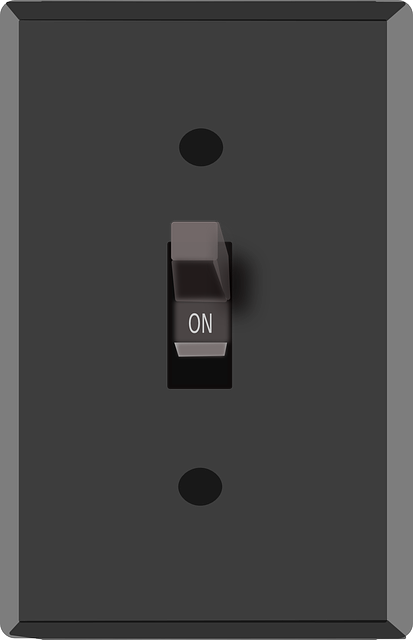
Light switch habit
Light switch habit

“Hey! Turn that back on!” I heard from the hallway one day.

It had happened again.

We have taught our children, from the time they were young, to turn off lights as they leave a room. Someone had turned out the light while there was someone still in that room.

It was a case of what I like to call “good habit—bad timing”.

It takes 21 days to form a good habit.

How amazing that the brain, once trained, knows what to do on its own! Eventually we no longer have to think about what to do and how to do it.

Imagine if you had to reinvent tying your shoe, each time you did it. We can turn off a light without thinking, even without looking at the switch. We can be thinking about the next task in the next room while we finish the task in the current one.

The mind is wonderful!

During an exercise class, I heard a phrase worth remembering:

“That which is used, develops; that which is not used atrophies.”

At that time, I did not know the meaning of the word “atrophy”, so I guessed it meant the opposite of “develop”. Since our family has a motto of knowing, instead of guessing, it bothered me I didn’t know for sure, so I looked it up.

So many habits go into each action…

Think of all the habits working in this experience:

  1. The phrase, repeated, became a reminder of the good of learning, repetition, and training.
  2. The habitual use of English caused me to guess correctly at the meaning of a word in context.
  3. The habit of exercise, itself, gave me a lifelong urge to keep moving, partly spurred on by thoughts of atrophy.
  4. Our habit of being sure of facts caused me to bother with a dictionary.
  5. A family habit of returning a thing to its place enabled me to find the dictionary.
  6. A habit of working alphabetically caused me to turn to the front of that huge book.

Imagine life without habits!

How difficult it would have been for me to benefit from the experience had I not had all those habits! Oh, the drill, supplied by faithful adults, that formed them in me!

The sad thing is that some children who lack faithful training might be learning to hate exercise instead of fearing atrophy. We have many such children living among us, these days—lacking drill in good habits—and this loss causes many problems. They never reap any benefit from life’s normal experiences. They become abnormal.

And we have to make up for their loss all around us.

Our children do not have to be among them, though. The home is the perfect environment for instilling good habits.

Let’s do it!

_______________

More tomorrow.

(Photo credit: Wikipedia)