We should train our children in every habit of good, such as obedience, quietness, tidiness, and so on. We want to produces good adults. However, how on earth do we instill habits into children?
The three-stage process begins with repetition.
I can type a list of all the countries in Southeast Asia, from memory:
Malaysia, Laos, Burma, Kampuchea, Brunei, Vietnam, Indonesia, Singapore, Thailand, Philippines.
I can type a list of all the English auxiliary verbs from memory:
is, am, are, was, were, be, being, been, shall, will, should, would, may, might, must, can, could, do, does, did, have, has, had.
Formulas for geometry, rules of the road, conjugations of foreign verbs, Bible verses, State capitals, all still reside in my attic, ready for me to climb up there and retrieve them. I learned them through repeating. They may fade as I age, but that will not mean that the repetition I used to learn them was wasted.
sad dad fad fads sass dad lass lass sass…
Repetition has saved me trips to the reference section of the library. It saves me mistakes, it helps me be a better teacher and helpful person, and it is fun. It is especially fun if after 40 years, I hop on a bike or sit at a keyboard, and every skill is still in place. It makes me very glad for asdf jkl; asdf jkl; asdf jkl;
Repetition is a great learning tool, one that we can teach our children to enjoy, if we do not mind making a little effort at helping with it. You know: songs, games, flashcards, etc. Our children’s future successes are worth more than a little effort, on our part, and on theirs.
Repeatedly asking the same question is one effort that works. Every time we went shopping, I would ask my children what was the rule. They knew. “If anyone but Mom touches merchandise, we all have to go back to the car.” I made it stick. They knew that, too. That repetition saved many a gift store.
This policy of repeating was a big part of our learning method throughout life.
What is seven times eight?
When do we feed the animals, and why?
How do we know a tornado may be coming?
What’s the first thing to remember in case of fire?
What are friends for?
Who loves you?
Why do you exist?
How do we spot a manipulator?
What should you do if someone tells you not to tell Mom or Dad?
What does it actually mean to acknowledge Jesus Christ?
What should you look for in a possible future spouse?
Who should you trust if Mom and Dad are not around and you don’t feel safe?
Your children can learn any important thing through repetition. Even in their adulthood, one of our children came straight to us when someone said, “Don’t let your parents know I told you this,” and in a dire situation, when no family was around, one of ours immediately knew whom to trust.
Our children can reap what God intended from good habits, if, by the time our babies are crawling, we’ve had the pleasure of instilling good habits into them.
For instance, we know we should keep them out of the cooking area, so we train them to stay out. Sometimes this is the first clash of wills between the darling babe and the soft mom. It can seem like war, if Mom doesn’t know how to:
Train in Good Habits
Habit training
In the beginning, for instance, we must teach a child what “hot” means, to fear when a thing is hot, and to trust our word on the matter. Use a hot light bulb and tell him “NO—HOT!” Act like you’re preventing him, but let him touch it briefly. Ask if he wants to repeat. If you see unwillingness, it’s a sign the child knows what you mean. If he cries, keep telling him it’s hot.
Anger and yelling do not help; they hinder. Anger is for the devil, not for teaching; yelling is for long distance, loud environments, or extreme emergencies, not for teaching.
Consistent firmness is the key. If you do not have time to be consistent, use a playpen or high chair to confine and thereby protect the child, or enlist a helper. “No” must mean “no”. If you are too lazy to be consistent, thinking about burn scars on your baby should help you feel stronger.
You must not cave in to crying. Crying sometimes is a good way for a baby to communicate. Crying to get one’s way is bad. Do not teach the child that crying to get his way is good.
Draw the line where you want, and make it stick. In our kitchen, one cabinet was permissible, but the rest of the kitchen was off-limits, during cooking. At crawling age, a child can grasp this.
Overcome Picky Eating Habits
We know we don’t want picky eaters and do want well-balanced diets, so we train them to eat. This can be another war, a bigger one, again avoidable, if Mom knows how to begin:
Be sure you do not serve food your husband will not eat when he is present. Save it for when he is gone. Be sure he understands this is a time of training, both in obedience and in habit, and you need his backing.
Make a new rule that every person will take at least a bite of every food on the table and eat that one bite all gone, no exceptions.
Anyone who complains about one bite, gets two bites. This is all done very pleasantly, not in a way that causes mealtime to be a war.
All food must be gone, not just pushed around, before getting any seconds or any dessert, again, all communication is friendly, matter-of-factly.
The only consequence is no other food offered at that meal. Eat one bite (or two for the grumpy) of everything if you want seconds of anything. End of discussion.
You likely are seeking the next step, here, but that is all there is. This process, based upon natural hunger, applied consistently, teaches the child to like all foods and to clean the plate.
All their lives, my children were afraid around off-limits things and unafraid of green things on the plate. It was good.
“Hey! Turn that back on!” I heard from the hallway one day.
It had happened again.
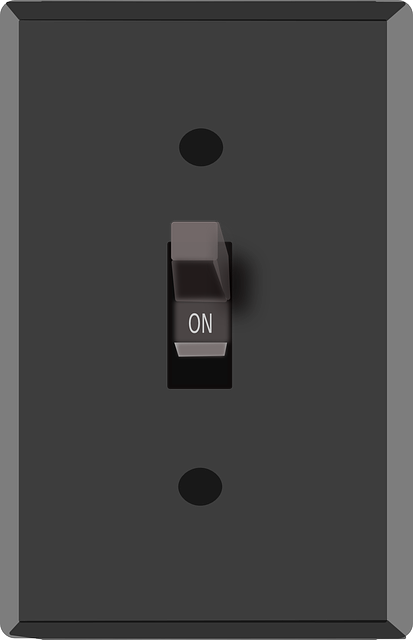
We have taught our children, from the time they were young, to turn off lights as they leave a room. Someone had turned out the light while there was someone still in that room.
It was a case of what I like to call “good habit—bad timing”.
It takes 21 days to form a good habit.
How amazing that the brain, once trained, knows what to do on its own! Eventually we no longer have to think about what to do and how to do it.
Imagine if you had to reinvent tying your shoe, each time you did it. We can turn off a light without thinking, even without looking at the switch. We can be thinking about the next task in the next room while we finish the task in the current one.
The mind is wonderful!
During an exercise class, I heard a phrase worth remembering:
“That which is used, develops; that which is not used atrophies.”
At that time, I did not know the meaning of the word “atrophy”, so I guessed it meant the opposite of “develop”. Since our family has a motto of knowing, instead of guessing, it bothered me I didn’t know for sure, so I looked it up.
So many habits go into each action…
Think of all the habits working in this experience:
The phrase, repeated, became a reminder of the good of learning, repetition, and training.
The habitual use of English caused me to guess correctly at the meaning of a word in context.
The habit of exercise, itself, gave me a lifelong urge to keep moving, partly spurred on by thoughts of atrophy.
Our habit of being sure of facts caused me to bother with a dictionary.
A family habit of returning a thing to its place enabled me to find the dictionary.
A habit of working alphabetically caused me to turn to the front of that huge book.
Imagine life without habits!
How difficult it would have been for me to benefit from the experience had I not had all those habits! Oh, the drill, supplied by faithful adults, that formed them in me!
The sad thing is that some children who lack faithful training might be learning to hate exercise instead of fearing atrophy. We have many such children living among us, these days—lacking drill in good habits—and this loss causes many problems. They never reap any benefit from life’s normal experiences. They become abnormal.
And we have to make up for their loss all around us.
Our children do not have to be among them, though. The home is the perfect environment for instilling good habits.
You think there were no angels in the sky that night.
You think there was no star that shone so bright.
You think that Mary spun a yarn,
You think that Joseph bought it.
You think no wise men broke the news.
You don’t think Herod fought it.
The news is good.
The joy is great.
In Bethlehem,
A family waits.
You think that life’s not fair when you look around.
You think that if there was a God his morals are unsound.
You think religion’s for the weak.
You think faith a delusion.
You think the world is
The way you think the world is.
Glory to God.
Peace to the Earth.
From transcendency
To human birth.
You think it couldn’t happen and if it did it failed.
You think that God as one of us would surely have prevailed. You think that God would sort…
Not so very long ago, (about thirty years, or so) we began homeschooling in the middle of the school year.
It can be tough.
Or it can be total joy.
Or it can be both.
I’m here to encourage you: You can do this. You can make it a beautiful combination of toughness and joy.
How it is with your child’s new school!
I can show you how.
What follows are links to a five-part series of actual steps you can take to maximize your experience, and your student’s experience, as you wander through this new land called “Homeschool”.
For better or worse (It’s better, I promise!) you are now the 100% proud owner of a somewhat used child. Here’s how to spruce up your new acquisition and enjoy a great start-up and lots of remaining miles!
When you have a couple of weeks behind you, start taking a closer look and planning for the entire journey. No sense in running out of gas or getting lost. It’s time for detailing and getting a map.
Changing the oil; getting the junk out of the radiator, and a decent set of tires can make all the difference in the world! You’ll go further and be more sure of arriving at all!
Those who get the most out of any trip are those who invest their entire beings into it. Is it time for you to make a major investment of your whole heart?
As an old song goes, the very beginning is a “very good place to start”.
Once my husband and I saw the need to educate our children at home, though, we began in the middle. We were not wise enough to see the need at the very beginning of that school year. Soon after that, we became too desperate to wait for another beginning.
We were what I like to call “middlers”.
After counseling several moms who have made this choice, I would like to share a good way to succeed at it. First, let’s look at the dilemma—how we felt (and how I have found that most people feel) in this predicament:
Scared. God says, “Fear not,” but we fear anyway. When you begin in the middle, you have greater temptation to fear. Often you have not deliberated, planned, and shopped for an entire summer. You fear that you are panicking, rejecting the status quo. Rather than simply not showing up, as most new home schoolers do, you must face irate professionals who think you are stealing their children, or worse, their money. This can be scary.
Uninformed. Some worldly systems neglect to tell you many significant things. You perhaps do not know what your child has studied and more importantly, how well he actually did. You may not understand achievement tests. Sometimes it is to the teacher’s advantage to keep parents at a distance. Other times, it just happens. How can you know what has been happening when you were not there? They taught, but did your child learn?
Without vision. All you know is that the current arrangement is not satisfactory and that you must devise a new strategy. You simply do not know what it is, yet. Perhaps you feel the Lord will lead, but perhaps He is waiting for you to take that first step…. How can you know?
Wounded. Usually, the decision to begin in the middle springs from hurtful happenings. Your child was failing, the teacher was angry, the other students were cruel, or whatever. Do not deceive yourself into thinking that such enormous circumstances have not touched you personally. What is more crucial, do not think they have not touched your child. Such situations can hurt a lot, and they can hurt a long time.
Distracted. It may feel like a thousand voices are shouting at you, now. Your families, your “teachers”, your neighbors, and maybe even your friends are telling you something, and usually it is not something helpful. Total strangers will feel compelled to voice an opinion. You may so tire of it, that even favorable opinion can irritate. It can be difficult to concentrate with so many voices sounding at once.
Strapped. You promised you would do whatever it takes to help your child, and if you were working outside the home then, you face reduced income and a slight increase in expenses (curriculum) now. If your salary caused you to inflate previous spending, you are wondering where the money will come from. To remain constant in your commitment, you have to think about expenses.
Unsure. You cannot fathom how anyone can stand in front of a child, especially his own, and say the words to make learning happen. You do not know where to start, what to write on the blackboard, when to have recess, how to shoot a basket—it can seem ridiculous, if you list it all. You do not even know how much of this you need to know.
Is this you? Cheer up; there is an easy way to solve these problems and to begin with an impressive steadiness. I always counsel someone in your position to do the same thing, because it works better than anything else can. In fact, your position is the easiest to recommend for, because there really is only one way that works well.
What makes sense is to use curriculum that is ideal for beginning in the middle. You must look for a curriculum that consists totally of workbooks prepared to be consumed at the rate of one per subject per every three weeks, or so. Very importantly, this curriculum must have a placement test. Several curriculum companies provide what I am suggesting, what home educators call “consumable curriculum”. (The child writes in the text, consuming it.) You will learn to choose your curriculum for yourself, someday, but you will be thankful if you begin with this.
Let me explain how well consumable curriculum can serve you.
First, you will gain courage when you look at the materials consumable curriculum provides. The three-week increments make it seem more attainable. You will realize that there is little for you to do, few ways to fail. Your children will relax with this material, for the same reason, and will approve your decision.
Since you have little familiarity with your child’s education, the placement test is your friend. A few sample questions are geared to the scope and sequence of the curriculum in the subjects of math and reading. After administering this test, you will have the joy of handing your child exactly the materials he needs for success in your new school. If he needs catch-up work, begin with one or two workbooks for problem areas. Then you are free to proceed where he is ready to work. If he is substantially behind in one subject, you can place him where he can achieve learning, and work extra in that area. If he is ahead, you can place him where he can finally feel a challenge. You both will love the smooth transition and instant success.
Vision will come immediately. It will be with great relief that you let the course work be your lesson plan. You will see more success than you dreamed you could generate, and it will be its own reward. You will see school through different eyes once you have tasted the joys of watching your child learn. As I said, shop around later, this summer, after that first half-year sample. For now, this will be all the vision you will need.
Because of past stress, you will not need the burden of determining your child’s needs and how to provide them. Perhaps you will feel a need to spend your weekends writing your own curriculum, someday. If so, this is your ticket to that day, and you both will benefit from resting wounded hearts along the way. For now, though, you both will need a time to coast, a time of getting to know each other. Learning must happen, but it does, with consumable curriculum. Consumable types just happen to be easiest for the mom. Children are relieved at the simple format, too.
These curriculum companies also provide encouragement, send you inspiring newsletters without cost, and provide toll-free numbers. You will have access to new voices, voices that help, encourage, and direct. These professional educators strive to serve the home school mom. Their attitude is that the only time a question is dumb is when it is unspoken. They love to help and they believe in home schooling, or they would take other jobs.
Yes, it costs just a bit more overall, to order consumable curriculum piecemeal. Still, a half-year of this type should cost far less than a full year of any other. (You cannot buy halves of hardbound texts.) I do not need to tell you that a half-year of consumable type costs much less than the wrong level of any other.
If you live in a big town, you probably can access consumable curriculum companies at a Christian bookstore. In very large cities, you may be able to locate a store entirely devoted to home schools. In these cases, you may go to the store every three weeks, and purchase only what you need next, saving even more.
If you are still unsure, consider this: If your child is reading, he can teach himself with this type of curriculum. This does not mean that you may leave him home alone, or that it is good to ignore him. What you will find, however, is that when you skip the lecture and the blackboard, your student finishes faster. The material is arranged so that the child reads a little and then answers questions. Only when he cannot understand, should you explain. The child is free to learn without suffering unending lecture, you are free to do a little housework, real learning happens, and you hardly had to do a thing. Are you surer, now?
O.k., let’s talk about the down side. You knew this was coming. I want to be fair and make certain you know what to expect.
The only problem I ever had with consumable curriculum, after trying two major providers, was the cost. The embarrassing thing about this is that it is so easy to make it reusable—have your children write the answers on another paper, instead of writing in the booklets. I feel silly never to have thought of it. Still, with six children, I did not feel we could afford to buy all their books all over each year. That may be a big consideration for you, too, but an easy one to overcome.
Some home school moms suspect all that filling-in-the-blank will lead to students not knowing how to write essays. If so, I do not know of it. My oldest received all his home education from consumable curriculum, and proceeded to “CLEP” English I. It did not seem to have hurt him. If I were worried about it, though, I would assign some extra essay work, a simple solution, again.
The only other hindrance that I can imagine with consumable curriculum is if your child does not read well. This is a two-fold problem involving both placement and performance, but do not fault the curriculum; it would be a problem whatever curriculum you choose.
The placement tests might not be entirely accurate with the slow-to-read child. I would administer the test, nevertheless, because it is not expensive and would give me better understanding of my child’s learning. Then I would use the results to help me examine the texts, as I selected the material I wanted to try. Consumable curriculum is so wonderful for this project, in that it allows you to buy very little, as a trial.
In the case of the slow or non-reader, leaving the child to read and answer questions himself will not work. To solve this problem, I would help the child read the material, to improve his reading level. Failing that I would read it to him, making sure that he paid attention and grasped the material. For an older child, I might read it onto a tape, to give him some control over his situation. I might use all three techniques. It would not be easy, but didn’t you bring him home because it was too hard for others?
You can do it, dear Middler, no matter how scared, uninformed, confused, wounded, distracted, strapped, and unsure you are. All you need is the curriculum designed with you in mind. I did it, and so have others just like you and me.
Go ahead and start in the middle to make a new beginning.
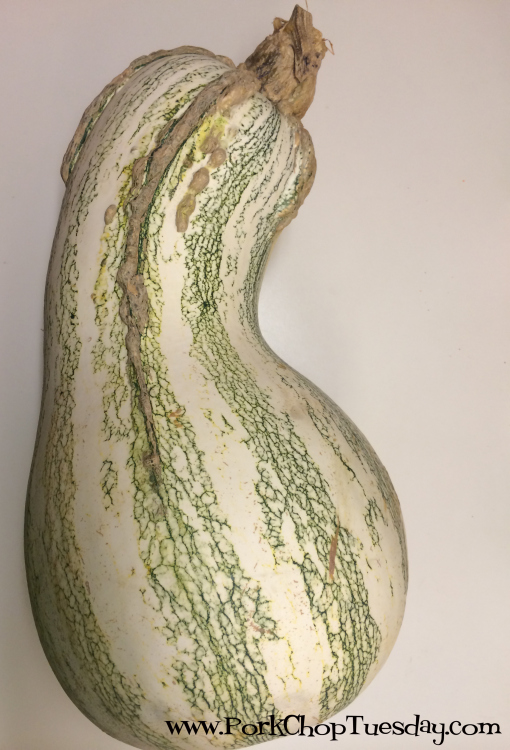
You may have seen these green and white beauties at your local pumpkin stand or farmer’s market this fall. They are beautiful to use in your fall decorating. Did you know you can eat them?
Cushaw has always been a part of our family’s Thanksgiving feast. Sometimes we would have it for Thanksgiving and Christmas, depending on how big of a cushaw we found.
I realize that traditionally at holiday time folks have a sweet potato casserole or sweet potatoes with marshmallows on top.
My Dad grew up in Baton Rouge. Baton Rouge’s warm climate is perfect for growing cushaw.





 Home's Cool!
