Posted in Believe it or not!, Blessings of Habit, Health, Photos, Womanhood

DRAMA QUEENS!

Mostly I will allow these shots to speak for themselves.

I don’t know where you live, but if you know anything about wasps, which is what the large creature is, here, you know that anything smaller than a wasp that can make a wasp act terrified, is a force to be dealt with.

I dealt with them both.

But look!

Trying to Escape
Trying to Escape

What you see here is a large, round, brown planter beside a smaller, rectangular, gray planter, with a large black wasp caught in a black widow web. It is she, herself, also visible, moving in. Can you see her red dots?

Closing In!
Closing In!

Sorry I couldn’t stage these better. Uncooperative subjects! The widow is obvious unafraid; not so, the wasp.
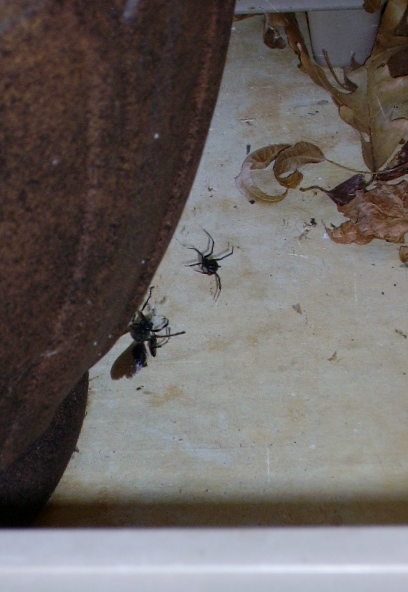
Just like that, the wasp is dead.

Based on the size of it, the wasp may have been a queen? Makes a good story: One queen defeats another.

"I'll wrap this up later..."
“I’ll wrap this up later…”

It’s that time of year, when we remember we are surrounded, here, with large and dangerous beasts. Always, stay at least four feet from a black widow spider because it is a jumping spider and is fearless.

Well, almost fearless. I used a zoom function to get this seemingly close. At first she was put off by my flash, but she got over it.

And always, ALWAYS go immediately to a hospital if a black widow spider bites you. They may not give you anti-venom, but they will know what to do and you will need close observation for at least two days. A black widow spider bite can kill a full-grown man in about 4 hours. Do not think you are an exception.

As a clue, besides the obvious red marking on a shiny black spider, the web is tough and of no apparent pattern, as if the weaver were drunk. It makes an audible tearing sound if you tear it, because it is such a tough web. They prefer undisturbed places, which our front porch has become, since it’s been so hot around here.

Time to sweep!

Posted in Believe it or not!, Blessings of Habit, Good ol' days, Health, Herbs, Homemaking, Inspiring, Photos, Scripture, Wisdom, Womanhood

Get All You Can–Can All You Get – Part 3

romantic rose honey
Romantic Rose Honey

Cannng Failure and the Moral of the Story!

Let’s talk a moment about canning failure. Although any canned food that fails to seal is acceptable if refrigerated and eaten within 3 days, undetected failure gives you food that is spoiled. It is unusable, offensive, and poison.

Either way, we must empty the jar, clean it, and try to find and fix the problem.

If the only trouble was debris on the jar rim, or a defective flat, it is an easy fix. Refill it next time and it will work fine.

However, if that rim is the problem, the jar is useless the way it is. Unless you know someone who knows how to do the impossible job of fixing a broken jar, the best thing you can do is to get it out of your life so you can avoid those problems in the future. It’s best to place it inside a bag, break it, and throw it away, to prevent its accidental re-use.

Sisters, we are the jars.

Yes, we are the earthen vessels that God uses for storage. But instead of physical nourishment, the things stored within us are spiritual life-giving treasures.

He gives His Living Word (Rhema) to us (John 1:1-4). It is so refreshing, like fresh fruit to our bodies, satisfying thirst and energizing us, but must be handled with extreme care.

Then He sustains us with His Written Word (Logos), which is also life-giving to us, the routine staple diet every Christian needs and longs for (John 20:31).

He also desires us to contain His meat: obedience and righteousness (John 4:32, 34; Hebrews 5:12-14).

Why does God desire to store His heavenly treasures within us? So that much good can come from these treasures here on this earth. God’s ways are difficult for the unchurched to know of. As vessels, we make the Kingdom more available and more palatable to the spiritually starving.

There is much we can do to make careless people notice God favorably (Romans 10:14). You’ve heard the saying: “You are the only Bible some people will ever read.” Another Christian saying goes: “Do not force the reason for your hope upon those who don’t ask for it, but live so that they will ask.”

Oftentimes God also uses us to make His Kingdom more understandable to some who desire it but are confused (Acts 8:30-31).

He uses us to make the Kingdom more easily acceptable to others (1 Corinthians 9:19-22).

It’s that dinner invitation, soft answer, or offer of baby-sitting that can woo people to Christ who would otherwise never turn to him. We are always to be His containers.

Just like the food we pressure can, God’s treasure within us must be prepared for the process. We must be sure it is clean, pure wisdom; no dirt or bug spots allowed (James 3:17).

Sometimes we cannot receive it all at once, either, any more than a jar could receive a whole potato (John 8:31-32, 16:12-13).

Sometimes it simply “goes in” better once it’s been softened by teaching, summary, or example (Ephesians 4:11-13).

 Tomorrow: The Master Potter!

Posted in Blessings of Habit, Good ol' days, Health, Homemaking, Inspiring, Photos, Who's the mom here?, Womanhood

Get All You Can–Can All You Get, Part 2

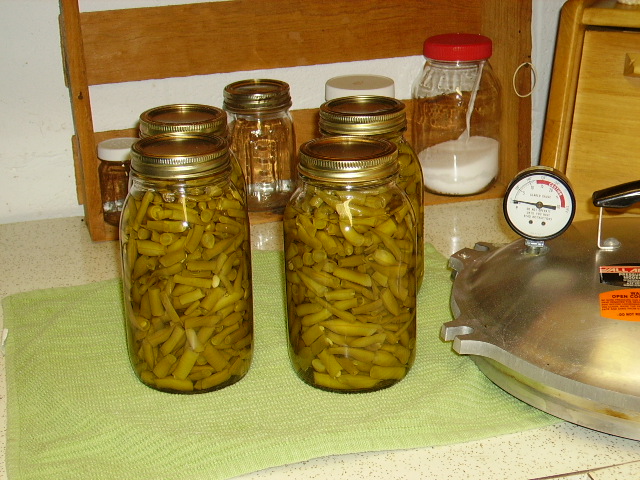
four quarts green beans
Four Quarts Green Beans

Canning Mechanics!

Now let’s consider the canning containers.

It’s not just the food; the jars must also be clean. Some mothers employ children for this chore because they think their own hands will not fit through the mouth of the jar. Actually, a wet, soapy, adult female hand will usually fit into a very warm jar. It is not a bad chore for a careful child, though.

We must take extra care to examine the jars for chips on the rims. Chipped jars will not seal and may even further chip or break altogether, so are useless for canning. You need one flat (or lid) for each jar of food you process and about a dozen or so screw bands (or rings) that aren’t too rusty.

The pressure pan consists of the pan and lid themselves, the rubber gasket (unless it is the metal-to-metal type), the over-pressure plug, the vent tube, the pressure regulator, and the cooking rack. These parts help cause, contain, and control the pressure and temperature of the food. To can the food, we add water to the pan, close it, install the pressure regulator, and apply heat for the recommended time.

The extreme benefits of canning foods are not obvious to us, but before the advent of canning it was usual and quite acceptable that people would die of starvation, malnutrition, or poisoning. With pressure canning we have long, safe storage of any food we need or desire.

Since we’re accustomed to canned foods, the benefit we notice most is how easy it is to use! Who hasn’t reached for canned pintos to make quick chili rather than soaking and cooking dried beans all night and day?

Canned foods also are timely–you may, in one afternoon, pressure cook 10 pint jars of raw green beans for 20 minutes and have them for a quick Monday dinner vegetable for 10 weeks. Compare that to shopping, rinsing, snapping, and cooking for an hour every Monday night for 10 weeks and you see the difference.

My favorite advantage, though, is the gift-ability of canned foods. People love to receive this kind of stuff, it can be so pretty, and it does not thaw on the way to meeting.

Tomorrow: Canning Failure and the Moral of the Story!

Posted in Blessings of Habit, Health, Homemaking, Inspiring, Photos, Who's the mom here?, Womanhood

Get All You Can–Can All You Get, Part 1

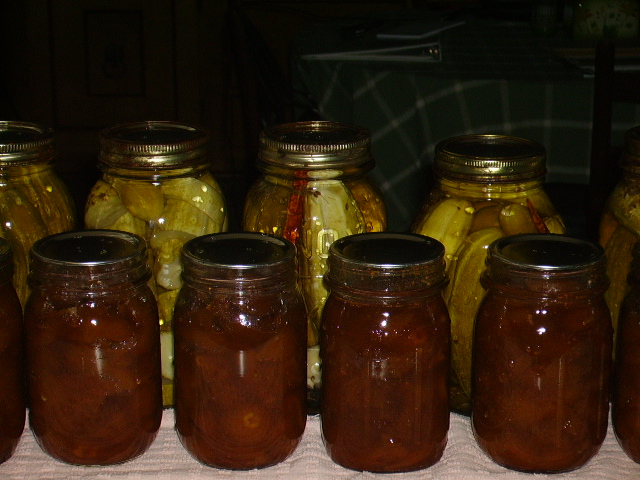
pickles and fig preserves
Pickles and Fig Preserves!

Introduction

You put beans, salt, and boiling water into a jar, cap with a hot lid, set it in a pressure pan that has a couple of quarts of water in it, apply the lid and the pressure gauge, turn on the heat, wait a while, turn it off, take the jar out, and you are done. What could be easier? People do this all the time!

Yet it took us about 4000 years or so to figure it out. The idea of canning, itself, did not come about until the early 1800’s. Tin cans were first used in the U.S. in 1839. Mr. John Mason invented the canning jar in 1858.

Before then, we starved a lot.

There are many advantages to cooking food at all. Many foods become much easier to chew and swallow. Imagine eating a raw roast! Cooking also often improves digestibility. Eating a nice big helping of delicious raw peas would put you through abundant abdominal agony!

Although cooking usually also improves the flavor of foods, we often prefer some foods raw, or fresh-frozen, such as strawberries: the canned ones are like mush. Still–if your only choice is between overly soft strawberries and NO strawberries, you begin to see the advantage.

Almost any type of food can be canned, though some with less success. Fruits are canned at 5 pounds of pressure for a short time because their acidity makes them less apt to spoil and their fragility makes them disintegrate easily. Vegetables are more rugged and less acid, so they require 10 pounds for around 30 minutes. Meats must be very thoroughly cooked and so are placed under 10 – 15 pounds of pressure for about 90 minutes.

The purpose of the pressure is to achieve higher temperatures: The water in the pressure pan boils at 240 degrees (instead of the normal 212 degrees) under 10 pounds of pressure, the secret of the short cooking times.

To prepare food for canning you must first clean it. Beans, peas, etc., may simply be rinsed several times. Greens require at least seven rinses. Carrots, potatoes, etc., must be well-scrubbed with a brush. Even your own organically grown, guaranteed unsprayed apples must be carefully washed because ants, roaches, and flies crawl on them all the time. These creatures spread staph, strep, fungus, and yeast diseases.

After cleaning, cut the food into bite-size or jar-size pieces. Most foods do not need peeling but beets and tomatoes usually do. Some people also blanch food before packing it into the jars. The purpose, then, is to get more into the jar with slightly softer vegetables. Beets, potatoes, peaches, and tomatoes peel more easily when blanched.

Tomorrow, Part 2: The Mechanics

Posted in Believe it or not!, Blessings of Habit, Health, Homemaking, Inspiring

I’m Back–I think!

two minutes
Two Minutes

The long break has been full, just full. Doctor visits, 1000-mile trips in two cars, garden harvest, company, you name it, we had it. I never meant to stay away this long.

I have some new direction, though, and feel ready to finish what I started, here. Basically, though, the new direction will be posting about every 3 days instead of daily. Sorry.

However, all the excitement about my eyes led to the new discovery that my circulatory system seems to be in perfect health. Yea!

So, to start off with a big rush, let’s talk about multi-tasking. I’ve been doing some of it!

Do you remember from past posts, how long it takes to make a bed? The answer is two minutes. And that is exactly how long to wait after lighting your Lampe Berger. Combine the two and you have a tidy and lovely scented bedroom.

Instead of a musty mess.

Right now I am waiting, waiting, waiting for my pressure cooker to come to pressure. While I need to stay by the kitchen and pay close attention to the stove, I am using this time to catch up on blogs. I will keep at it until it is totally finished pressuring my jars of green beans.

Then I will damp mop my kitchen and laundry room floors while attending to some delicate clothing in the dryer. Do not want to over-cook these, as they become nearly impossible to unshrink and unpleasant to fold.

After that, it is off to the showers for me, where I will tend to the damp shower surround once I am finished with my self time. Everyone knows the shower is easiest to clean when it has had a good wet-down.

So how about it? Do you multi-task? Share with us how you get more than one thing done at a time.

And thanks for your patience and kind words while I was away. They mean more than you can know.

Posted in Homemaking, Inspiring, Recipes, Wives

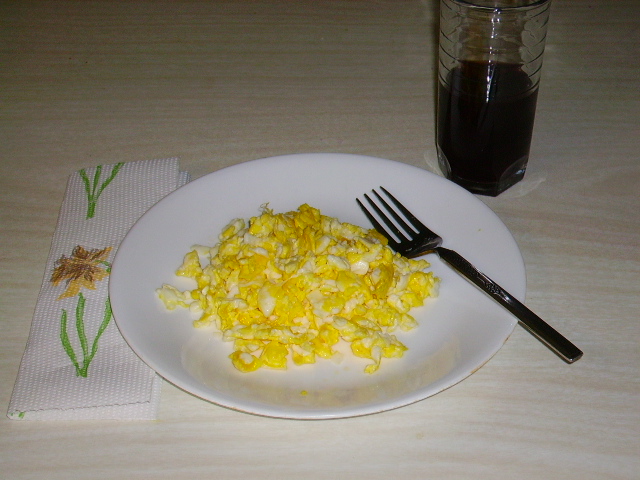
The A-Okay Breakfast – Stir Fried Eggs!

Some friends took my husband and me out for dinner not long ago, to a Japanese restaurant where everyone sits around the grill and watches the chef entertain with cooking.

These chefs are wonders! They throw eggs, build train engines from onion rings, and juggle spatulas. And they can cook really fast.

I paid attention. I never plan to build a choo-choo from onion rings, or throw rice at people, but the SPEED! After tasting the food, I knew I had discovered one more way to make a breakfast I could eat.

And to make it fast.

Stir Fried Eggs

2 eggs
1/2 T. butter

You can tell from the ingredients, this will be fast, can’t you?

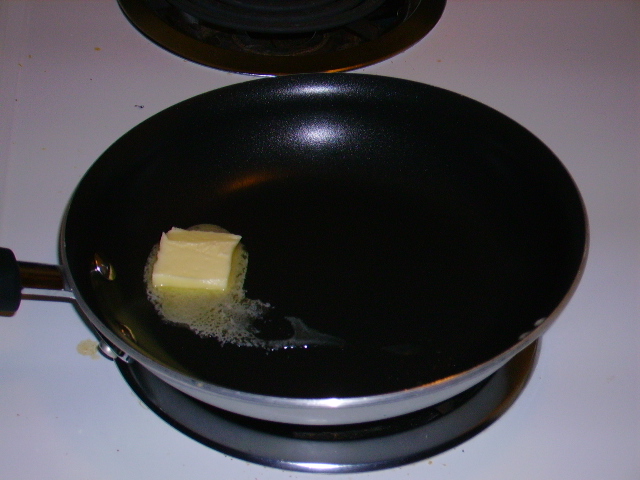
High Heat - Watch Carefully
High Heat – Watch carefully

Put butter in pan and turn on high.

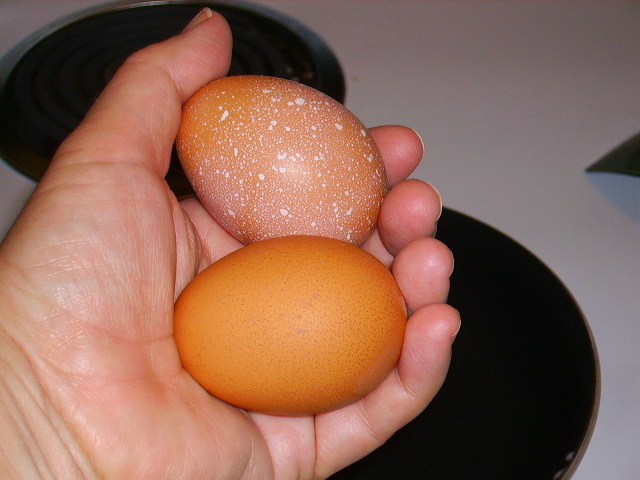
Aren't TheseBeauties?
Aren’t These Eggs Beauties?

Have spatula ready. You need one with a flat front edge.

Once butter is all melted, break two eggs into pan, still on high heat.

REady to Go!
Pan and Eggs Ready to Go!
Start Chopping
Start Chopping Eggs Immediately

Quickly pick up your flat-edged spatula or spoon and begin chopping eggs very quickly, in all directions. Scoop or scrape particles together and chop more, until all is chopped, about pea-sized or even rice-sized, and quite done.

If pan seem too hot, control temperature by lifting or tilting pan, not by regulating the temperature of the burner. You need it hot. Prevent burning by quick and thorough stir-chopping.

Finished product
Stir Fried Eggs

Serve hot, with salt, pepper, soy sauce (opt.) and juice and/or coffee. Get good at this method and try it mixed with mayonnaise and fresh onion, for an egg salad sandwich. Mmm!

Posted in Blessings of Habit, Health, Home School, Homemaking, Pre-schoolers, Who's the mom here?, Wisdom, Womanhood

How to Take Care of Your Eyes – Rest!

Close your eyes and it will go away!This is my favorite treatment for every problem–just close your eyes! Maybe it will go away!

In the case of eye health, this is definitely true.

But no one tells us.

Study this set of posts. Link to them. Copy-paste them for your fridge. Someone you know needs this information!

Resting

When we do not get enough sleep, eye health breaks down. Do not let this happen to you.

1.  The only time your eyes get a rest or a chance to self-heal at all is when you close them. Open your eyes and they are on the job. Just as never resting would weaken a  soldier, so never sleeping could weaken the two guards you call your eyes. A good nightly amount is eight hours. If you cannot get that for some reason (sick children, etc.) then pay more attention to daily resting.

2.  You may need a timer for this one, at first. Every time you work for 50 minutes, rest your eyes for ten. This includes computer work, yes, but any reading or crafting is work for your eyes, no matter how fun it is. Give them a break.

3.  You know how tired eyes feel to you, When your eyes feel overly tired, try this: lie down and cover your eyelids with cool cucumber slices. Chamomile tea bags, boiled, cooled, and squeezed out, work too. Let the soothing compresses take you away!

So now you have it: Four ways to make for better eye health: nutrition, exercise, detoxify, and rest. Let’s all get going on taking care!

Okay, now comes the part we have to say in this lawsuit-happy world: This post is meant to inform and to satisfy curiosity, only, and is not a substitute for medical advice. Consult your doctor for information concerning your conditions. Much effort has been made to assure this information is accurate, however, medical research is always changing the facts, and new findings may supersede currently accepted data. I am NOT a doctor, only quoting several of them.