Broken things lead to other broken things. They can be like dominos. An exploding lightbulb can knock over a fragile vase. A broken tree can break another tree as it falls:
Broken Tree Breaking Tree
These trees, near our chicken house, are probably going to fall onto the chicken yard fence and break it, too. Ever try to bend or move a tree? Think of the extreme power in a falling tree that it can bend, and even break, a tree near it.
When we humans break, we need to be careful how we fall. We have the above type of power over our fellow man, sometimes.
But look at this:
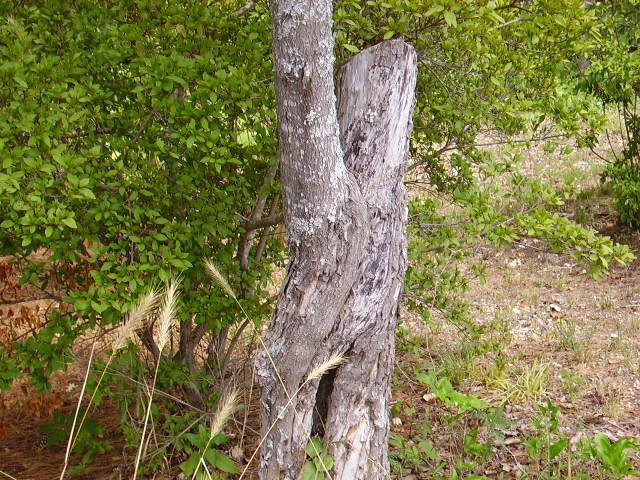
Mended Tree
This poor old tree, though obviously having seen better days, someone has mended in hopes it will last a bit longer. I like its pluck. See how it seems to be trying to dance with the grasses?
Yes, a few days ago, we got rain! It was only 3/8 inch but it was so wonderful, we sat on our front porch and got wet watching it. Then, only two days later, we received that much, again, putting us at 3/4 inch. Not much, but we were silly with excitement.
Then, of course, I just had to photograph it and see what would show up.
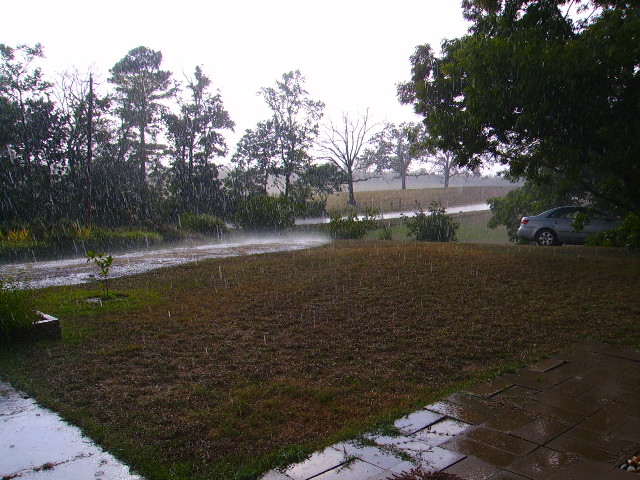
In the camera viewfinder, the drops did not look as if they would show, but here they are:
Click on photo for zoom to see details.
I took MANY shots, but I know although I could look at many more, you might prefer just one. I chose to show how big the drops were and how steam was rising as the water landed on our hot, hot world. Also a view of our parched grass appears here, and dead trees in our neighbor’s pasture. Please ignore the weeds in the patio: it’s been over 100 degrees every day (around 40 C) and the soil has been too hard.
And, yes, even then, while it was raining, the sun was still trying its best to shine through.
I felt a bit silly, like a little girl, taking pictures of rain, but I could not stop myself. I was so happy for it. Since then I have visited with several friends, and guess what: In almost every family I know, someone was photographing this very rain. HA!
Just had to share that fact with you so you could better understand how much we lacked rain and how universally happier everyone is, these days.
Let’s talk a moment about canning failure. Although any canned food that fails to seal is acceptable if refrigerated and eaten within 3 days, undetected failure gives you food that is spoiled. It is unusable, offensive, and poison.
Either way, we must empty the jar, clean it, and try to find and fix the problem.
If the only trouble was debris on the jar rim, or a defective flat, it is an easy fix. Refill it next time and it will work fine.
However, if that rim is the problem, the jar is useless the way it is. Unless you know someone who knows how to do the impossible job of fixing a broken jar, the best thing you can do is to get it out of your life so you can avoid those problems in the future. It’s best to place it inside a bag, break it, and throw it away, to prevent its accidental re-use.
Sisters, we are the jars.
Yes, we are the earthen vessels that God uses for storage. But instead of physical nourishment, the things stored within us are spiritual life-giving treasures.
He gives His Living Word (Rhema) to us (John 1:1-4). It is so refreshing, like fresh fruit to our bodies, satisfying thirst and energizing us, but must be handled with extreme care.
Then He sustains us with His Written Word (Logos), which is also life-giving to us, the routine staple diet every Christian needs and longs for (John 20:31).
He also desires us to contain His meat: obedience and righteousness (John 4:32, 34; Hebrews 5:12-14).
Why does God desire to store His heavenly treasures within us? So that much good can come from these treasures here on this earth. God’s ways are difficult for the unchurched to know of. As vessels, we make the Kingdom more available and more palatable to the spiritually starving.
There is much we can do to make careless people notice God favorably (Romans 10:14). You’ve heard the saying: “You are the only Bible some people will ever read.” Another Christian saying goes: “Do not force the reason for your hope upon those who don’t ask for it, but live so that they will ask.”
Oftentimes God also uses us to make His Kingdom more understandable to some who desire it but are confused (Acts 8:30-31).
He uses us to make the Kingdom more easily acceptable to others (1 Corinthians 9:19-22).
It’s that dinner invitation, soft answer, or offer of baby-sitting that can woo people to Christ who would otherwise never turn to him. We are always to be His containers.
Just like the food we pressure can, God’s treasure within us must be prepared for the process. We must be sure it is clean, pure wisdom; no dirt or bug spots allowed (James 3:17).
Sometimes we cannot receive it all at once, either, any more than a jar could receive a whole potato (John 8:31-32, 16:12-13).
Sometimes it simply “goes in” better once it’s been softened by teaching, summary, or example (Ephesians 4:11-13).
It’s not just the food; the jars must also be clean. Some mothers employ children for this chore because they think their own hands will not fit through the mouth of the jar. Actually, a wet, soapy, adult female hand will usually fit into a very warm jar. It is not a bad chore for a careful child, though.
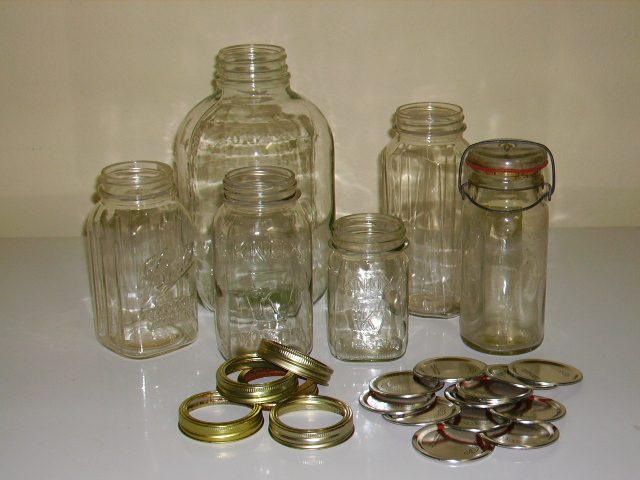
We must take extra care to examine the jars for chips on the rims. Chipped jars will not seal and may even further chip or break altogether, so are useless for canning. You need one flat (or lid) for each jar of food you process and about a dozen or so screw bands (or rings) that aren’t too rusty.
The pressure pan consists of the pan and lid themselves, the rubber gasket (unless it is the metal-to-metal type), the over-pressure plug, the vent tube, the pressure regulator, and the cooking rack. These parts help cause, contain, and control the pressure and temperature of the food. To can the food, we add water to the pan, close it, install the pressure regulator, and apply heat for the recommended time.
The extreme benefits of canning foods are not obvious to us, but before the advent of canning it was usual and quite acceptable that people would die of starvation, malnutrition, or poisoning. With pressure canning we have long, safe storage of any food we need or desire.
Since we’re accustomed to canned foods, the benefit we notice most is how easy it is to use! Who hasn’t reached for canned pintos to make quick chili rather than soaking and cooking dried beans all night and day?
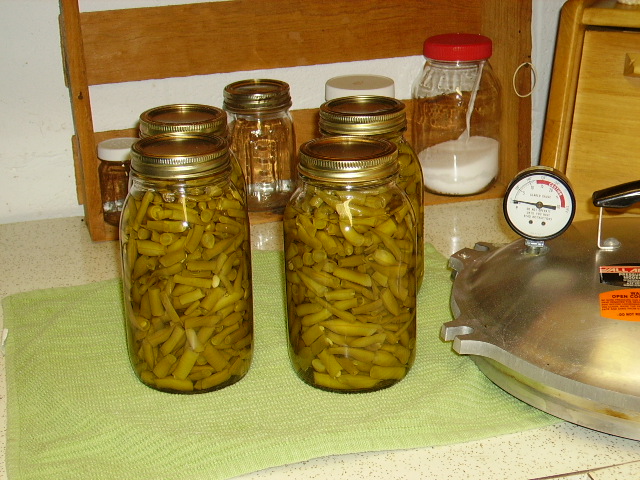
Canned foods also are timely–you may, in one afternoon, pressure cook 10 pint jars of raw green beans for 20 minutes and have them for a quick Monday dinner vegetable for 10 weeks. Compare that to shopping, rinsing, snapping, and cooking for an hour every Monday night for 10 weeks and you see the difference.
My favorite advantage, though, is the gift-ability of canned foods. People love to receive this kind of stuff, it can be so pretty, and it does not thaw on the way to meeting.
You put beans, salt, and boiling water into a jar, cap with a hot lid, set it in a pressure pan that has a couple of quarts of water in it, apply the lid and the pressure gauge, turn on the heat, wait a while, turn it off, take the jar out, and you are done. What could be easier? People do this all the time!
Yet it took us about 4000 years or so to figure it out. The idea of canning, itself, did not come about until the early 1800’s. Tin cans were first used in the U.S. in 1839. Mr. John Mason invented the canning jar in 1858.
Before then, we starved a lot.
There are many advantages to cooking food at all. Many foods become much easier to chew and swallow. Imagine eating a raw roast! Cooking also often improves digestibility. Eating a nice big helping of delicious raw peas would put you through abundant abdominal agony!
Although cooking usually also improves the flavor of foods, we often prefer some foods raw, or fresh-frozen, such as strawberries: the canned ones are like mush. Still–if your only choice is between overly soft strawberries and NO strawberries, you begin to see the advantage.
Almost any type of food can be canned, though some with less success. Fruits are canned at 5 pounds of pressure for a short time because their acidity makes them less apt to spoil and their fragility makes them disintegrate easily. Vegetables are more rugged and less acid, so they require 10 pounds for around 30 minutes. Meats must be very thoroughly cooked and so are placed under 10 – 15 pounds of pressure for about 90 minutes.
The purpose of the pressure is to achieve higher temperatures: The water in the pressure pan boils at 240 degrees (instead of the normal 212 degrees) under 10 pounds of pressure, the secret of the short cooking times.
To prepare food for canning you must first clean it. Beans, peas, etc., may simply be rinsed several times. Greens require at least seven rinses. Carrots, potatoes, etc., must be well-scrubbed with a brush. Even your own organically grown, guaranteed unsprayed apples must be carefully washed because ants, roaches, and flies crawl on them all the time. These creatures spread staph, strep, fungus, and yeast diseases.
After cleaning, cut the food into bite-size or jar-size pieces. Most foods do not need peeling but beets and tomatoes usually do. Some people also blanch food before packing it into the jars. The purpose, then, is to get more into the jar with slightly softer vegetables. Beets, potatoes, peaches, and tomatoes peel more easily when blanched.
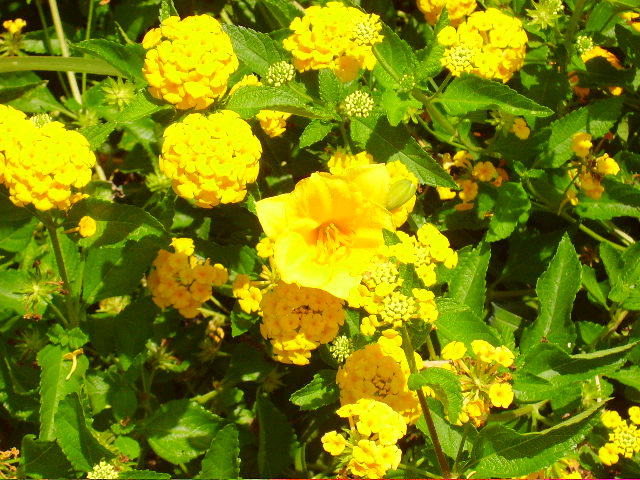
With our still ongoing drought, these amazing souls are doing their best to bring us “colorful” although they never receive the benefits of irrigation like their veggie neighbors do. Good job, guys. But…
Shy Visitor
…several gorgeous others dropped in to give us a really good show. This one was terribly camera shy. The red wasps were NOT. I had to work quickly, dodge a bit, and get back into the house, pronto. Still, I was pleasantly surprised when I saw how many flashes of “colorful” they were willing to add to our fun, here:
Caught ya!
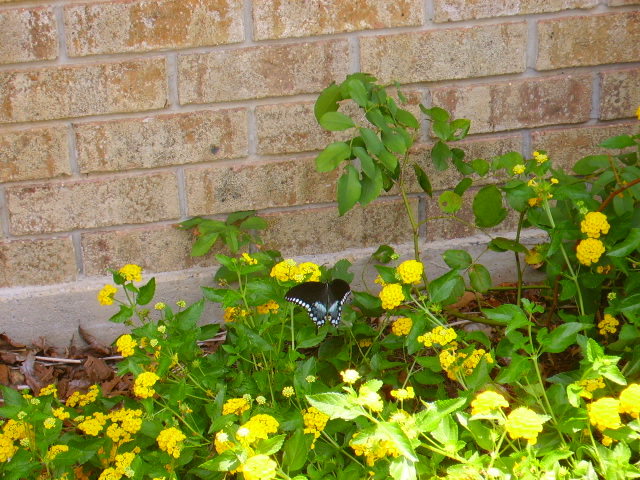
I have no idea what kind of butterflies these are, except I know they are the faithful kind; they come to my lantana beds every year. Some new ones showed up this year, though:
Swoosh!
I followed this one around a bit, and am so glad because…
Exposed!
…we get a glimpse of blue and red undies! Can you see it? If you click on the photo, it will zoom in for you. And, oh, look! Here is the shyest of them all:
I Spy!
It probably thinks it is hidden–I took several of this one zipping out of the shot.
These are not mostly canning recipes, but mostly hints about getting out from under a pile of vegetables on the counter. Of course, the solution is to eat them, but did you know:
It is perfectly fun and delicious to eat a cheese and mayo sandwich with a whole tomato on the side to eat like an apple?
Carrots, are irresistible sliced lengthwise and fried in butter, with a dash of onion, until soft and caramelized?
Grated zucchini keeps well in the freezer, and in recipe-sized batches would be ready for bread in the winter in a short time?
Bitter cucumbers, sliced and soaked in the refrigerator in vinegar/salt water will lose their bitterness in a couple days? And are yummy?
If your onions are not keeping well, you can still save them by slipping one into each jar of green beans before canning them at the same pressure?
Okay, now for the recipes!
Summer Squash Patties
3-4 c. grated summer squash
1 egg
¼ c. chopped onion
¼ c. self-rising flour
¼ c. powdered milk
¼ c. corn meal
salt and pepper
oil
Mix all together well. Fry in 2” patties in ½ inch oil over medium-high heat until well-browned. Drain on paper towel. Serve hot.
Cucumber and Onion Marinade
3-4 cucumbers, sliced thin, peeled or not
1 onion, sliced and separated into rings
3 Tbsp. salt, non-iodized
2 c. cider vinegar
Place onion rings over cucumber slices in large serving bowl. Add vinegar and salt. Add water to cover. Serve well-chilled; we like a few ice cubes in ours. Some people add black pepper, but I do not. If cucumbers are bitter, hold for 3 days before serving. If sweet, these are grand served immediately.
Green Tomato Minced Meat Pie
2 c. chopped green tomato
2 Tbsp. lemon juice
3 Tbsp. melted butter
½ c. brown sugar
½ c. raisins
½ t. salt
¾ t. cloves
¼ t. nutmeg
1 two-crust pie shell
Cover tomatoes with water. Bring to a boil. Drain. Add rest of ingredients. Bake in pie shell at 375 degrees for 40 minutes. Green tomatoes may be frozen in 2-cup batches, in summer, for use in this recipe, in winter. Just chop, package, and freeze. No need to thaw, first.
“No-tel” (Tastes just like the R-real thing.)
1 pt. peeled, raw tomatoes
1 jalapeno pepper
1 pinch rosemary leaves
½ t. canning salt
Place the above ingredients into each pint jar until you run out of ingredients. Cap with hot lids. Process at 5 lb. pressure for 10 minutes. To peel tomatoes, dip into boiling water for 1 minute. Dip into cool water. Slip skins off. Core.
This final recipe is for handling all the garden scraps such as vegetable peels, old pea vines, etc., IF you do not have chickens:
Compost
1 bushel clipping, leaves, vegetable waste, etc.
1 handful balanced fertilizer
1-2 pints good garden soil
Sprinkle to moisten, if needed. Mix well, using hoe in wheelbarrow. Seal in large plastic bag. Tie shut. Stack bags anywhere (barn, garage, etc.) and store for 3-6 months at 70 degrees or so. Open and apply to garden.
Oh, there is so much more, but we’ll change subjects for a while! See ya’ tomorrow!





 Home's Cool!