Posted in Blessings of Habit, Coffee-ism, Homemaking, Photos, Who's the mom here?, Wives, Womanhood

MONDAY! Whew!

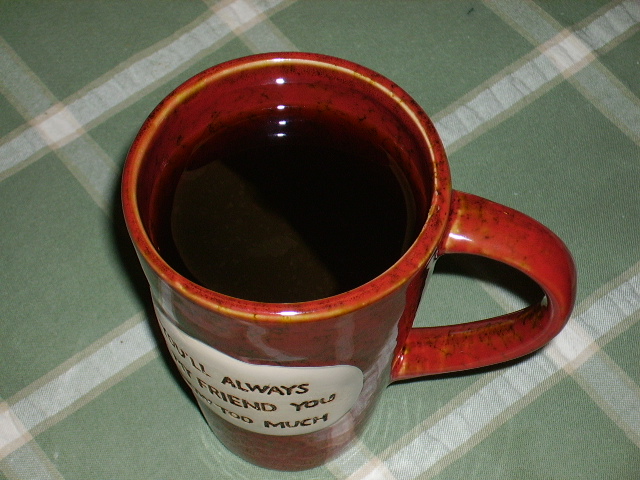
care to share a cup
Care to Share a Cup?

I just finished the most wonderful week, followed by an amazing weekend, and how exhausted I am! Does that ever happen to you?

A new friend visited me for a whole week. She stayed in our guest house and helped me with cooking and canning. One night I spent the night with her. What fun to talk like college girls until 2 in the morning! I say “like college girls” but really, we shared from the Word and from our lives like NO college girls I ever knew. I may be a bit too old for such a schedule, but it probably was for only one time, and was over too soon.

After lunch with an old friend that Friday, I caught up on shopping, found a new purse on back-to-school sale. No more BTS for me, but the sales are still a great idea.

Then it was off to our son’s house visiting with him and his lovely family, lunching on burgers and outstanding carrot cake, teasing and loving grandchildren, playing games; lengthening and strengthening the bonds we built in our son’s childhood.

Came home to view a large column of smoke rising from the woods about 4 miles from our house. Fire’s out, now, thank the Lord.

Then came Sunday, the day when we rest only from our own stuff, but highly concentrate on the Lord’s work . . . How I love the little church that has tripled in attendance since having a pastor, for a change! And how I love the one-hour drive to it, when I share my husband and he shares me with: NO ONE. Our talks have been so good.

That was yesterday, and we had a lovely visitor to grace our home for the afternoon. Made nachos and just relaxed together. So good.

Now it is just me, just this home. Such peace. Bed made. Laundry started. Cats fed. Chickens out. Headed for 105 degrees IN THE SHADE (that’s right at 40 C), today, down from the recent 110-ish week, with humidity from a brief rain last night. Air conditioner, set on 80, has run several times, already, this morning. Garden dead and tilled in. Jars of food all rinsed and stored in the basement.

Pear harvest waiting to be pear butter.

Second cup of coffee sitting at ready.

Join me! Bring your best knife and I’ll share some pear butter with you–it’ll be fun!
Posted in Blessings of Habit, Good ol' days, Homemaking, Inspiring, Scripture, Wisdom, Wives

Get All You Can–Can All You Get – Part 4

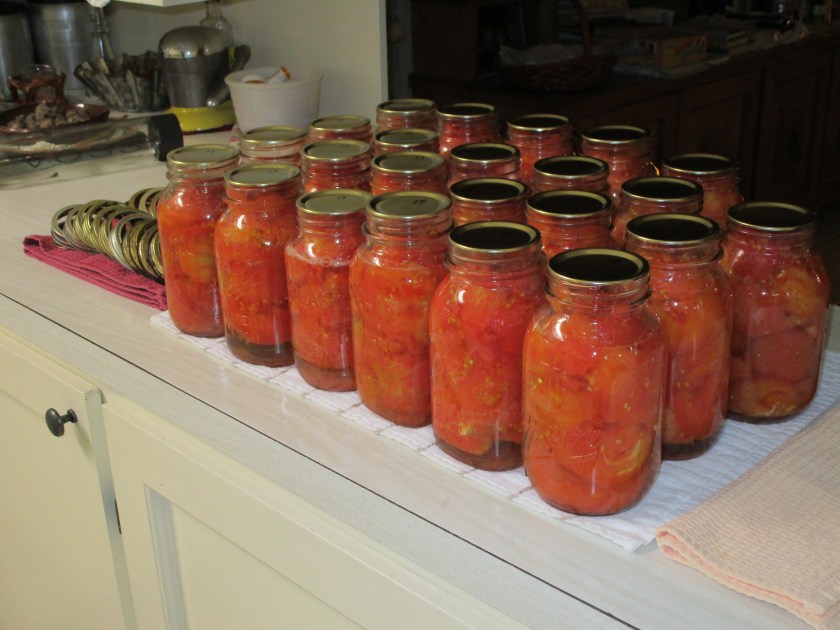
One Morning's Canning success, SAVED for those "chili and soup" days!
One morning’s work, SAVED for chili, soup, and spaghetti!

The Master Potter!

Sisters, we truly are like canning jars (2 Corinthians 4:7). God calls us to belong to Him for a reason, and that is to contain the treasures of His Holy Kingdom, but first we need to be clean jars. He is very careful and does not store valuable things in dirty vessels. So the first step for us is to be saved, delivered from the dirt to which we’ve been accustomed (John 3:7). If we are not “Spiritual” we cannot take in Spiritual treasures (1 Corinthians 2:14).

We must also be unabused, emotionally “whole” people: no cracked-pots (Acts 8:18-23). What joy we have in knowing we serve the God who knows how to fix us broken jars!

Then we must be set apart for His use, separated from the world and it’s contamination, as with that flat lid, sealed by the Spirit of God (Ephesians 1:13-14.) The screw bands are like the Law, holding us in separation (Romans 7:7) until The Seal takes effect, and then are unneeded and removed from over us.

The cooker is this present world (John 16:33). The heat and pressure are our trials (James 1:2-3, 2 Corinthians 4:8). The timing is God’s alone (Ecclesiastes 3:1, 11). All the elements of successful food storage are mirrored in God’s beautiful work of preparing us “earthen vessels” to hold His treasures.

It is such a joy to be the bearer of God’s good things. He can open us up and use us to bless those who would die without His goodness in their lives (Psalm 145:15, Ephesians 2:10). Many who would turn away from God are drawn to what they see in us (John 15:8, 16). He can place us wherever He desires, to give the gift of His goodness whenever He pleases (2 Timothy 4:2). His Life is not just for Sunday Church!

The sad thing is that there can be failure in this endeavor, as in home canning, and the results are just as putrid when left undetected. Doesn’t the mention of your favorite failed evangelist make you cringe? Spoiled food, and rotten Treasure both are unusable, offensive, and poison (Jude 12,13).

The only real difference between any one of us and these people is that their unseparated condition, cracked rim, or whatever the problem, went a long time unnoticed and unfixed. A spoiled jar can explode.

The solution is always to submit to God’s dumping us out and cleaning us (Ephesians 5:25-26), to allow Him to adjust us, and to go joyfully into the pan of pressures and heat. Then when He refills us (Ephesians 5:18), we will “hold”.

And what if you are broken, cracked, or chipped either before or during your time in God’s service?

You do not have to be smashed and thrown away.

We serve the God who knows how to mend the broken pieces of our lives (Jeremiah 18:1-8).

Submit to Him. Let Him clean you, mend you, fill you, seal you, and use you.

The end.

Posted in Believe it or not!, Blessings of Habit, Good ol' days, Health, Herbs, Homemaking, Inspiring, Photos, Scripture, Wisdom, Womanhood

Get All You Can–Can All You Get – Part 3

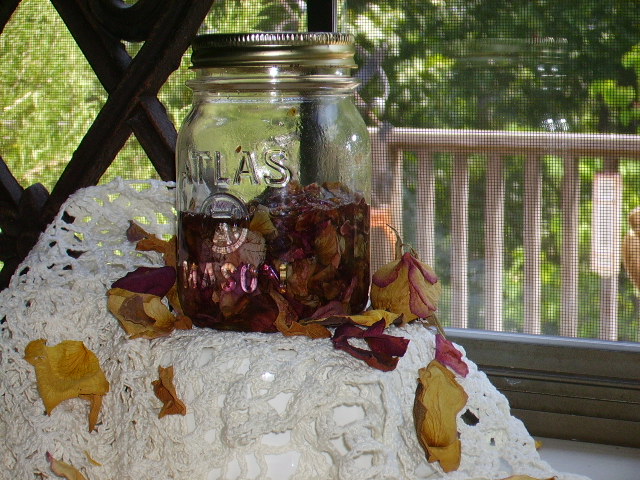
romantic rose honey
Romantic Rose Honey

Cannng Failure and the Moral of the Story!

Let’s talk a moment about canning failure. Although any canned food that fails to seal is acceptable if refrigerated and eaten within 3 days, undetected failure gives you food that is spoiled. It is unusable, offensive, and poison.

Either way, we must empty the jar, clean it, and try to find and fix the problem.

If the only trouble was debris on the jar rim, or a defective flat, it is an easy fix. Refill it next time and it will work fine.

However, if that rim is the problem, the jar is useless the way it is. Unless you know someone who knows how to do the impossible job of fixing a broken jar, the best thing you can do is to get it out of your life so you can avoid those problems in the future. It’s best to place it inside a bag, break it, and throw it away, to prevent its accidental re-use.

Sisters, we are the jars.

Yes, we are the earthen vessels that God uses for storage. But instead of physical nourishment, the things stored within us are spiritual life-giving treasures.

He gives His Living Word (Rhema) to us (John 1:1-4). It is so refreshing, like fresh fruit to our bodies, satisfying thirst and energizing us, but must be handled with extreme care.

Then He sustains us with His Written Word (Logos), which is also life-giving to us, the routine staple diet every Christian needs and longs for (John 20:31).

He also desires us to contain His meat: obedience and righteousness (John 4:32, 34; Hebrews 5:12-14).

Why does God desire to store His heavenly treasures within us? So that much good can come from these treasures here on this earth. God’s ways are difficult for the unchurched to know of. As vessels, we make the Kingdom more available and more palatable to the spiritually starving.

There is much we can do to make careless people notice God favorably (Romans 10:14). You’ve heard the saying: “You are the only Bible some people will ever read.” Another Christian saying goes: “Do not force the reason for your hope upon those who don’t ask for it, but live so that they will ask.”

Oftentimes God also uses us to make His Kingdom more understandable to some who desire it but are confused (Acts 8:30-31).

He uses us to make the Kingdom more easily acceptable to others (1 Corinthians 9:19-22).

It’s that dinner invitation, soft answer, or offer of baby-sitting that can woo people to Christ who would otherwise never turn to him. We are always to be His containers.

Just like the food we pressure can, God’s treasure within us must be prepared for the process. We must be sure it is clean, pure wisdom; no dirt or bug spots allowed (James 3:17).

Sometimes we cannot receive it all at once, either, any more than a jar could receive a whole potato (John 8:31-32, 16:12-13).

Sometimes it simply “goes in” better once it’s been softened by teaching, summary, or example (Ephesians 4:11-13).

 Tomorrow: The Master Potter!

Posted in Blessings of Habit, Good ol' days, Health, Homemaking, Inspiring, Photos, Who's the mom here?, Womanhood

Get All You Can–Can All You Get, Part 2

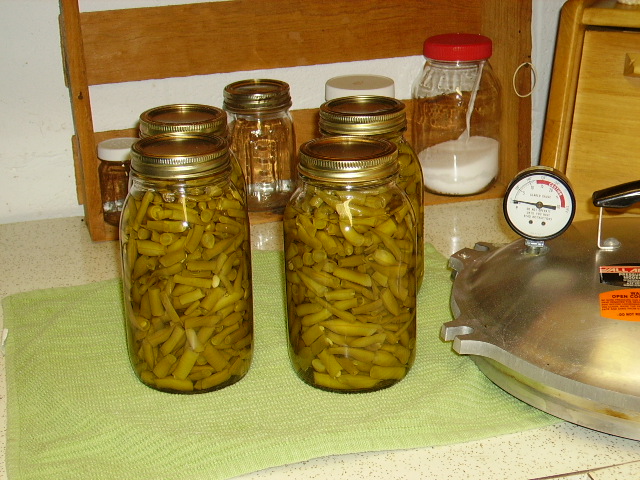
four quarts green beans
Four Quarts Green Beans

Canning Mechanics!

Now let’s consider the canning containers.

It’s not just the food; the jars must also be clean. Some mothers employ children for this chore because they think their own hands will not fit through the mouth of the jar. Actually, a wet, soapy, adult female hand will usually fit into a very warm jar. It is not a bad chore for a careful child, though.

We must take extra care to examine the jars for chips on the rims. Chipped jars will not seal and may even further chip or break altogether, so are useless for canning. You need one flat (or lid) for each jar of food you process and about a dozen or so screw bands (or rings) that aren’t too rusty.

The pressure pan consists of the pan and lid themselves, the rubber gasket (unless it is the metal-to-metal type), the over-pressure plug, the vent tube, the pressure regulator, and the cooking rack. These parts help cause, contain, and control the pressure and temperature of the food. To can the food, we add water to the pan, close it, install the pressure regulator, and apply heat for the recommended time.

The extreme benefits of canning foods are not obvious to us, but before the advent of canning it was usual and quite acceptable that people would die of starvation, malnutrition, or poisoning. With pressure canning we have long, safe storage of any food we need or desire.

Since we’re accustomed to canned foods, the benefit we notice most is how easy it is to use! Who hasn’t reached for canned pintos to make quick chili rather than soaking and cooking dried beans all night and day?

Canned foods also are timely–you may, in one afternoon, pressure cook 10 pint jars of raw green beans for 20 minutes and have them for a quick Monday dinner vegetable for 10 weeks. Compare that to shopping, rinsing, snapping, and cooking for an hour every Monday night for 10 weeks and you see the difference.

My favorite advantage, though, is the gift-ability of canned foods. People love to receive this kind of stuff, it can be so pretty, and it does not thaw on the way to meeting.

Tomorrow: Canning Failure and the Moral of the Story!

Posted in Blessings of Habit, Health, Homemaking, Inspiring, Photos, Who's the mom here?, Womanhood

Get All You Can–Can All You Get, Part 1

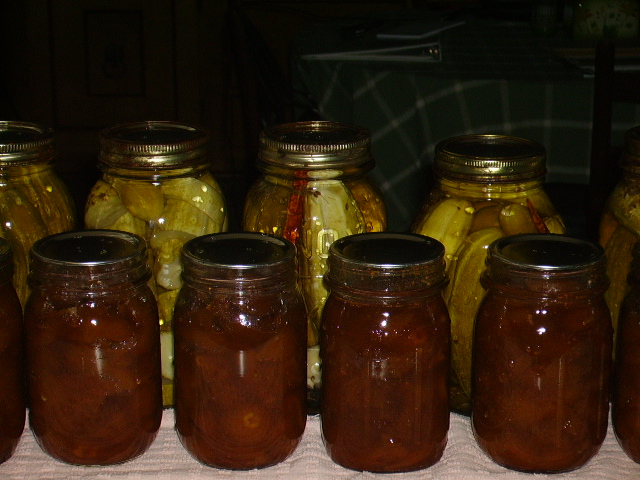
pickles and fig preserves
Pickles and Fig Preserves!

Introduction

You put beans, salt, and boiling water into a jar, cap with a hot lid, set it in a pressure pan that has a couple of quarts of water in it, apply the lid and the pressure gauge, turn on the heat, wait a while, turn it off, take the jar out, and you are done. What could be easier? People do this all the time!

Yet it took us about 4000 years or so to figure it out. The idea of canning, itself, did not come about until the early 1800’s. Tin cans were first used in the U.S. in 1839. Mr. John Mason invented the canning jar in 1858.

Before then, we starved a lot.

There are many advantages to cooking food at all. Many foods become much easier to chew and swallow. Imagine eating a raw roast! Cooking also often improves digestibility. Eating a nice big helping of delicious raw peas would put you through abundant abdominal agony!

Although cooking usually also improves the flavor of foods, we often prefer some foods raw, or fresh-frozen, such as strawberries: the canned ones are like mush. Still–if your only choice is between overly soft strawberries and NO strawberries, you begin to see the advantage.

Almost any type of food can be canned, though some with less success. Fruits are canned at 5 pounds of pressure for a short time because their acidity makes them less apt to spoil and their fragility makes them disintegrate easily. Vegetables are more rugged and less acid, so they require 10 pounds for around 30 minutes. Meats must be very thoroughly cooked and so are placed under 10 – 15 pounds of pressure for about 90 minutes.

The purpose of the pressure is to achieve higher temperatures: The water in the pressure pan boils at 240 degrees (instead of the normal 212 degrees) under 10 pounds of pressure, the secret of the short cooking times.

To prepare food for canning you must first clean it. Beans, peas, etc., may simply be rinsed several times. Greens require at least seven rinses. Carrots, potatoes, etc., must be well-scrubbed with a brush. Even your own organically grown, guaranteed unsprayed apples must be carefully washed because ants, roaches, and flies crawl on them all the time. These creatures spread staph, strep, fungus, and yeast diseases.

After cleaning, cut the food into bite-size or jar-size pieces. Most foods do not need peeling but beets and tomatoes usually do. Some people also blanch food before packing it into the jars. The purpose, then, is to get more into the jar with slightly softer vegetables. Beets, potatoes, peaches, and tomatoes peel more easily when blanched.

Tomorrow, Part 2: The Mechanics

Posted in Blessings of Habit, Good ol' days, Homemaking, Inspiring, Recipes

You CAN Can – The RECIPES!

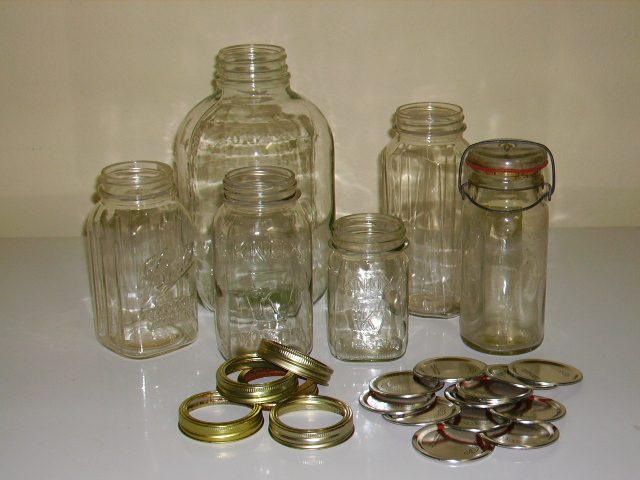
i love old jars
I Love Old Jars!

These are not mostly canning recipes, but mostly hints about getting out from under a pile of vegetables on the counter. Of course, the solution is to eat them, but did you know:

  • It is perfectly fun and delicious to eat a cheese and mayo sandwich with a whole tomato on the side to eat like an apple?
  • Carrots, are irresistible sliced lengthwise and fried in butter, with a dash of onion, until soft and caramelized?
  • Grated zucchini keeps well in the freezer, and in recipe-sized batches would be ready for bread in the winter in a short time?
  • Bitter cucumbers, sliced and soaked in the refrigerator in vinegar/salt water will lose their bitterness in a couple days? And are yummy?
  • If your onions are not keeping well, you can still save them by slipping one into each jar of green beans before canning them at the same pressure?

Okay, now for the recipes!

Summer Squash Patties

3-4 c. grated summer squash
1 egg
¼ c. chopped onion
¼ c. self-rising flour
¼ c. powdered milk
¼ c. corn meal
salt and pepper
oil
Mix all together well. Fry in 2” patties in ½ inch oil over medium-high heat until well-browned. Drain on paper towel. Serve hot.

Cucumber and Onion Marinade

3-4 cucumbers, sliced thin, peeled or not
1 onion, sliced and separated into rings
3 Tbsp. salt, non-iodized
2 c. cider vinegar
Place onion rings over cucumber slices in large serving bowl. Add vinegar and salt. Add water to cover. Serve well-chilled; we like a few ice cubes in ours. Some people add black pepper, but I do not. If cucumbers are bitter, hold for 3 days before serving. If sweet, these are grand served immediately.

Green Tomato Minced Meat Pie

2 c. chopped green tomato
2 Tbsp. lemon juice
3 Tbsp. melted butter
½ c. brown sugar
½ c. raisins
½ t. salt
¾ t. cloves
¼ t. nutmeg
1 two-crust pie shell
Cover tomatoes with water. Bring to a boil. Drain. Add rest of ingredients. Bake in pie shell at 375 degrees for 40 minutes. Green tomatoes may be frozen in 2-cup batches, in summer, for use in this recipe, in winter. Just chop, package, and freeze. No need to thaw, first.

“No-tel” (Tastes just like the R-real thing.)

1 pt. peeled, raw tomatoes
1 jalapeno pepper
1 pinch rosemary leaves
½ t. canning salt
Place the above ingredients into each pint jar until you run out of ingredients. Cap with hot lids. Process at 5 lb. pressure for 10 minutes. To peel tomatoes, dip into boiling water for 1 minute. Dip into cool water. Slip skins off. Core.

This final recipe is for handling all the garden scraps such as vegetable peels, old pea vines, etc., IF you do not have chickens:

Compost

1 bushel clipping, leaves, vegetable waste, etc.
1 handful balanced fertilizer
1-2 pints good garden soil
Sprinkle to moisten, if needed. Mix well, using hoe in wheelbarrow. Seal in large plastic bag. Tie shut. Stack bags anywhere (barn, garage, etc.) and store for 3-6 months at 70 degrees or so. Open and apply to garden.

Oh, there is so much more, but we’ll change subjects for a while! See ya’ tomorrow!

Posted in Blessings of Habit, Good ol' days, Homemaking, Inspiring, Pre-schoolers, Who's the mom here?, Womanhood

You CAN Can – Help!

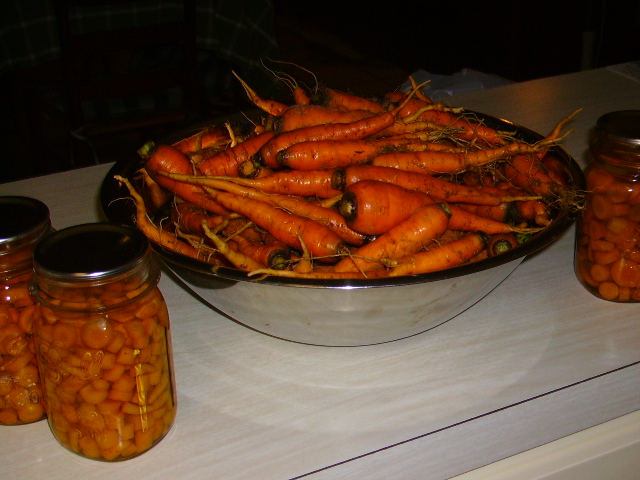
carrots
Carrots!

Canning, Gardening, and Kids – Oh, MY!

Since we’ve been on the subject of canning all week, let’s talk about canning and children.

Children who are old enough ought to help. Little ones ought to stay away. Too much is going on for you to trust yourself to watch them carefully. All that blanching and lugging jars adds a safety factor with which they are too young to cooperate, and one act of confusion or disobedience could be disastrous.

So draw a line and make it stick. This is a time when high chairs, play pens, door gates, etc., are proper for the safety of precious little ones.

Let me tell you how we enlisted our children’s help in the garden when the days were blistering hot. We woke them at daylight, and had them dress quickly and go directly to the garden with us. Everyone had an assignment, only 30 – 45 minutes worth of work.

Each one managed his own row, which he kept weeded and proudly displayed to guests. Really, the garden looked good.

The youngest one’s work was to play nearby without walking on garden plants or eating dirt.

Then it was back to the house for our reward. On these days we would have treat-type breakfasts such as cantaloupe and ice-cream, oatmeal raisin cookies, fruit juice popsicles, strawberries on cereal, frozen chocolate-dipped bananas, cheesecake with blackberry sauce—whatever they considered rare and delightful. They loved it! They knew how hot the world would be by 10:00, and they seemed to appreciate my organizing things this way.

Then if we HAD to work in the heat, we would take quart jars of ice water with us and drink straight from the jar. They loved this, too. When such hot work was done, their daddy would throw them squealing into our large stock tank (which was kept for the children, only, and was un-licked-upon by any livestock) and they had water play in their work clothes.

These types of rewards were the heartbeat of our children’s summer gardening memories. They are adults, now, and still remember it with smiles, still do gardening, themselves.

Sometimes they fussed a little or grew competitive, but often the sweet sounds coming from the early morning garden rivaled those of the birds.

Tomorrow: recipes for the surplus!