Not much to say, today, but wanted to show off one of my favorite photos. Surrounded by the safety in many uncles (the blue stripes and the adult finger belong to two of them) a young boy learns about which wildlife is to be trusted, a family tradition meant to instill wisdom and fearlessness:
From all the research that has been done, I think we might, might, might be able to make some progress solving the problems in governmental institutionalization of our children. It would take drastic change, though.
No matter what you are thinking, I meant more drastic than that.
English: Jewish Children with their Teacher in Samarkand. Early color photograph from Russia, created by Sergei Mikhailovich Prokudin-Gorskii as part of his work to document the Russian Empire from 1909 to 1915. (Photo credit: Wikipedia)
Most classrooms have far too many children in them.
Instead, each classroom would have to reduce to only around 5 children per adult. Many homes have something like that, and national research shows it is the best way to learn. It certainly would be more natural. Some high school children might make do with 10 to 12 per adult, if they were mature .
It’s how the ancient Greeks taught.
Most classrooms have all same-age children in them.
Bizarre! Instead, each child should be allowed to receive the gift of relationships with vastly different-aged others. Most homes have that and the learning potential is expanded when the students are of differing levels of learning. Especially the older ones would learn, truly learn the subjects if they were, in this more organic approach, occasionally in positions to help teach.
We do learn most when we teach, right?
Most classrooms labor under the false assumption that touch, being sexual and subject to lawsuit, should be prohibited.
Instead, we all should acknowledge what we instinctively know, and has been proven, that hugs and pats and other touch, including light corporal punishment, are part of socializing and leaving them out is wrong. Most homes have touch. Remember, orphans who are never touched die, whereas touched children are healthier and grow taller.
To protect the child from the occasional bad teacher, and the teacher from the occasional bad parent, of course video cameras in every room and every hall would be essential. That way, any teacher or child who doesn’t care about God, could realize that Big Brother is also up there.
We have the space, really. We are closing schools every day because we’ve aborted zillions of the children who could have filled them.
We do not have enough teachers, but how quickly they would come if they learned we’d solved the discipline problems, wouldn’t they!
It would take a large staff of volunteers, but what better place to volunteer! Lots of families have become single-income these days, so one spouse must be somewhat free. Then that parent could discover the joy of watching or even helping his or her own child learn things of great value, even about volunteerism. It would be a whole lot like home schooling, and might even get the better results of homeschooling, but would happen at the school.
Or, we could just send them all home, which would be lots more cost effective.
If there exists any type of divine design, then for argument’s sake, we must think that children were put into homes for a reason.
But even those who cannot swallow the idea of a God must consider why all creatures seem to have evolved to higher and higher plains while passing through a home- or family-type stage, and the higher the plain, the longer the prerequisite familial stage, with homo-sapiens needing a family for the longest time of all.
It is worth a thought.
Many who have given it a thought have withdrawn their children from the bedlam outside the home. Then—surprise!—their children begin auto-correcting their psyches, learning more, retaining more, doing more with it, and growing up to be more productive.
I am not making this up. It is heavily-researched scientific fact that no thinking person should ignore, especially if that person cares about children, about the state of his country, or about the future at all.
And before we continue, we must define a home: a set of parents who function adequately, with each other and with their children, as mom and dad. To use a broken, dysfunctional, or abusive home as a reason for schools is as fair as using a broken, dysfunctional, or abusive school as a reason for home schools.
But bad schools are not the reason to homeschool.
CHILDREN are the reason to homeschool.
If you have them, you should.
Today’s children are being destroyed in schools. They were not made to be in schools and do not thrive there. They are tormented daily, growing warped personalities we see depicted in the worst national headlines.
And they’re not allowed to pray
Putting children into a school is asking them to pass the socializing test before ever receiving any instruction, correction,or reinforcements about HOW to socialize. They encounter children even less trained than they are, with no chance of escape from this zoo.
Sink-or-swim is often a great way to drown a kid.
The typical classroom is sink-or-swim. When drowning, it is natural for the inexperienced to attempt survival by pushing down on other swimmers.
Just natural.
Empathy is the natural product of a home education. Each older child who cherishes the home’s newest infant later has patience with that same child doing wrong, cares if that sibling falls down, laughs with—not at—that little one.
Resilience is another natural product of a home education. Encouraging, even requiring social resilience, leads to practice in resilience. The old “get back on the horse” motto prevails and in time, becomes instilled. As the child matures, he develops the ability to keep going, no matter what, if only someone has taught him how.
Confidence is another natural product of a home education, and it is born of hope. A child who is dumped at the door of an antagonistic, institutionalized experience has no hope. A child who has a mommy who will keep everyone on a good social plane while they learn, just because she loves them, has hope and learns confidence.
Tomorrow, part 3 about how to fix the schools. See ya’!
People forget children are not adults. Adults can handle many things children cannot. The adult thinks to himself, “Oh, it won’t be that bad.” But he forgets. Time has a way of rewriting our memories.
We project ourselves onto our children and think of how great it would be to be surrounded with 25 five-year-olds every day for nine months. We think as an adult who has authority and could quell any problem with a child. We forget a child has no such ability and does not even know what to do, let alone how.
Or we look at other kids or our own childhood and think, “They did okay. I did okay. Troubles make you stronger, after all.” That is true to an extent. When air blows over a plant, it does make it stronger, unless it is a tornado.
If we look deeper, though, we realize those who did well in school were taught how, as were most of their peers. In my day, kids were polite. It was considered a huge breach of civilized behavior to forget to say “please.” The child who did this was ostracized. Now it is a joke. It is a different world. It is truly bad.
Bad has always been a possibility, though, in schools. Some were blown away by the tornadoes of troubles they faced. Einstein, Edison, Disraeli, and T. Roosevelt all did poorly in the institutions of their days—very poorly.
If we actually were to place ourselves in our children’s shoes, we would think twice, and that would be good.
Think: if everyone at your workplace were mean to you, had better stuff than you, outperformed you, or got chosen before you.
How well could you cope with that?
Would you change jobs?
They say in those circumstances, a person should change jobs. However, children in those circumstances cannot change jobs. Their job must always remain to go to the school of someone else’s determining. Period.
If you did stay in that job, though, would you seek comfort from family or friends? Sure you would, and you should!
The child, though, often finds his family does not believe how bad it is, as discussed above, or does not understand the enormity of it. And his friends! They are all at the school, all in the same boat! How can they help? The child and all his friends are in a social drain that leaves them socially depleted by day’s end. And then he usually has more school to do at home.
You know how you would resent having to bring work home. Daily. Hours and hours of it.
Yet, you have freedom to leave your job if you want, even to take vacation whenever you want. The child is required by law to remain in his torture chamber for 12 years, at least. No wonder they think of suicide.
We will discuss the solution to this ongoing problem tomorrow. See ya!
Okay, girls, today our fast-clean project is this stuffed coat closet. Oh, we have so much to do to make it better! Here, Little Mary, you can play with all these wonderful wooden hangers. Can you pile them onto the couch for mom? Great! Thanks!
Hey, Big Sis, look at Daddy’s old umbrella–it needs mending. Write that on the list for me, will you? First write “mend”, then I will spell “umbrella” for you, okay? Thanks!
Oh, look, here is the glove you were looking for, Leah! I’m so glad we are cleaning this closet out. Maybe we’ll even find some MONEY hiding in here. Run and put the glove with your other one, okay?
Oh, I wonder what is in this box–Would you look! It is empty except for one cap. What a waste of space, and just when I was thinking we needed a bigger closet! Are you back already, Leah? Take these road atlases over to the couch beside the hangers. Yes, that’s right. Thanks! No, Little Mary, those are grown-up books. Good girl.
Okay, this other box has candles in it. Can you tell from the lovely perfume coming from it? Here, everyone sniff and tell me what it smells like . . . Right! Just like flowers, isn’t it? Good job! We’ll set it on this big chair, and don’t you let me forget to put it back, when things in there are dry.
What else is up on this shelf? Daddy’s two good hats are dusty. Big Sis, do you know where the whisk broom is? Get it for me, please. Thanks. I didn’t know I would need that in here. Leah, could you bring me back the big box? Yes, that’s the one. Let’s put Daddy’ good hats in it, since he doesn’t wear them often. That will keep them clean and keep bugs off them. Oh, here’s that broom. Good. Now we can clean the hat before we store it. Won’t Daddy look sharp in this new, clean hat? What? You want to try it on? Okay, but let Mommy help you–Whoa! You look just like Daddy!
You know, I think I will pull all the coats out of here before I wash the shelf. I don’t want to get soap on our good coats, if I spill. We’ll lay them across the back of the couch. There. Much better for the coats, and you help me remember to take this graduation gown to my closet, okay? Okay!
Big Sis, how are we for time? Fifteen minutes? We need to hurry more.
Little Mary, would you like a job? Can you carry out all the umbrellas off the floor in here? You can? Great! Leah, you help her with that huge one. Yes. Good.
Big Sis, hand me the step stool. Thanks. Let’s see if Mom can fit up inside this little closet. Oh, sure, I see we need to wipe the shelf, so here goes. Can you fetch the fan from the dining room? I want this to dry fast so we can put everything away before the timer goes off. Do you know why it should be dry? Yes, the box could stick to the shelf. That would be a big mess. I think I will clean this door, too. Somebody handled it with grimy hands. Too bad!
Now to sweep the floor right quick . . . There!
Let’s put the coats back and let’s be sure to check all the collars. Uh-oh, Daddy’s trench coat needs dry cleaning, see? Look at that. We’ll take it out to the car in a while. Everything else looks good, so back it goes, into its place. Hey, Little Mary, I’m ready for you to bring me the hangers again. Thanks, Baby. You are such a helper. Okay, let me get the candle box. Now the hat box. We are almost done.
You two put the umbrellas back except for the broken one. Mommy will take care of it. Whew! All that work made me hungry! Who wants a cookie?
There you have it: one session of the new Spring Cleaning plan, in a one-sided conversation, with three imaginary girls helping. Of course, your children are not exactly like these and your words would differ, but do you see how it might work to incorporate children into this job?
They SO need the attention and the teaching. Let’s go for it!
If you know anything, at all, about photography, you know: soon as I planned to take photos of shadows, the sky clouded over, erasing them all. Later, as the clouds thinned, the resulting shadow quickly disappeared while I readied my camera. You know.
The sand pictured below lives in the shadow of our house, a northeast inward corner and a cool playground for kiddos in summer. In early spring, though, it boasts the abundance of weed seed it has collected since last summer. In this photo, I have just raked all the weeds away. Don’t like to spray where kiddos play.
Nevertheless, here is the sand area, complete with shadow but sans board to keep it all in place. We’ll get a new board; the old one was termite-ridden. This is the usual spring cleanup ritual around our yard.
Sand sans boundary
If you know anything, at all, about sand areas, you know the gritty-squish sound my shoes made as I tried to step lightly into the sunroom where my camera is. Will have to sweep there, soon.
The Sunroom
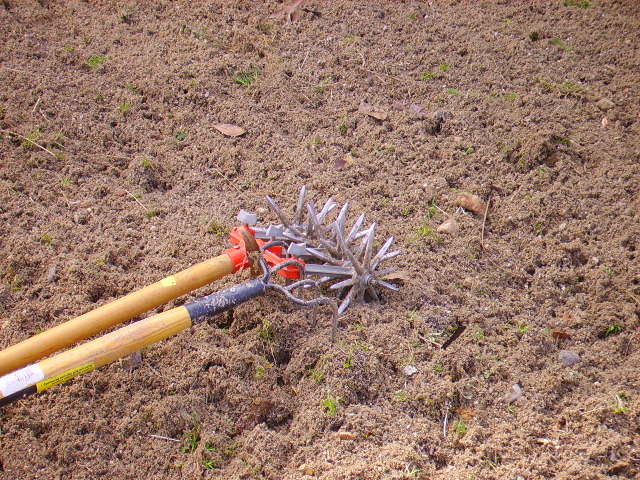
If you know anything, at all, about gardening tools, you know what brand these are, from the fragment of label revealing itself from the underside. The torturous-looking one is torturous in real dirt, but in sand it is perfect.
Isn’t it odd the sand looks more like sphagnum in a close up? It looks just like sand, in reality.
My Sand Toys
Thinking about shadows made me realize I have an early bloomer in the deeper shade. Between the well-house and the house grow some hellebores. These picky little ones love living in the shadows. They were camera shy and I had to prop up their faces with my green watering can. It is fun to realize they have come back to bloom for me.
Hellebores
I can be like that, sometimes. Although I do enjoy an outing, I am most comfortable at home, blooming in the shadows. I like my old comfortable places
The United Kingdom has decided that Christians are not acceptable as foster or adoptive parents and that Christian beliefs are harmful to children and violate a child’s international human rights.
Since when are personal beliefs a reason to deny children a home and a family? If religion, of all things, violates child rights, what will be next?
Such problems are built in to the United Nation’s Convention on the Rights of the Child (CRC), and would plague the United States if we ratify that treaty.
You know, we’ve been kicking these ideas around for about forty years.
Happily, I can say, a resolution opposing ratification of the CRC will appear in the U.S. Senate probably next week. Still, only the Parental Rights Amendment can end the threat of ratification permanently.
The U.S. Supreme Court is considering whether a child has the right to be protected from seizure and interrogation without a warrant, emergency circumstances, or parental consent.


 Children need to be in homes.




 Home's Cool!