Some friends took my husband and me out for dinner not long ago, to a Japanese restaurant where everyone sits around the grill and watches the chef entertain with cooking.
These chefs are wonders! They throw eggs, build train engines from onion rings, and juggle spatulas. And they can cook really fast.
I paid attention. I never plan to build a choo-choo from onion rings, or throw rice at people, but the SPEED! After tasting the food, I knew I had discovered one more way to make a breakfast I could eat.
And to make it fast.
Stir Fried Eggs
2 eggs
1/2 T. butter
You can tell from the ingredients, this will be fast, can’t you?
High Heat – Watch carefully
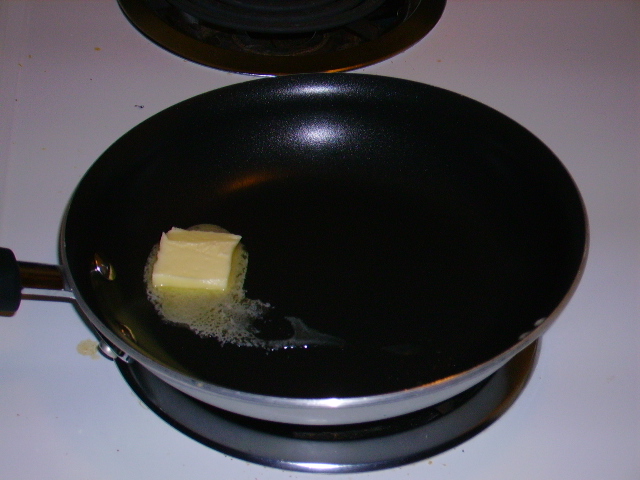
Put butter in pan and turn on high.
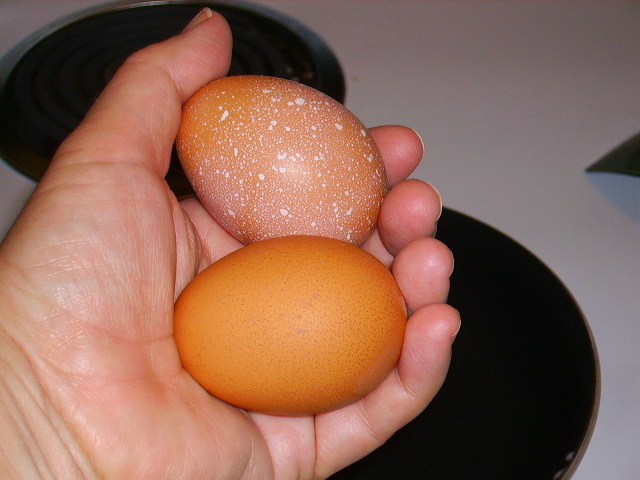
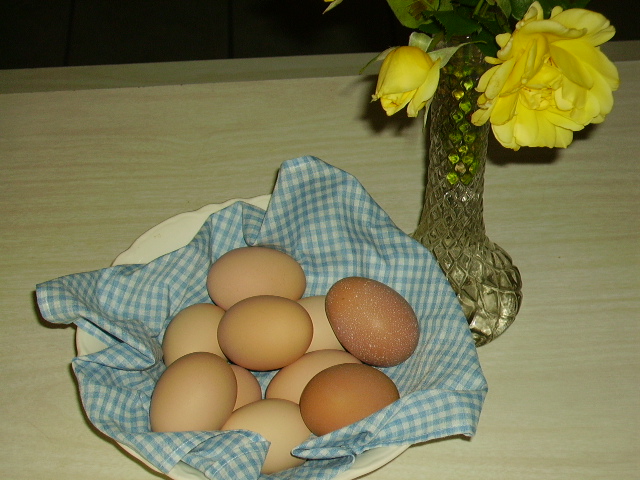
Aren’t These Eggs Beauties?
Have spatula ready. You need one with a flat front edge.
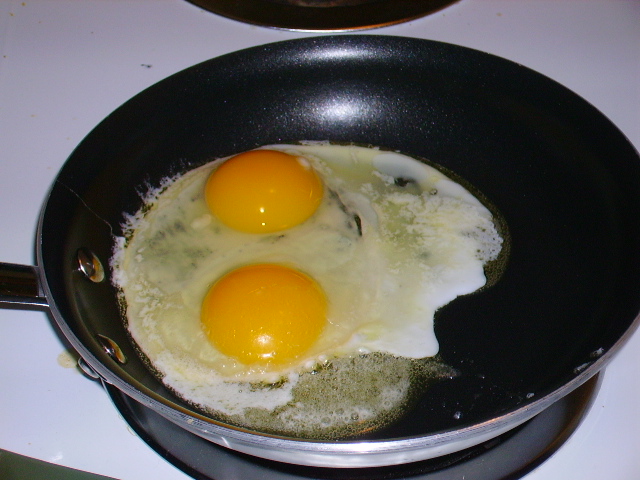
Once butter is all melted, break two eggs into pan, still on high heat.
Pan and Eggs Ready to Go!
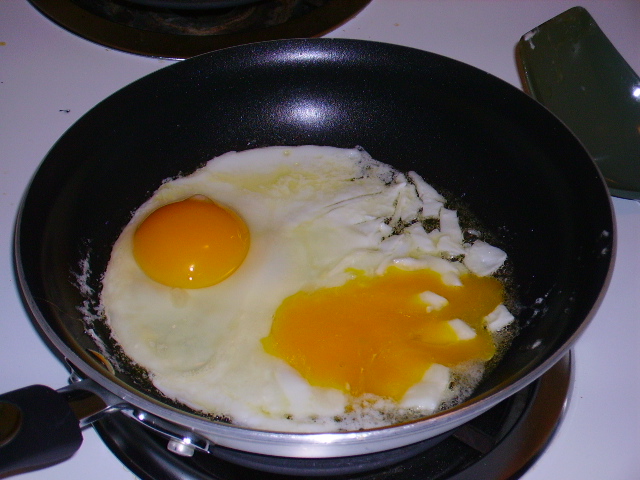
Start Chopping Eggs Immediately
Quickly pick up your flat-edged spatula or spoon and begin chopping eggs very quickly, in all directions. Scoop or scrape particles together and chop more, until all is chopped, about pea-sized or even rice-sized, and quite done.
If pan seem too hot, control temperature by lifting or tilting pan, not by regulating the temperature of the burner. You need it hot. Prevent burning by quick and thorough stir-chopping.
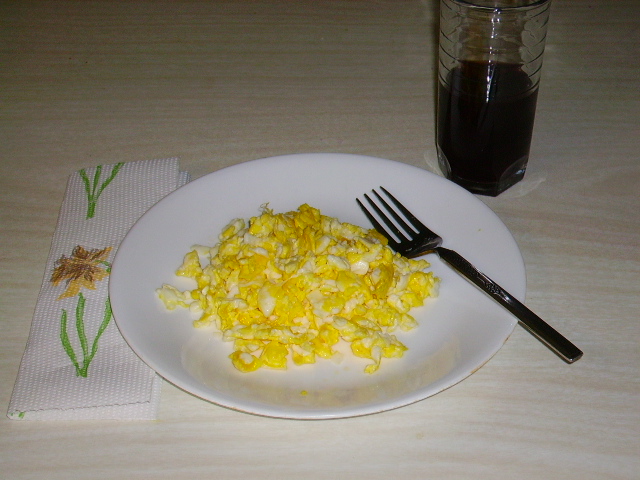
Stir Fried Eggs
Serve hot, with salt, pepper, soy sauce (opt.) and juice and/or coffee. Get good at this method and try it mixed with mayonnaise and fresh onion, for an egg salad sandwich. Mmm!
Zabaglione is an Italian dessert that is supposed to be just this side of cooked eggs. I like being sure about such things, so my recipe for it will vary from what the very best cookbooks say. That is okay with me. Cooking just a few seconds longer gives me peace of mind. Let this yummy recipe change your way of thinking about breakfast!
2 eggs
1/4 c. cream
1 serving stevia powder
1/2 t. cinnamon
dash nutmeg
few drops vanilla
1. t. butter
large handful frozen blueberries
Place blueberries in a cereal or soup bowl to be ready.
Bowl of Berries
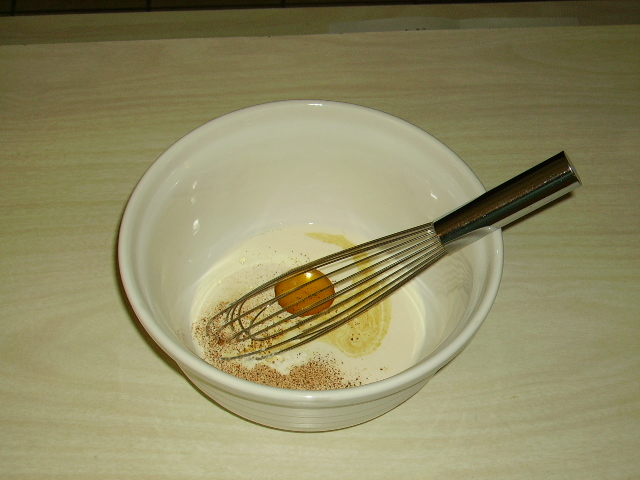
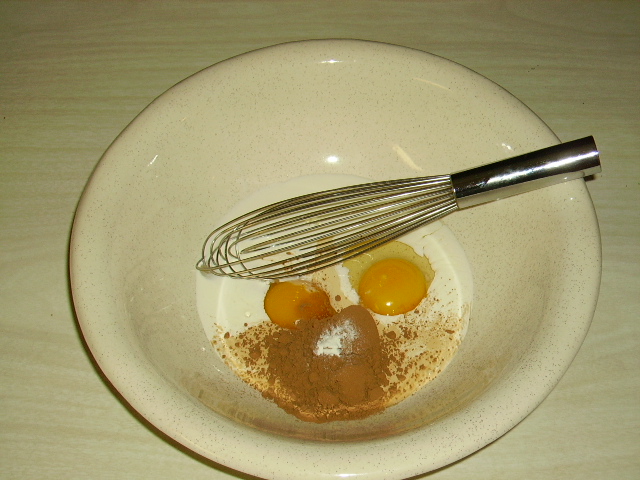
Place rest of ingredients except butter into mixing bowl and whip.
Ready to Whip
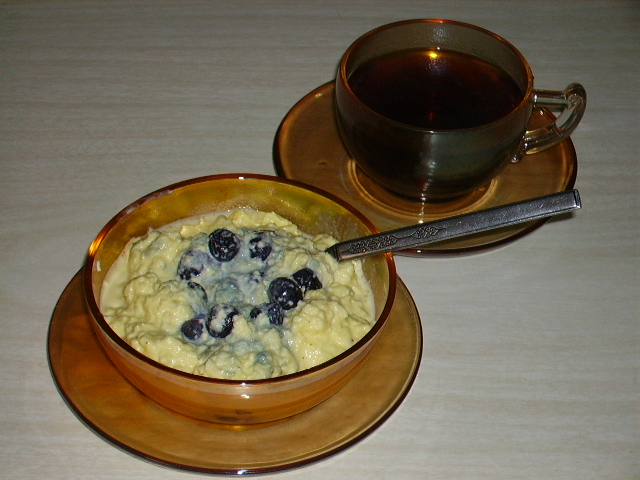
Melt butter in small saucepan and pour in egg mix. Cook on medium while constantly stirring with whip, until mixture thickens. Quickly pour over berries in bowl. Serve with beverage of your choice. Enjoy!
Now that the wonderful produce from the garden needs preserving, let’s talk about how to get the job done as fast as possible and get out of that hot kitchen lickety-split.
Today’s vegetable is beet greens, one of our favorite treats. In fact, we love beet greens so much, we planted two rows of them and will not allow them to mature to beets. We will just pull them and use them for greens. These instructions will work well for any type greens you cook, though.
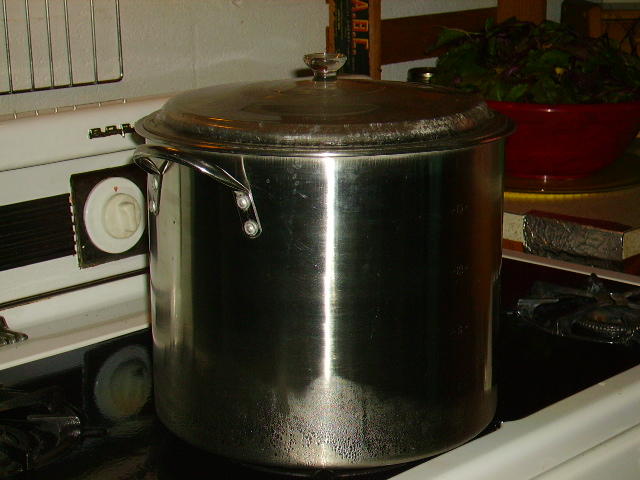
Heating water
The first step is not to pick the greens, but to heat the blanch water, which takes a long time. If you have an exhaust fan over your stove, you will be glad if you turn it on.
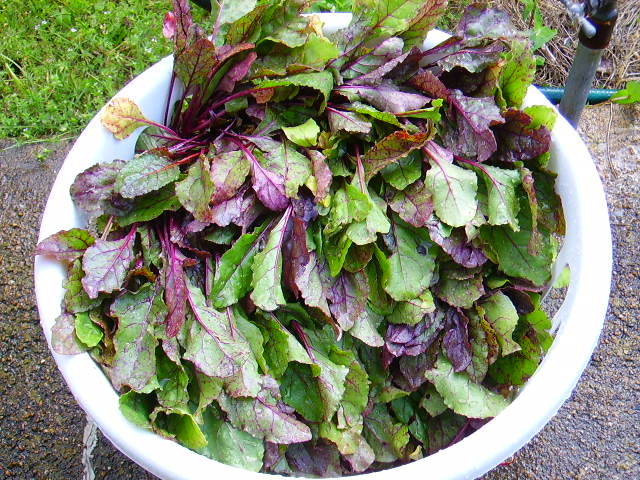
Bushel of Greens
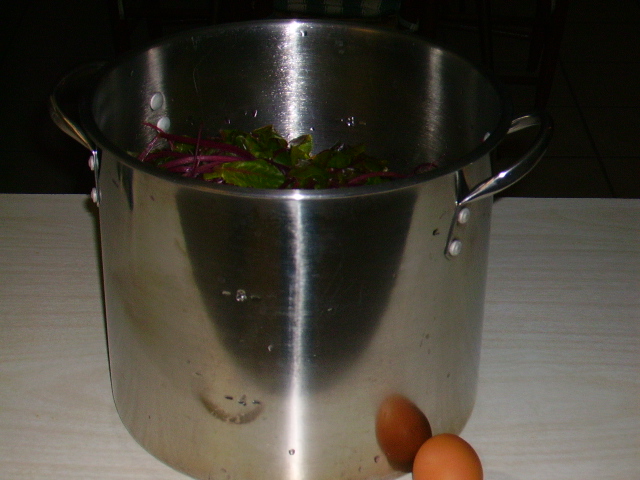
Now pull or cut your greens. I like to lay mine in a bushel basket as I pick them. Here you see them after a light rinsing. Now I place them in a five-gallon bucket and fill with water. After sloshing them around a bit, I place them into the basket again, tip it to allow most of the water out, and take it indoors.
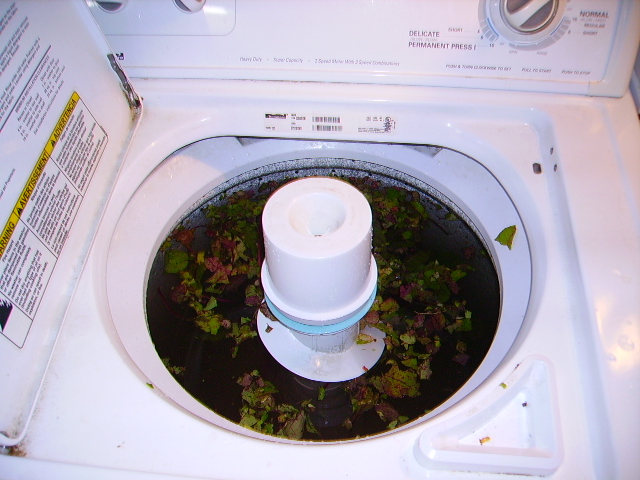
They Float
To finish washing greens, I like to use my clothes washing machine. I always wash a bleach load of towels as the last laundry use, so my washer is bleached. Using the large load and gentle rinse setting, I fill it with cold water and add about 1/3 bushel greens. NO SOAP! I allow it to agitate for 3 to 4 minutes, then stop the cycle and allow it to sit for a few minutes. The greens will float and I scoop them off the top half of the water, into a clean pan or bowl. They will be a bit torn, but we are going to chew them, anyway, right? I then allow the cycle to complete, including the spin portion. (Hint: I always fold or iron clothes while waiting for this, so I do not forget it.)
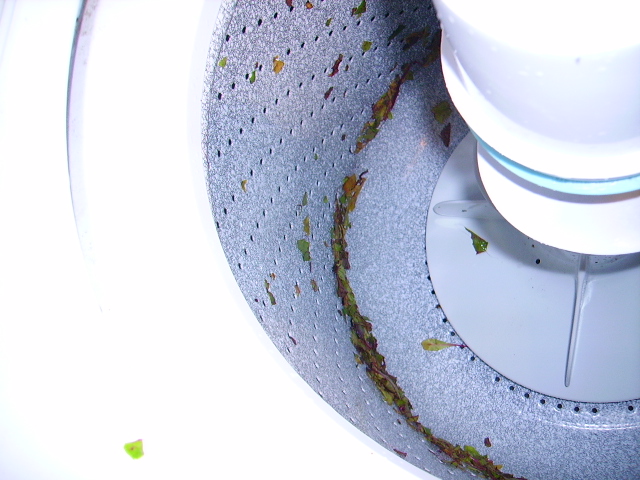
Debris in Washer
In the bottom of the washer will be debris, which you should remove and save for your chickens. Then repeat step 3 to rinse another 1/3 bushel. Although this may seem like using too much water, the alternative is to wash them a few at a time in the sink, using at least seven pans of water for each fourth bushel. The mechanized way is much faster, and I don’t think it wastes water.
To prepare your kitchen, gather a couple strainers, one that will work in the boiling pan, and one that will stand in the sink. Fill either a very clean sink, or a large pan or bowl with cold water.
The StrainersSink Ready
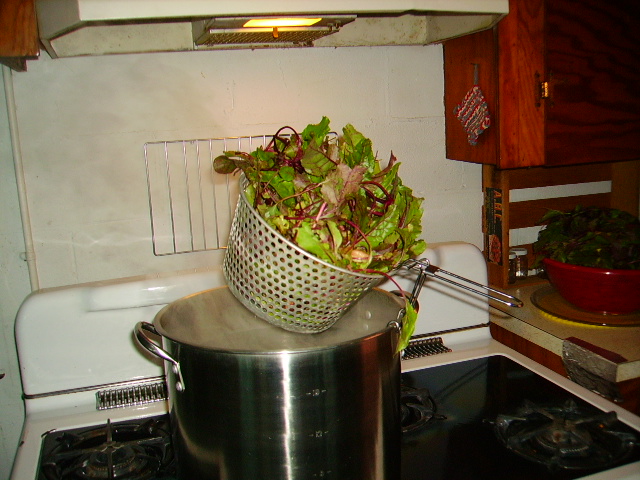
Once the blanch water boils, fill a strainer with raw greens, and carefully lower into water. Cover pan and wait 4 minutes. Using a potholder, raise greens from boiling water and allow to drip a moment. Then plunge blanched greens into the cold water. Stir them gently to help cool quickly. Then transfer to standing strainer to drip before dumping into clean pan or bowl. Repeat this step until all greens are blanched.
Raw, Fluffy and CrispyBlanched, Four Minutes LaterPlunged into the Cold WaterAllowing Excess Water to Drip Off
I started with a bushel, but ended with this, which the pan says is 8 quarts, but only made six, when packed down.
Eight Quarts?
Box or bag for the freezer, and label with date and contents.
Boxed, Labeled, and Ready to Freeze
Too much work? You’ve never tasted fresh beet greens . . .
Many of us grew up on good ol’ bacon and eggs breakfasts and just the thought brings back such good memories. Yet, I wonder how many know how it’s really done, how to put the sizzle into it without having steam coming out of their ears.
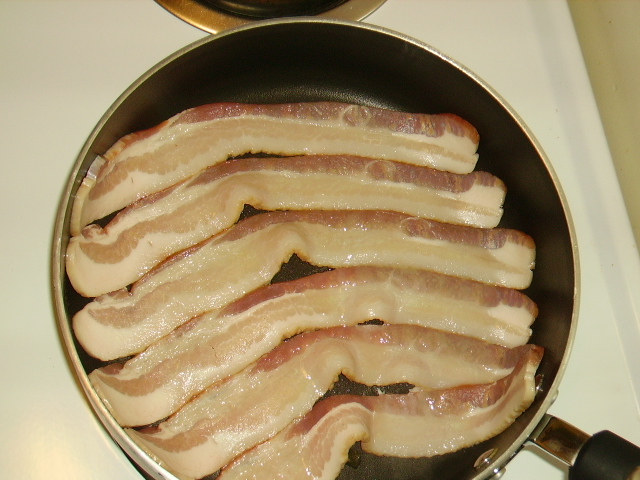
Cold and Crowded
Start with a cold fry pan and crowd the bacon in it, because it will shrink and leftovers are so handy. Heat the pan of bacon slowly. This is what helps prevent shrinking and curling. I use medium heat for bacon.
Covered Pan
As spattering begins, I add a lid to keep stray droplets in the pan. This also helps conserve heat, so you may want to turn the burner temperature down a little. Notice the lid is tilted to allow steam to escape.
This is also a good time to sprinkle with black pepper, if you like.
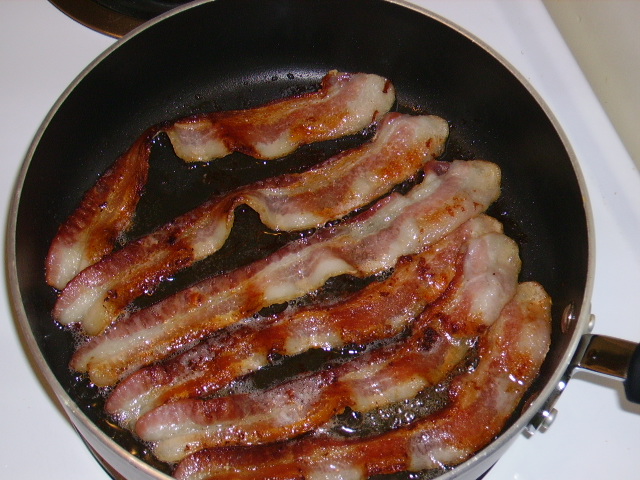
Nearly Done
Once bacon is fried to your liking on one side, use a pair of tongs and turn it over to finish. Add more pepper, if desired. Watch carefully for burning; never use more than medium heat. When done, remove to a plate lined with paper toweling and place in oven set on low, or 150-170 degrees. Allow pan to cool some.
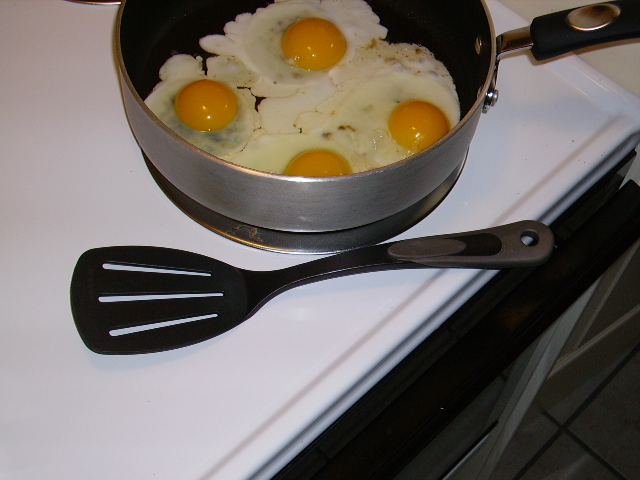
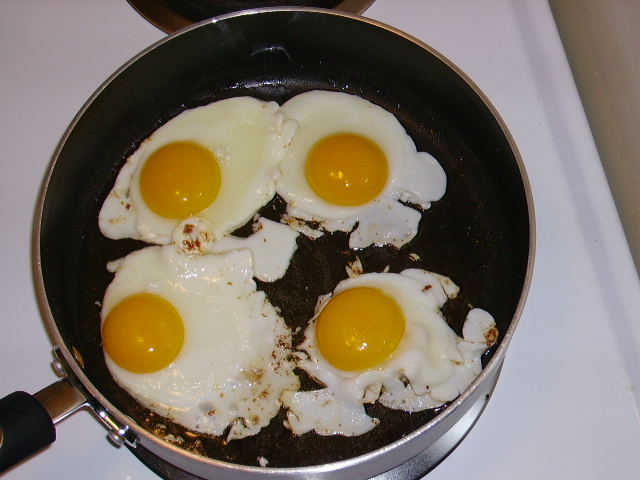
Eggs on Low Heat
Now it is time for the eggs. Break them into the pan if it is not too hot. You do not want the eggs instantly to bubble and harden. The pan should not be very hot. This is the secret to avoiding “gristle” on the edges of the eggs.
Rounded Spatula
The best spatula for managing the tricky task of turning eggs has a rounded front edge. For this non-stick pan, I use this plastic spatula, which, at these low temperatures is SUPPOSED to be safe. Hope they finally got the truth all straightened out about those topics.
Egg Triage
Now comes the test. At our house, one person likes eggs over easy, another likes them broken, flattened, and cooked through. So at this point in cooking the eggs, I pick out the two I feel are most likely to turn out unbroken for the over-easy pair. I choose the two left-most ones. They are ready to turn when the white is mostly gelled. If they are slightly stuck, scoop the spatula under them from all directions, to loosen them, first. Then with the spatula in your dominant hand the and pan handle in the other, tilt the pan slightly to position the spatula under at least half of the egg. Gently tilt the spatula to lift and turn the egg.
If it breaks, you still have three left to try and get it right. This is another of my secrets: turn the over-easy eggs first, so if you break one, it can be for the other person who likes them that way.
Eggs Almost Done
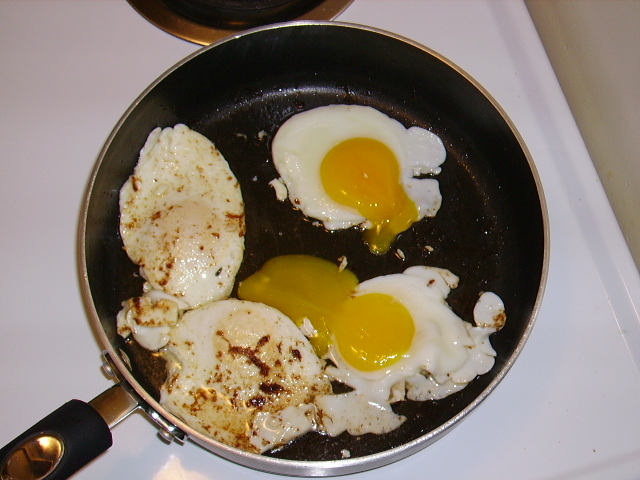
Once you have successfully turned the over-easy eggs, you can relax. Turn off the burner under the pan and allow the existing heat to finish the job gently. To hard-cook a fried egg takes longer, so there is no rush to turn the other two, but do break them at this point, so the yolks can run away some.
Remove the over-easy eggs when the bottoms are done. My over-easy egg eater likes the whites hard. You can determine this by pressing gently on the whites, near the yolk, and if it does not give much, then it is fully cooked. At this point, the yolks are very near overdone, so removing them immediately is the next step. The longer you hold them on the plate before serving, the more the yolk cooks, so do try to hurry your eaters to the table.
Finish the fully cooked eggs by flipping them and waiting until they are cooked through. You may want to return the burner setting to low.
Don’t you LOVE when an experimental trick turns out?
The first time I tried to make perfectly round fried eggs–the kind you put on an English muffin–I succeeded! My way is, I am sure, NOT how many people do it, but it suits me perfectly, I think.
And it was far more fun to figure it out myself, than to conform, anyway.
I know this breakfast post is supposed to come to you on Monday mornings, but life here is slow to return to normal. Lord willing, I will post another A-Okay Breakfast next Monday. In the meantime, try this:
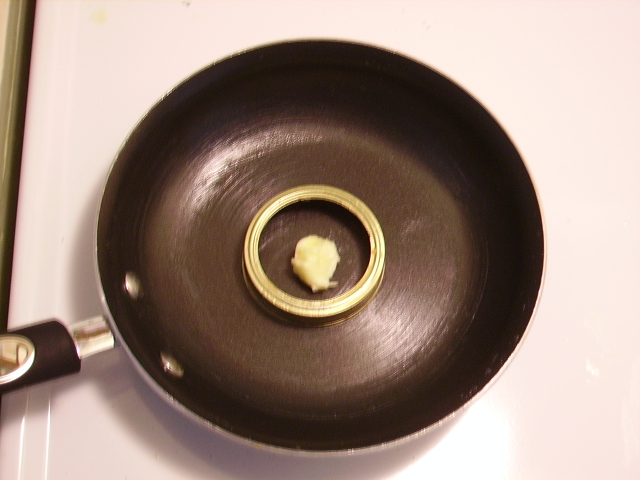
All you need is butter and eggs and a small tin can, such as tuna comes in, or else a canning ring. I use a canning ring for our Frisbee Eggs. (We call them that because they are slightly domed on top and sometimes have a bubble underneath, close enough in shape to a Frisbee, making little ones laugh.)
Place the ring in a small fry pan.
Heating Butter and Ring
Put about 1/2 teaspoon butter in the ring and turn on heat to medium, until butter completely melts.
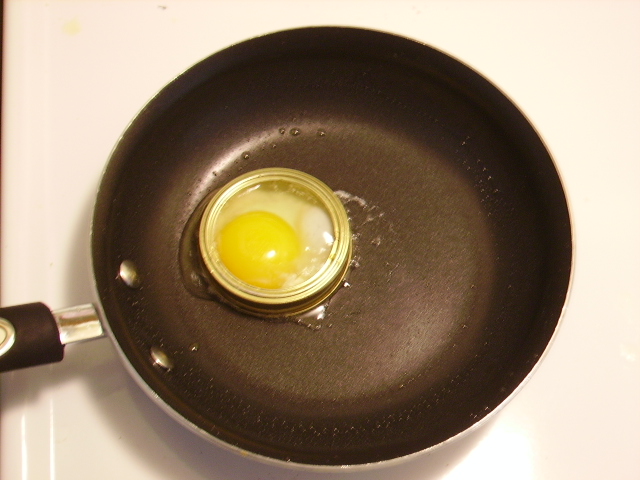
Egg in Ring
Break medium egg into ring, holding ring down briefly, to prevent egg liquids from escaping underneath ring. Reduce heat to medium-low and cook until it is half-cooked.
Fork Lift
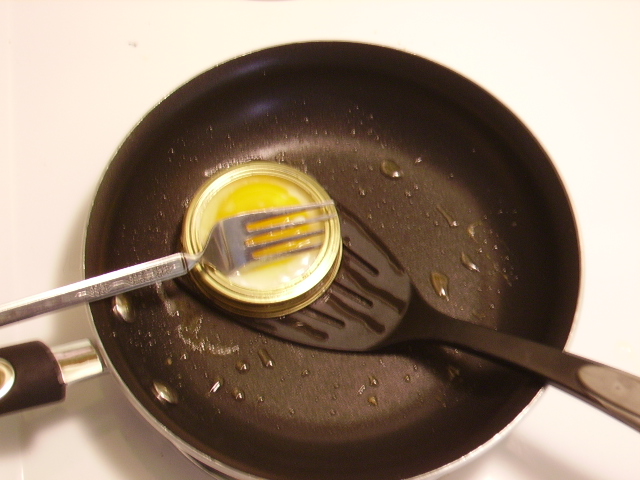
Use fork to help lift egg and ring onto spatula, and flip egg and ring together.
Flipped
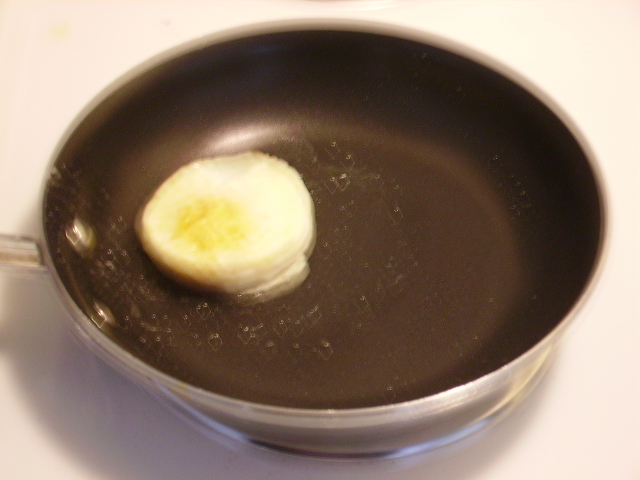
Cook briefly on top side. Then flip again, to remove ring.
Cooking Top
After removing ring, return to cooking top side until egg is done to your preference.
Weekly Photo Challenge Round
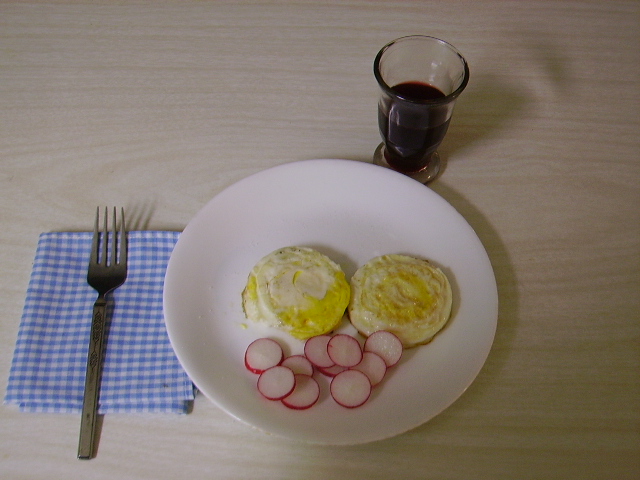
I had mine with several radish slices and salt. Served with 2 ounces pomegranate juice.
Next Monday, I hope to return to the old schedule with “Good Ol’ Bacon and Eggs”.
. . . I do not like the official recipe for zabaglione because it smacks too much of raw egg to suit me and it is too slow. So although several expert cooks will probably turn over in their gravies, I present you with my own version, decidedly not haute.
But delicious.
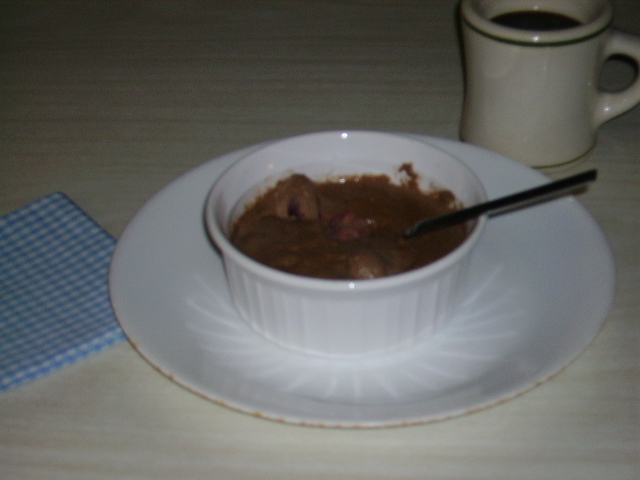
Chocolate/Strawberry Zabaglione
4 frozen strawberries
1 T. butter
2 eggs
½ cup cream
1 T. cocoa powder
¼ t. cinnamon
1 or 2 servings stevia
1/8 t. vanilla
Place strawberries in heat-resistant cereal bowl and set aside. Melt butter in 1-quart stainless saucepan.
All Ingredients
Meanwhile, whisk remaining ingredients together thoroughly, beginning slowly to prevent scattering cocoa powder. Pour into saucepan over melted butter and cook over medium heat, stirring constantly with wire whisk until mixture begins to steam at the edges. At this point it will be ready to thicken. Once mixture thickens some, it will be ready to begin lumping.
(For real zabaglione, cook only until barely thickened and not yet lumpy, then quickly pour into serving dish, omitting strawberries, and allow to cool. The heat in the mixture finishes the cooking process. My way is faster but gives a lumpy result. Since this reminds me of the very breakfast-y oatmeal, I am okay with this.)
Once the A-OK zabaglione becomes somewhat lumpy, the egg is truly done. Pour over strawberries, which will instantly cool it to a good serving temperature, while thawing strawberries enough to eat.
Are you ever too rushed or too un-awake to cook a breakfast? Sometimes I am and that’s when I turn to my secret stash of gold: a small bowl of hard-boiled eggs stored in the fridge.
Hard-boiled eggs are nearly too easy. You just open and eat. If you want, you can really exert yourself and sprinkle on some salt and pepper. Or go all the way and slice them, too.
If I find that slick, greenish coating on the yolk, though, I feel less hungry, fast.
Avoiding the green yolk is easy if you know how to boil an egg. Because breakfast is the most important meal of the day, I love sharing these instructions with anyone who will listen.
To Boil an Egg Hard:
Be sure eggshells are clean and uncracked. Wash with soap and water just before using. Amazing how many folks don’t mind germs on eggs! Germs can be lethal and some parasites do not die at boiling temperatures.
Be sure the raw eggs are old enough. Very fresh eggs that are hard-boiled are difficult to peel. Raw eggs will keep a long while under refrigeration; store-bought eggs are usually several months old before you even buy them. I find that if I keep my hennies’ incredibly fresh eggs at least three weeks before I boil them, they are far easier to peel.
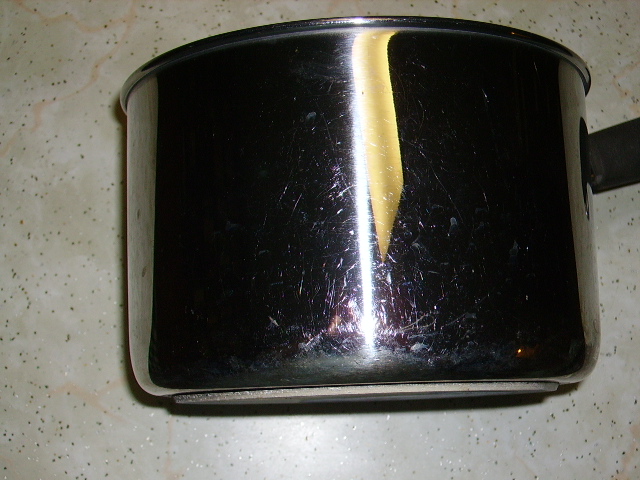
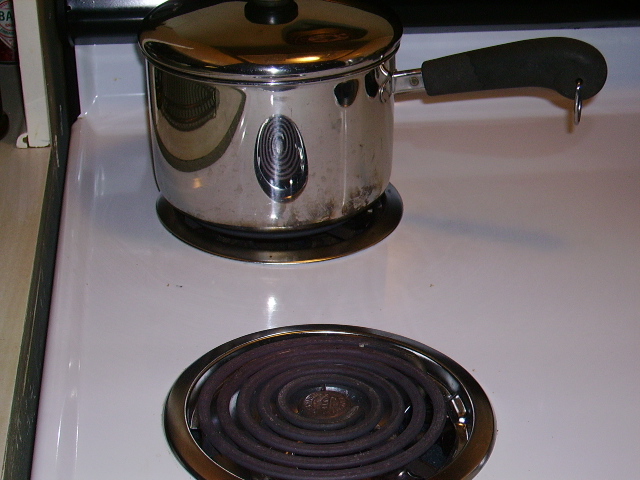
Thick-bottomed Pan
Use a straight-sided pan with a thick bottom. Shown here is a thin, stainless pan with a thick aluminum plate bonded to it.
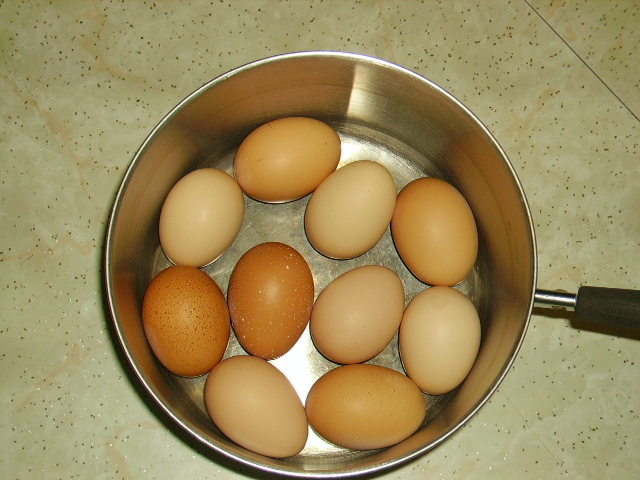
Pan of Eggs
Load only the number of eggs that will fit in a single layer into the pan.
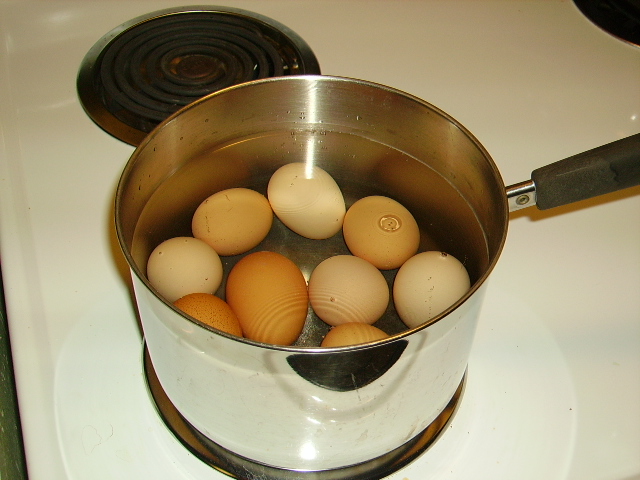
Extra Inch of Water
Cover with tepid water at least an inch over the tops of the eggs.
Add about 1/8 teaspoon salt to water. This supposedly aids with peeling.
Set pan to heat at medium setting; high heat will crack eggs. Stay nearby and monitor its progress.
Boiling
Once water is boiling, set timer and boil for only one minute.
Cover Ten Minutes
Remove from heat and cover pan for ten minutes.
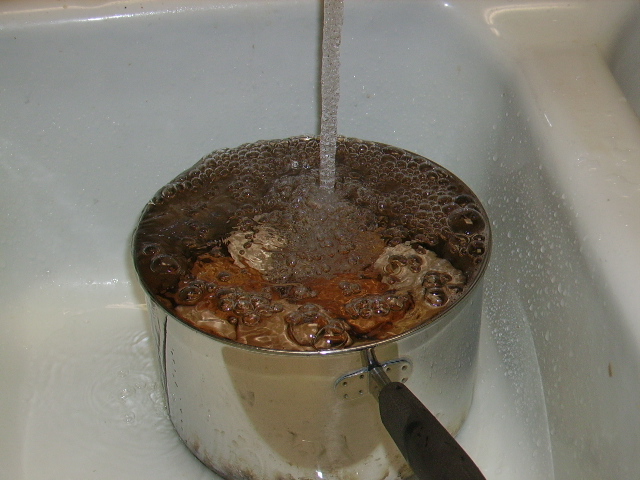
Cooling Water
Cool immediately under running cold water. Dry and store hard-boiled eggs in refrigerator for up to two weeks.
Ready for Fridge
That’s all there is to it. If you have followed these instructions exactly, you will have instant wonder-food for your breakfasts, any time you want.
And a couple of eggs plus a cup of coffee will cost you about 25 cents.







 Home's Cool!