To the sweet ones who visited me daily or almost daily, I thank you so much. Many times you made me smile and your comments made my blog better than it might have been. I wish we could meet. Please understand, I am not dropping off the edge of the world, but only off the blog-wagon.
I plan to return, Lord willing, after Fathers’ Day, to announce my final decision.
Zabaglione is an Italian dessert that is supposed to be just this side of cooked eggs. I like being sure about such things, so my recipe for it will vary from what the very best cookbooks say. That is okay with me. Cooking just a few seconds longer gives me peace of mind. Let this yummy recipe change your way of thinking about breakfast!
2 eggs
1/4 c. cream
1 serving stevia powder
1/2 t. cinnamon
dash nutmeg
few drops vanilla
1. t. butter
large handful frozen blueberries
Place blueberries in a cereal or soup bowl to be ready.
Bowl of Berries
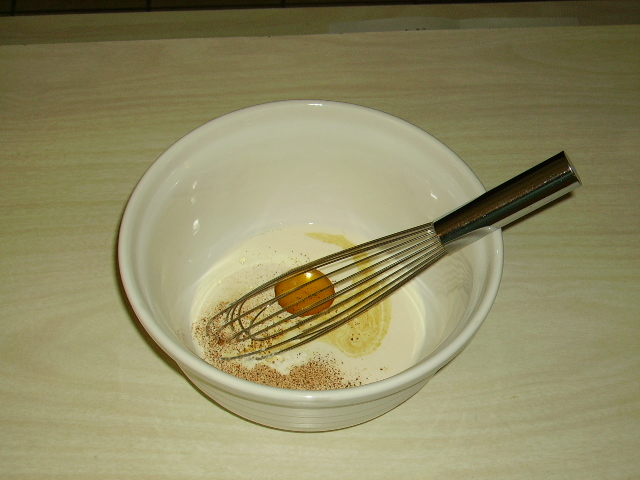
Place rest of ingredients except butter into mixing bowl and whip.
Ready to Whip
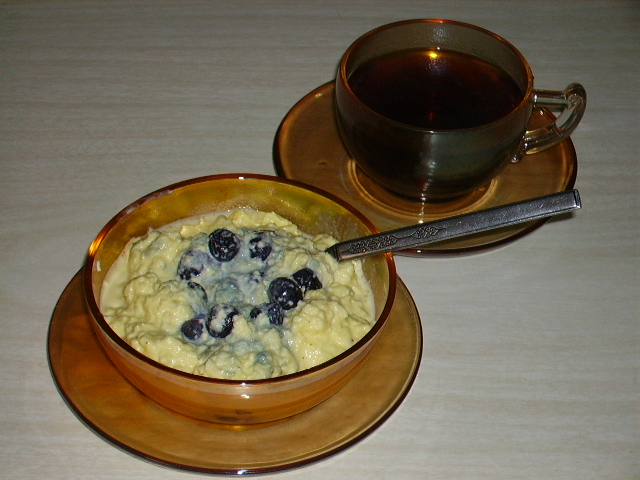
Melt butter in small saucepan and pour in egg mix. Cook on medium while constantly stirring with whip, until mixture thickens. Quickly pour over berries in bowl. Serve with beverage of your choice. Enjoy!
If all hearts were open and all desires known–as they would be if people showed their souls–how many gapings, sighings, clenched fists, knotted brows, broad grins, and red eyes should we see in the marketplace. –Thomas Hardy
If I can sell tickets to my movies like Red Sonja . . . you know I can sell just about anything. –Arnold Schwartznegger
And waving our red weapons o’er our heads, let’s all cry, “Peace, freedom, and liberty . . . ” –Shakespeare, Julius Caesar
Give her two red roses, each with a note. In the first note say, “For the woman I love,” and the second, “For my best friend.” –Unknown
The Lewis and Clark Expidition began on this day, in 1804.
Now that the wonderful produce from the garden needs preserving, let’s talk about how to get the job done as fast as possible and get out of that hot kitchen lickety-split.
Today’s vegetable is beet greens, one of our favorite treats. In fact, we love beet greens so much, we planted two rows of them and will not allow them to mature to beets. We will just pull them and use them for greens. These instructions will work well for any type greens you cook, though.
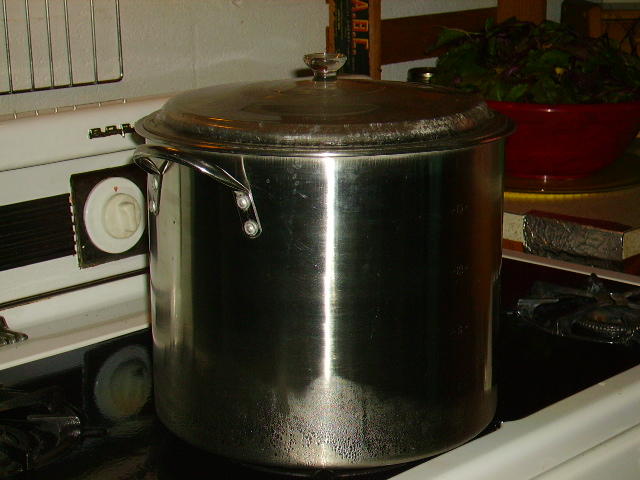
Heating water
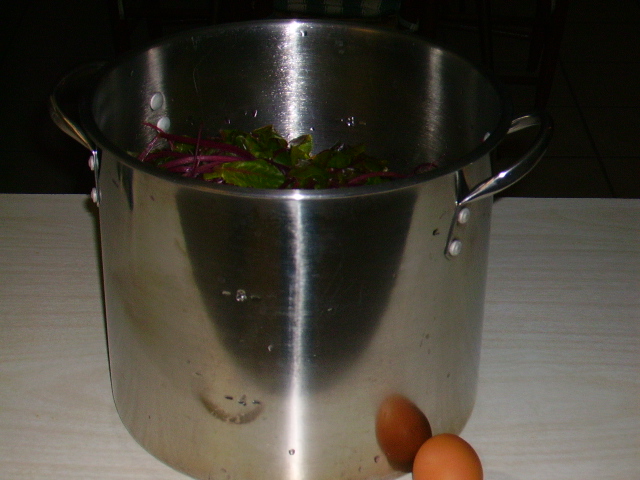
The first step is not to pick the greens, but to heat the blanch water, which takes a long time. If you have an exhaust fan over your stove, you will be glad if you turn it on.
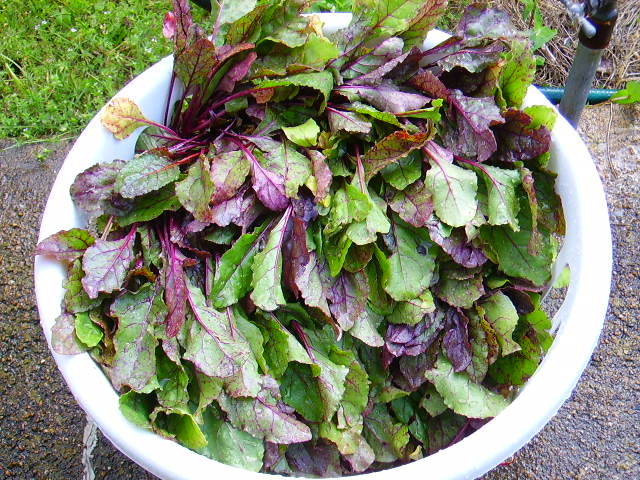
Bushel of Greens
Now pull or cut your greens. I like to lay mine in a bushel basket as I pick them. Here you see them after a light rinsing. Now I place them in a five-gallon bucket and fill with water. After sloshing them around a bit, I place them into the basket again, tip it to allow most of the water out, and take it indoors.
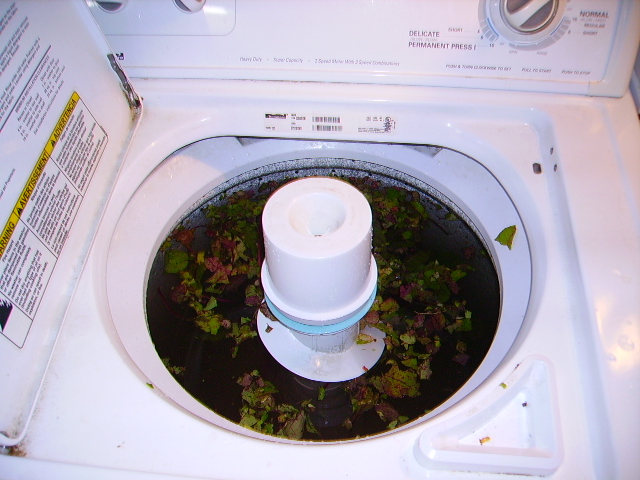
They Float
To finish washing greens, I like to use my clothes washing machine. I always wash a bleach load of towels as the last laundry use, so my washer is bleached. Using the large load and gentle rinse setting, I fill it with cold water and add about 1/3 bushel greens. NO SOAP! I allow it to agitate for 3 to 4 minutes, then stop the cycle and allow it to sit for a few minutes. The greens will float and I scoop them off the top half of the water, into a clean pan or bowl. They will be a bit torn, but we are going to chew them, anyway, right? I then allow the cycle to complete, including the spin portion. (Hint: I always fold or iron clothes while waiting for this, so I do not forget it.)
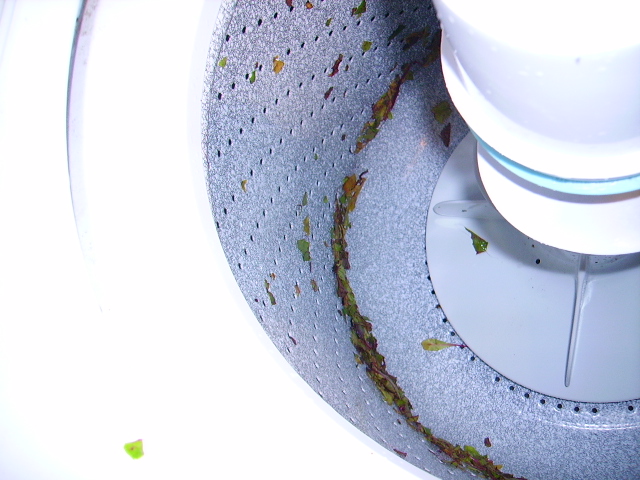
Debris in Washer
In the bottom of the washer will be debris, which you should remove and save for your chickens. Then repeat step 3 to rinse another 1/3 bushel. Although this may seem like using too much water, the alternative is to wash them a few at a time in the sink, using at least seven pans of water for each fourth bushel. The mechanized way is much faster, and I don’t think it wastes water.
To prepare your kitchen, gather a couple strainers, one that will work in the boiling pan, and one that will stand in the sink. Fill either a very clean sink, or a large pan or bowl with cold water.
The StrainersSink Ready
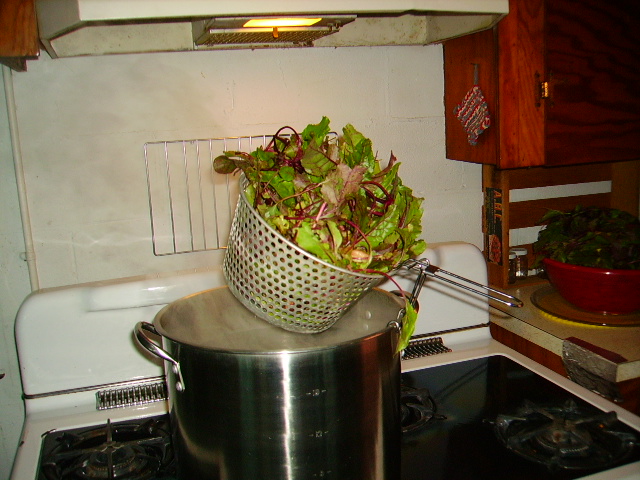
Once the blanch water boils, fill a strainer with raw greens, and carefully lower into water. Cover pan and wait 4 minutes. Using a potholder, raise greens from boiling water and allow to drip a moment. Then plunge blanched greens into the cold water. Stir them gently to help cool quickly. Then transfer to standing strainer to drip before dumping into clean pan or bowl. Repeat this step until all greens are blanched.
Raw, Fluffy and CrispyBlanched, Four Minutes LaterPlunged into the Cold WaterAllowing Excess Water to Drip Off
I started with a bushel, but ended with this, which the pan says is 8 quarts, but only made six, when packed down.
Eight Quarts?
Box or bag for the freezer, and label with date and contents.
Boxed, Labeled, and Ready to Freeze
Too much work? You’ve never tasted fresh beet greens . . .
Not much to say, today, but wanted to show off one of my favorite photos. Surrounded by the safety in many uncles (the blue stripes and the adult finger belong to two of them) a young boy learns about which wildlife is to be trusted, a family tradition meant to instill wisdom and fearlessness:
Many of us grew up on good ol’ bacon and eggs breakfasts and just the thought brings back such good memories. Yet, I wonder how many know how it’s really done, how to put the sizzle into it without having steam coming out of their ears.
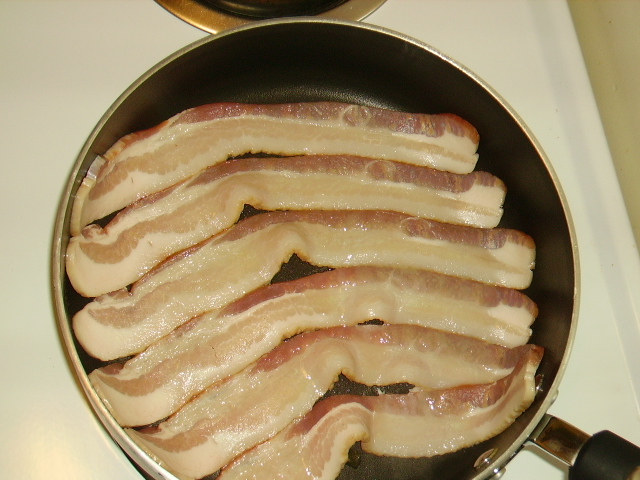
Cold and Crowded
Start with a cold fry pan and crowd the bacon in it, because it will shrink and leftovers are so handy. Heat the pan of bacon slowly. This is what helps prevent shrinking and curling. I use medium heat for bacon.
Covered Pan
As spattering begins, I add a lid to keep stray droplets in the pan. This also helps conserve heat, so you may want to turn the burner temperature down a little. Notice the lid is tilted to allow steam to escape.
This is also a good time to sprinkle with black pepper, if you like.
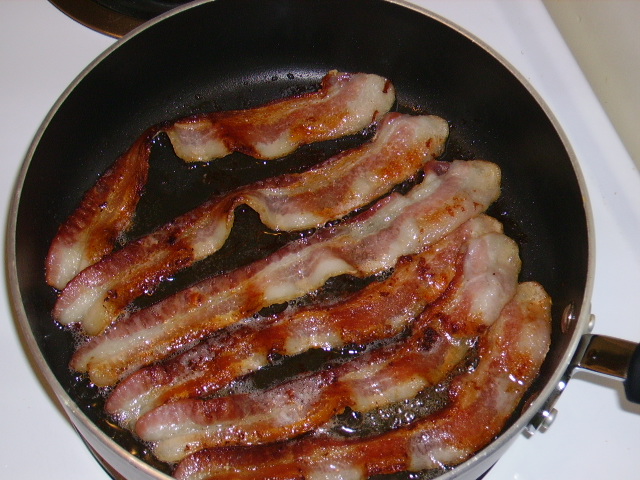
Nearly Done
Once bacon is fried to your liking on one side, use a pair of tongs and turn it over to finish. Add more pepper, if desired. Watch carefully for burning; never use more than medium heat. When done, remove to a plate lined with paper toweling and place in oven set on low, or 150-170 degrees. Allow pan to cool some.
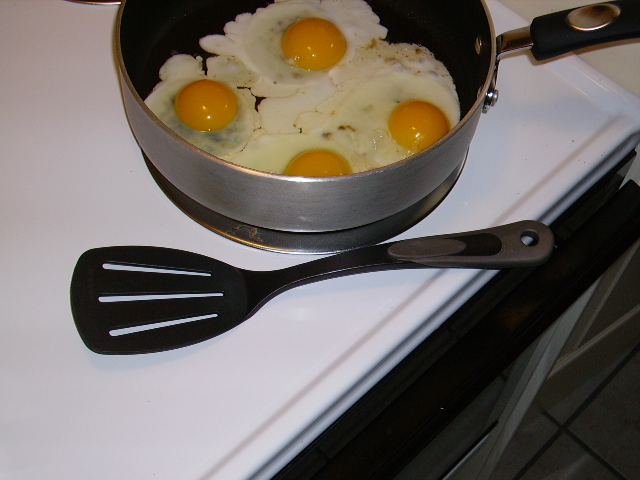
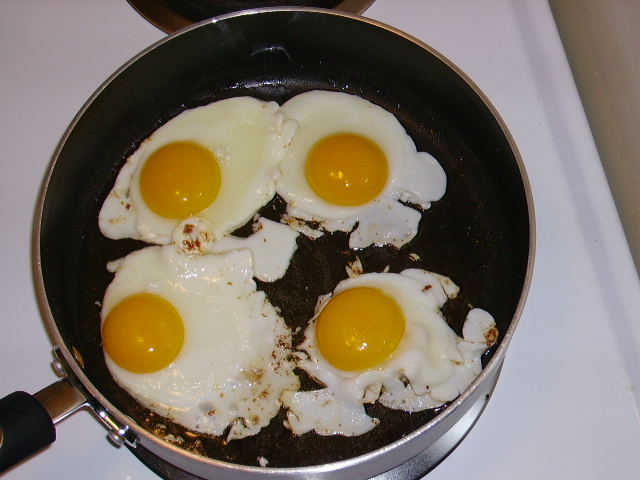
Eggs on Low Heat
Now it is time for the eggs. Break them into the pan if it is not too hot. You do not want the eggs instantly to bubble and harden. The pan should not be very hot. This is the secret to avoiding “gristle” on the edges of the eggs.
Rounded Spatula
The best spatula for managing the tricky task of turning eggs has a rounded front edge. For this non-stick pan, I use this plastic spatula, which, at these low temperatures is SUPPOSED to be safe. Hope they finally got the truth all straightened out about those topics.
Egg Triage
Now comes the test. At our house, one person likes eggs over easy, another likes them broken, flattened, and cooked through. So at this point in cooking the eggs, I pick out the two I feel are most likely to turn out unbroken for the over-easy pair. I choose the two left-most ones. They are ready to turn when the white is mostly gelled. If they are slightly stuck, scoop the spatula under them from all directions, to loosen them, first. Then with the spatula in your dominant hand the and pan handle in the other, tilt the pan slightly to position the spatula under at least half of the egg. Gently tilt the spatula to lift and turn the egg.
If it breaks, you still have three left to try and get it right. This is another of my secrets: turn the over-easy eggs first, so if you break one, it can be for the other person who likes them that way.
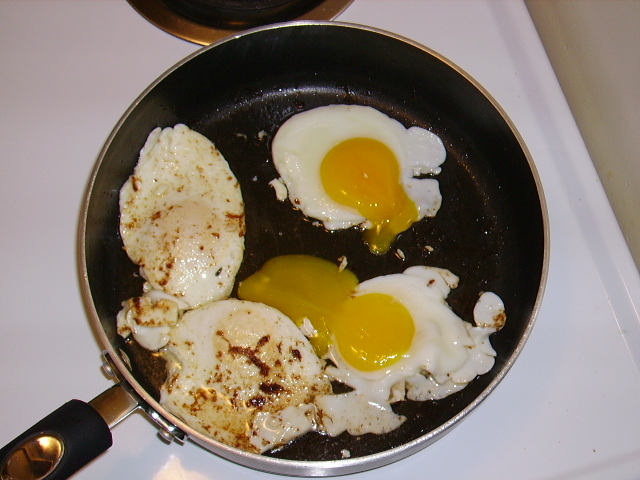
Eggs Almost Done
Once you have successfully turned the over-easy eggs, you can relax. Turn off the burner under the pan and allow the existing heat to finish the job gently. To hard-cook a fried egg takes longer, so there is no rush to turn the other two, but do break them at this point, so the yolks can run away some.
Remove the over-easy eggs when the bottoms are done. My over-easy egg eater likes the whites hard. You can determine this by pressing gently on the whites, near the yolk, and if it does not give much, then it is fully cooked. At this point, the yolks are very near overdone, so removing them immediately is the next step. The longer you hold them on the plate before serving, the more the yolk cooks, so do try to hurry your eaters to the table.
Finish the fully cooked eggs by flipping them and waiting until they are cooked through. You may want to return the burner setting to low.
In honor of the 400th anniversary of the translation of the Bible into English, commissioned by King James of England in 1611, and originally published by Robert Barker, printer to the King, I will use this version for the rest of this year in these posts. Hope we can enjoy the quaint differences we find here and appreciate all that went into it.
Job Chapter 39
Knowest thou the time when the wild goates of the rocke bring forth? or canst thou marke when the hindes doe calue?
Canst thou number the moneths that they fulfill? or knowest thou the time when they bring forth?
They bowe themselues, they bring forth their young ones, they cast out their sorrowes.
Their yong ones are in good liking, they grow vp with corne: they go forth, and returne not vnto them.
Who hath sent out the wild asse free? or who hath loosed the bands of the wild asse?
Whose house I haue made the wildernesse, and the barren lande his dwellings.
He scorneth the multitude of the citie, neither regardeth he the crying of the driuer.
The range of the mountaines is his pasture, and hee searcheth after euery greene thing.
Will the Vnicorne be willing to serue thee? or abide by thy cribbe?
Canst thou binde the Vnicorne with his band in the furrow? or will he harrow the valleyes after thee?
Wilt thou trust him because his strength is great? or wilt thou leaue thy labour to him?
Wilt thou beleeue him that hee will bring home thy seed? and gather it into thy barne?
Gauest thou the goodly wings vnto the peacocks, or wings and feathers vnto the Ostrich?
Which leaueth her egges in the earth, and warmeth them in dust,
And forgetteth that the foot may crush them, or that the wilde beast may breake them.
She is hardened against her yong ones, as though they were not hers: her labour is in vaine without feare.
Because God hath depriued her of wisedome, neither hath he imparted to her vnderstanding.
What time she lifteth vp her selfe on high, she scorneth the horse and his rider.
Hast thou giuen the horse strength? hast thou clothed his necke with thunder?
Canst thou make him afraid as a grashopper? the glory of his nostrils is terrible.
He paweth in the valley, and reioyceth in his strength: hee goeth on to meet the armed men.
He mocketh at feare, and is not affrighted: neither turneth he backe from the sword.
The quiuer ratleth against him, the glittering speare and the shield.
He swalloweth the ground with fiercenesse and rage: neither beleeueth he that it is the sound of the trumpet.
He saith among the trumpets, Ha, ha: and he smelleth the battaile afarre off, the thunder of the captaines, and the shouting.
Doeth the hawke flie by thy wisedome, and stretch her wings toward the South?
Doeth the Eagle mount vp at thy commaund? and make her nest on high?
She dwelleth and abideth on the rocke, vpon the cragge of the rocke, and the strong place.
From thence she seeketh the pray, and her eyes behold a farre off.
Her yong ones also suck vp blood: and where the slaine are, there is he.
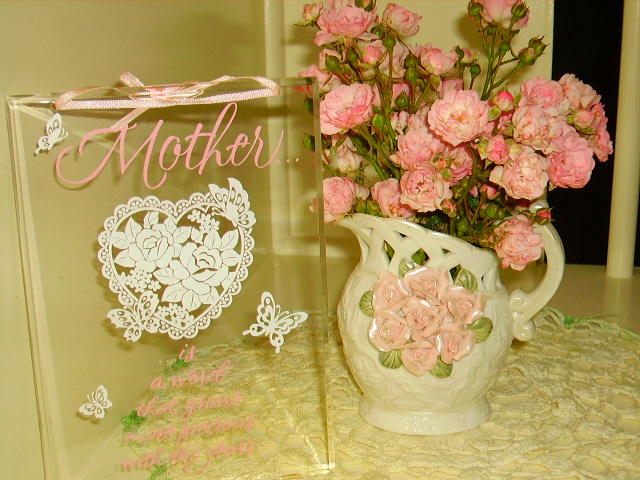
P.S. I picked these for you, all you moms out there. Enjoy!







 Home's Cool!