Posted in Good ol' days, Homemaking, Inspiring, Wisdom, Womanhood

THE MONEY MOM

Hello, Friends!

This week I must devote entirely to several speaking chores. So I thought you would enjoy viewing the introductions to my presentations. Here they are in their approximate final draft. Enjoy!

Managing Your Money

"Sharecropping"
“Sharecropping”

About sixty years ago, two sharecroppers laid their baby boy in a box that was really a dresser drawer, his first cradle. Nursed and blanketed carefully, he was as secure and warm in that box as in the finest crib.

They pumped all water by hand and heated it on a kitchen stove. Dishwater never went to waste. Once that water was hot, it did dishes, the stove, the countertops, the cabinet fronts, the tabletop, the chairs, and last, but not least, it did the floor.

Bathing happened once a week with “washing up” in cold water for other days.

Clothing, being almost all homemade, was divided and washed by use: undies, being all whites, went first, while the water was hot, with colored clothing next, followed by jeans and work clothing, all washed in the same water. Making soap, heating water, and hauling it away took too much time to waste a drop, so when all was done, the water proceeded to the garden, via siphon hose.

The soap was real, homemade, back then and not toxic.

And all had to dry on a line.

The baby boy grew and acquired a little sister. The two children played in the dirt at one end of the rows in a huge bean field, while the dad and mom walked the fields, pulling weeds for their living.

In time, their finances improved and they bought a farm. Almost all food for the next forty years came from the garden. Most was canned or pickled. Seldom was anything thrown away. Scraps went to the chickens. Children who did not like the food offered at the table still had to eat it. And no one got dessert until the plate was clean. The children grew up adaptable to almost any food.

Meanwhile, a city girl grew up only a bit more affluent, dressed in home-made clothing that was washed all in the same water and hung to dry. Climbing trees and building cities in the dust under them, she also had to clean her plate, no matter what, and it was garden food. Scraps went to her chickens, too.

Both families owned only one car, one small black and white T.V., and no computers. Both families mowed their own lawns with reel type mowers. The girls in both families went to bed in curlers and there was no hair dryer in either home, no beater bars on the vacuums, and no A.C.

When visitors came, someone slept on the floor. Soda pop happened once or twice a year.

The children grew up and wanted brand new store-bought clothing, so they got jobs and bought them. Only–the girls did the math and often bought patterns and fabric, instead.

When they went to college, the boy and the girl each recognized something about the other; he, her homemade clothing, and she, his homemade chessboard. They married and made two decisions:

  1. Mom would stay home, and,
  2. Everything would be homemade.

It was a simple step to move to home schooling.

That was about 28 years ago, and the little tree-climbing girl stands before you today to say:

It can be done. Go there.

Posted in Blessings of Habit, Homemaking, Inspiring, Sayings, Wisdom, Womanhood

LET’S DON’T BE TURKEYS!

Hello, Friends!

This week I must devote entirely to several speaking chores. So I thought you would enjoy viewing the introductions to my presentations. Here they are in their approximate final draft. Enjoy!

Disorganization vs. Order

Don't be such a turkey!We lingered over lunch, one day, with dear old friends, while they shared stories of life on their farm. They had owned a crazy bull, and some weird goats, and we enjoyed some great laughs at their antics. The story of the turkey, though, weakened us with laughter to the point of tears.

They say turkeys are stupid. Their turkey was a full-grown tom, and accustomed to life on the farm. It was so accustomed (and so stupid) that they had been able for two whole YEARS to keep it fully contained using only half a fence.

I do NOT mean just the bottom half, but just two adjoining fence panels, just the corner they made.

This poor, stupid creature did not know that it could escape by going past the fence. It had learned that the fence (at one time) was perpetual, like a circle with corners, and that was the only reality it could grasp: the fence never ends, is impossible to escape.

It had worn an L-shaped path in the pasture, walking back and forth from one end of the fence, around the inside corner, to the other end, and back.

Before we laugh too hard, though, we need to look at ourselves a bit.

Many of us resolve to make major changes in our organizational skills. Why do we do that? What is so important about it that it has become such a rut for us that it is a lucrative business?

One thing that motivates each of us, whether we believe it or not, whether we care to admit it or not, is that God has placed the desire inside each of us. Even those who do not know Him have this God-given love for the inviting beauty that comes from being organized.

We know it is true. But it takes so much mental energy to keep everything going, to remember everything, to think every thought necessary for progress . . . Rational thought breaks down. We gripe. And increasing voice volume does NOT increase productivity. We become unpleasant to live with. We retrace steps, going back and forth.

Like that turkey.

When we organize, though, daily chores run smoothly. Adding extra challenges is only slightly challenging. Our thoughts are only of adding a new emphasis or a special touch; of how best to bless someone; of what God wants from us. Instead of scowls of anxiety, we wear smiles of excitement.

Stress taxes our health. It causes illness, accidents, and waste. When we learn to flow more naturally within our daily activities, we add to our health, safety, and even our savings account. We become better stewards of the gifts God has given us.

Let’s go there!

Posted in Blessings of Habit, Homemaking, Recipes, Who's the mom here?, Wives

The A-OK Breakfast – Blueberry Vanilla Spice Zabaglione!

Zabaglione is an Italian dessert that is supposed to be just this side of cooked eggs. I like being sure about such things, so my recipe for it will vary from what the very best cookbooks say. That is okay with me. Cooking just a few seconds longer gives me peace of mind. Let this yummy recipe change your way of thinking about breakfast!

2 eggs
1/4 c. cream
1 serving stevia powder
1/2 t. cinnamon
dash nutmeg
few drops vanilla
1. t. butter
large handful frozen blueberries

Place blueberries in a cereal or soup bowl to be ready.

bowl of berries
Bowl of Berries

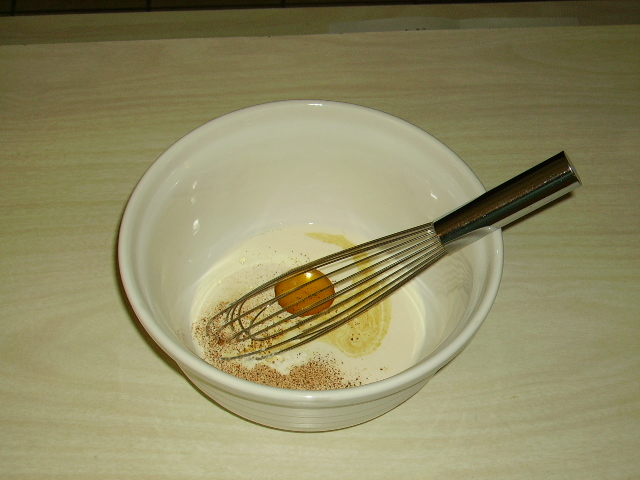
Place rest of ingredients except butter into mixing bowl and whip.

ready to mix
Ready to Whip

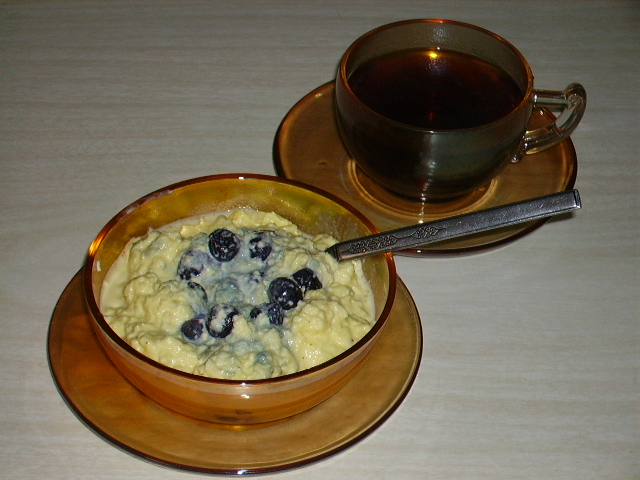
 Melt butter in small saucepan and pour in egg mix. Cook on medium while constantly stirring with whip, until mixture thickens. Quickly pour over berries in bowl. Serve with beverage of your choice. Enjoy!

finished product
Finished Product
Posted in Home School, Homemaking, Inspiring, Womanhood

No Such Thing as a Single Income Family!

Saved is earned.
Saved is earned.
Big announcement:

Parents who home educate their children must have someone at home. We may quibble about which parent must stay, but no doubt someone simply must.

Lots of people think keeping a parent at home precludes being a two income family, but it does not. The act of staying home saves so much, one wonders how that second wage-earner makes any money at all. Let’s look at how it adds up. (Note: These are 2011 prices.):

  1. Clothing. Stay-home clothes, timely bought (on sale) cost far less than suits or uniforms bought under duress. The same is true for shoes, bags, coats, etc.
  2. Transportation. If only one parent is going out to work, only one car is necessary. Same for gas.
  3. Work. Someone has to do it. Either you clean the house or someone else gets about $1000 per year to do it. You can do your own laundry, yard work, repairs, etc., and save the high price of hiring it done.
  4. Cooking. A rib-eye steak costs about $5 on sale at the grocery, about $12 at a restaurant. Spaghetti dinner for six costs the same at home as for one at a restaurant. Maybe less. A homemade birthday cake costs about $5, compared to $15 from the store, and you know which tastes better! Hearty, homemade bread is half or less of insipid store-bought.
    However, if you make these yummy foods to sell, you get the store price, or above.
  5. Shopping. What? Isn’t shopping how we lose money? No, that’s random spending. Shopping is comparing prices, waiting for sales, and squeezing all the value you can from every penny. It is sticking to your list, buying in bulk, and always being ready for the surprise bargain for someone’s gift for the future.
    It is what you don’t have time for if you’re on your way home from the office.
  6. Sewing. While it is true, fabric has gone up, it is also true you can make new, lovely curtains with hardly any sewing instructions, covering that window in sale fabric for about $25 instead of $125. With only a bit more knowledge, you could make yourself a skirt or cape. Learn a tiny bit more and make simple dresses for your girls. All with the same savings rate.
    But if you sell, it . . .
  7. Gardening. A pint of home-canned green beans costs about ten cents for the lid and bit more for energy to run the stove. There is an initial investment, but you can re-coup the cost once you’ve canned for a year or two. And store-bought vegetables are nearly $1 per can.
    And sometimes you can find used pressure canners and jars for nearly free.
  8. Crafts. A bit of yarn, a drop of glue, how surprising the fun and savings in making gifts! And the savings is phenomenal. You could develop a reputation for a certain type of gift and become known as “the afghan lady” or the “soap lady”, turning it into a business.
  9. Last, but not least, Child Care! It’s about $18 per day per child.
    That does not factor in the cost of medical care for all the diseases they will pick up.

This list could go on forever, but you get the idea. If, when you are at home, you actually WORK, you are a working mom. You add greatly to the family wealth. You add income by stopping the outgo.

Stop just wishing. You CAN go home. And this is how.

Posted in Blessings of Habit, Good ol' days, Homemaking, Recipes, Who's the mom here?, Wives, Womanhood

The Fastest Way to Put Up Greens

Now that the wonderful produce from the garden needs preserving, let’s talk about how to get the job done as fast as possible and get out of that hot kitchen lickety-split.

Today’s vegetable is beet greens, one of our favorite treats. In fact, we love beet greens so much, we planted two rows of them and will not allow them to mature to beets. We will just pull them and use them for greens. These instructions will work well for any type greens you cook, though.

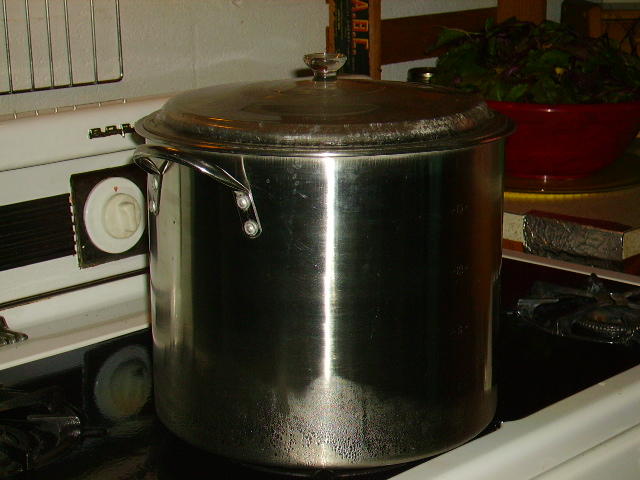
heating water
Heating water
  1. The first step is not to pick the greens, but to heat the blanch water, which takes a long time. If you have an exhaust fan over your stove, you will be glad if you turn it on.

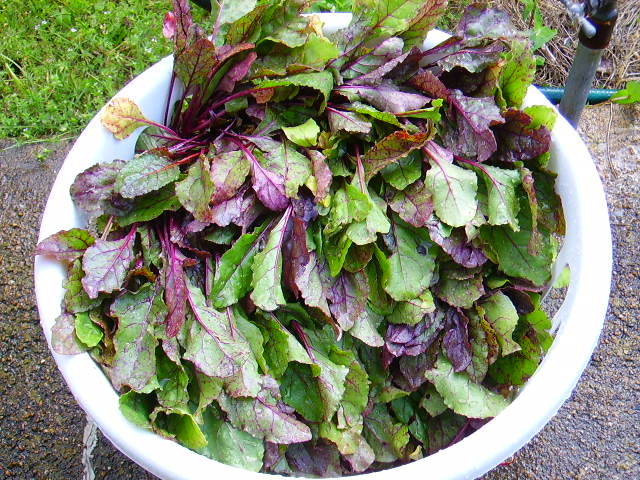
    bushel of greens
    Bushel of Greens
  2. Now pull or cut your greens. I like to lay mine in a bushel basket as I pick them. Here you see them after a light rinsing. Now I place them in a five-gallon bucket and fill with water. After sloshing them around a bit, I place them into the basket again, tip it to allow most of the water out, and take it indoors.

    they float
    They Float
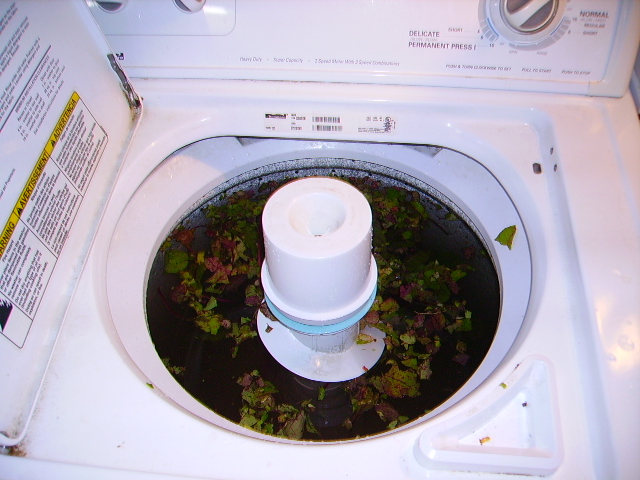
  3. To finish washing greens, I like to use my clothes washing machine. I always wash a bleach load of towels as the last laundry use, so my washer is bleached. Using the large load and gentle rinse setting, I fill it with cold water and add about 1/3 bushel greens. NO SOAP!  I allow it to agitate for 3 to 4 minutes, then stop the cycle and allow it to sit for a few minutes. The greens will float and I scoop them off the top half of the water, into a clean pan or bowl. They will be a bit torn, but we are going to chew them, anyway, right? I then allow the cycle to complete, including the spin portion. (Hint: I always fold or iron clothes while waiting for this, so I do not forget it.)

    debris in washer
    Debris in Washer
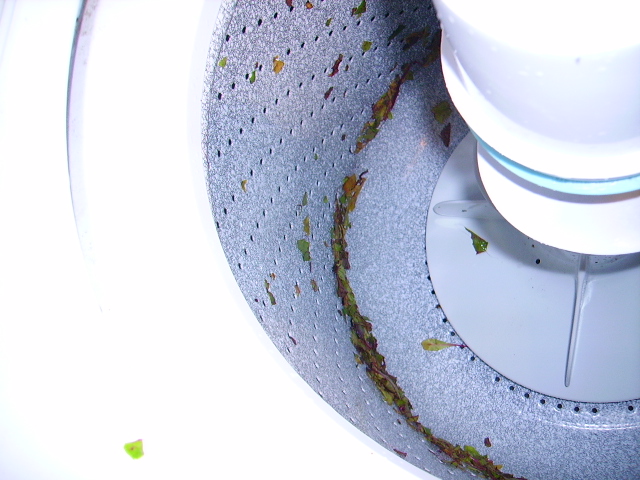
  4. In the bottom of the washer will be debris, which you should remove and save for your chickens. Then repeat step 3 to rinse another 1/3 bushel. Although this may seem like using too much water, the alternative is to wash them a few at a time in the sink, using at least seven pans of water for each fourth bushel. The mechanized way is much faster, and I don’t think it wastes water.
  5. To prepare your kitchen, gather a couple strainers, one that will work in the boiling pan, and one that will stand in the sink. Fill either a very clean sink, or a large pan or bowl with cold water.

    the strainers
    The StrainersSink Ready
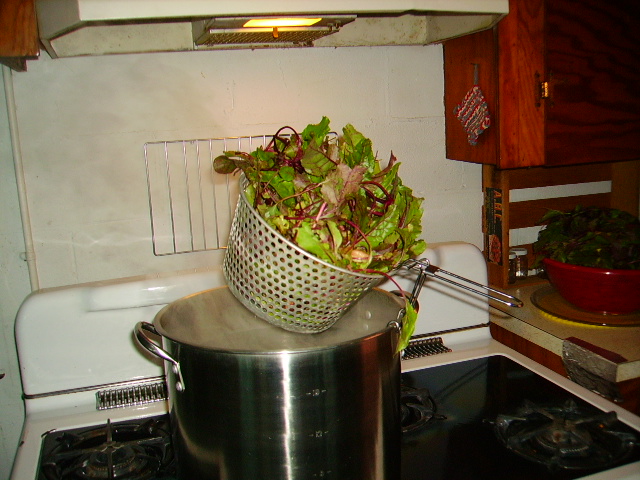
  6. Once the blanch water boils, fill a strainer with raw greens, and carefully lower into water. Cover pan and wait 4 minutes. Using a potholder, raise greens from boiling water and allow to drip a moment. Then plunge blanched greens into the cold water. Stir them gently to help cool quickly. Then transfer to standing strainer to drip before dumping into clean pan or bowl. Repeat this step until all greens are blanched.

    raw
    Raw, Fluffy and CrispyBlanched, Four Minutes LaterPlunged into the Cold WaterAllowing Excess Water to Drip Off
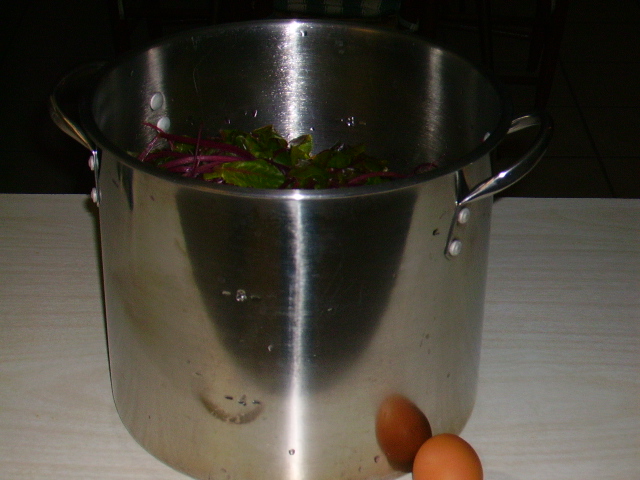
  7. I started with a bushel, but ended with this, which the pan says is 8 quarts, but only made six, when packed down.

    eight quarts
    Eight Quarts?
  8. Box or bag for the freezer, and label with date and contents.

    boxed
    Boxed, Labeled, and Ready to Freeze

Too much work? You’ve never tasted fresh beet greens . . .

Posted in Blessings of Habit, Homemaking, Recipes, Who's the mom here?, Wives

The A-OK Breakfast – Good Ol’ Bacon and Eggs!

Many of us grew up on good ol’ bacon and eggs breakfasts and just the thought brings back such good memories. Yet, I wonder how many know how it’s really done, how to put the sizzle into it without having steam coming out of their ears.

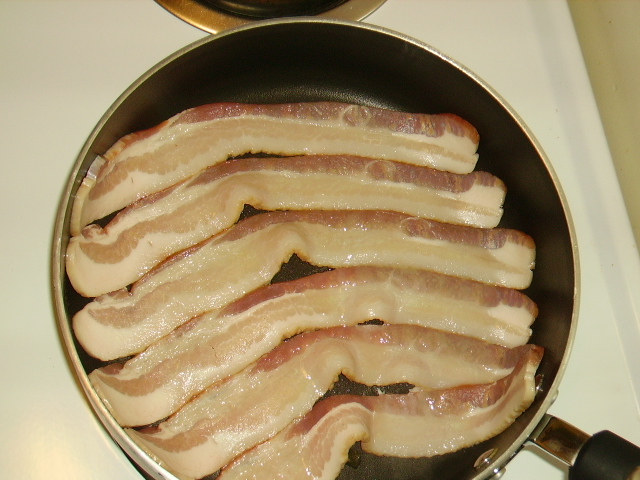
cold and crowded
Cold and Crowded

Start with a cold fry pan and crowd the bacon in it, because it will shrink and leftovers are so handy. Heat the pan of bacon slowly. This is what helps prevent shrinking and curling. I use medium heat for bacon.

covered pan
Covered Pan

As spattering begins, I add a lid to keep stray droplets in the pan. This also helps conserve heat, so you may want to turn the burner temperature down a little. Notice the lid is tilted to allow steam to escape. 

This is also a good time to sprinkle with black pepper, if you like.

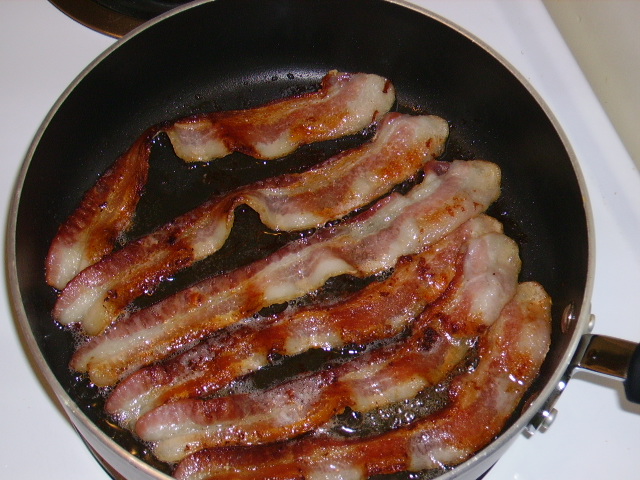
nearly done
Nearly Done

Once bacon is fried to your liking on one side, use a pair of tongs and turn it over to finish. Add more pepper, if desired. Watch carefully for burning; never use more than medium heat. When done, remove to a plate lined with paper toweling and place in oven set on low, or 150-170 degrees. Allow pan to cool some.

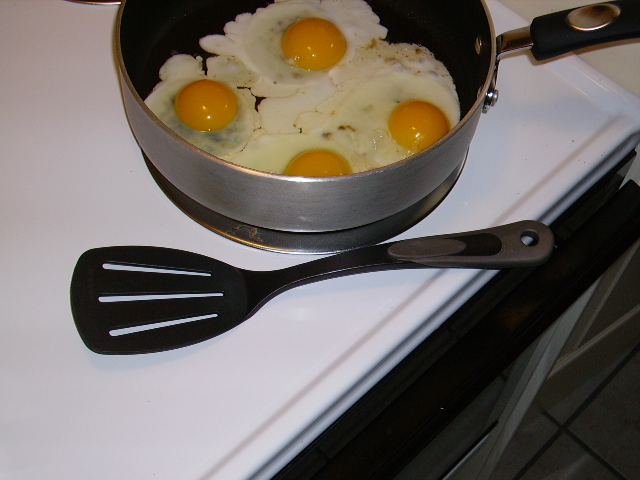
eggs on low
Eggs on Low Heat

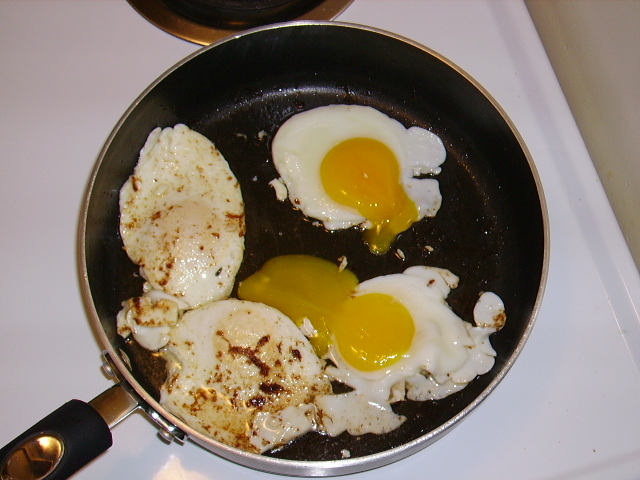
Now it is time for the eggs. Break them into the pan if it is not too hot. You do not want the eggs instantly to bubble and harden. The pan should not be very hot. This is the secret to avoiding “gristle” on the edges of the eggs.

rounded spatula
Rounded Spatula

The best spatula for managing the tricky task of turning eggs has a rounded front edge. For this non-stick pan, I use this plastic spatula, which, at these low temperatures is SUPPOSED to be safe. Hope they finally got the truth all straightened out about those topics.

egg triage
Egg Triage

Now comes the test. At our house, one person likes eggs over easy, another likes them broken, flattened, and cooked through. So at this point in cooking the eggs, I pick out the two I feel are most likely to turn out unbroken for the over-easy pair. I choose the two left-most ones. They are ready to turn when the white is mostly gelled. If they are slightly stuck, scoop the spatula under them from all directions, to loosen them, first. Then with the spatula in your dominant hand the and pan handle in the other, tilt the pan slightly to position the spatula under at least half of the egg. Gently tilt the spatula to lift and turn the egg.

If it breaks, you still have three left to try and get it right. This is another of my secrets: turn the over-easy eggs first, so if you break one, it can be for the other person who likes them that way.

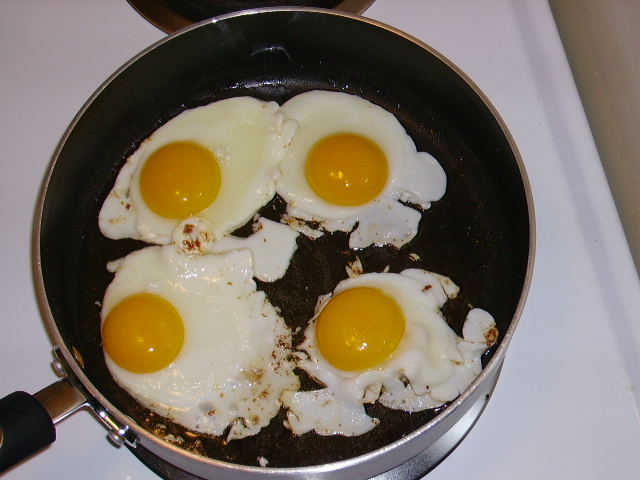
eggs almost done
Eggs Almost Done

Once you have successfully turned the over-easy eggs, you can relax. Turn off the burner under the pan and allow the existing heat to finish the job gently. To hard-cook a fried egg takes longer, so there is no rush to turn the other two, but do break them at this point, so the yolks can run away some.

Remove the over-easy eggs when the bottoms are done. My over-easy egg eater likes the whites hard. You can determine this by pressing gently on the whites, near the yolk, and if it does not give much, then it is fully cooked. At this point, the yolks are very near overdone, so removing them immediately is the next step. The longer you hold them on the plate before serving, the more the yolk cooks, so do try to hurry your eaters to the table.

Finish the fully cooked eggs by flipping them and waiting until they are cooked through. You may want to return the burner setting to low.

Serve with hot coffee and toast.

Don’t forget: the bacon is in the oven.

Posted in Homemaking, Inspiring, Recipes

The A-Okay Breakfast – Frisbee Eggs!

Don’t you LOVE when an experimental trick turns out?

The first time I tried to make perfectly round fried eggs–the kind you put on an English muffin–I succeeded! My way is, I am sure, NOT how many people do it, but it suits me perfectly, I think.

And it was far more fun to figure it out myself, than to conform, anyway.

I know this breakfast post is supposed to come to you on Monday mornings, but life here is slow to return to normal. Lord willing, I will post another A-Okay Breakfast next Monday. In the meantime, try this:

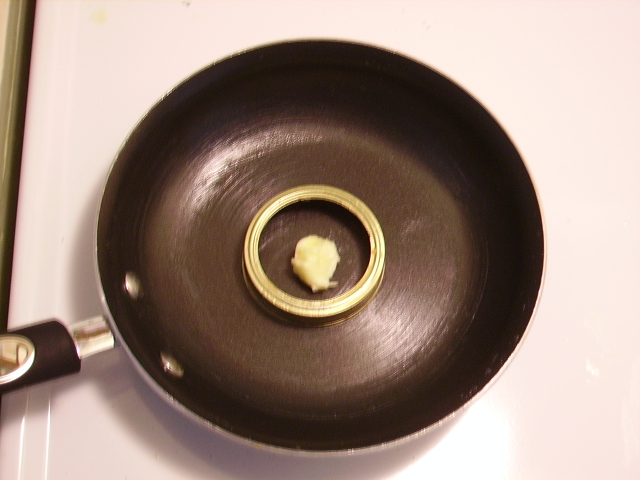
All you need is butter and eggs and a small tin can, such as tuna comes in, or else a canning ring. I use a canning ring for our Frisbee Eggs. (We call them that because they are slightly domed on top and sometimes have a bubble underneath, close enough in shape to a Frisbee, making little ones laugh.)

Place the ring in a small fry pan.

heating butter and ring
Heating Butter and Ring

Put about 1/2 teaspoon butter in the ring and turn on heat to medium, until butter completely melts.

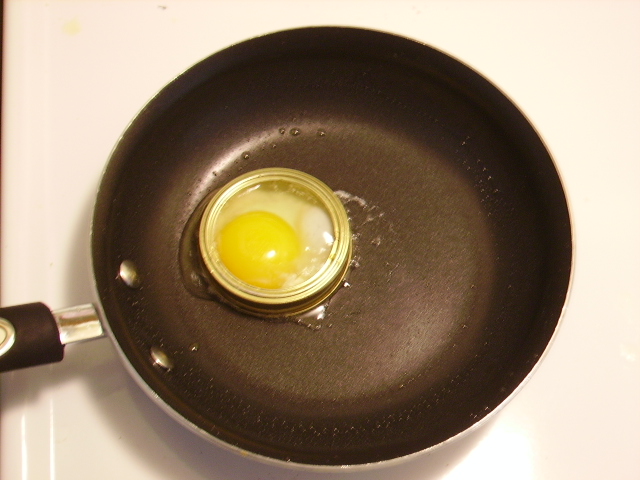
egg in ring
Egg in Ring

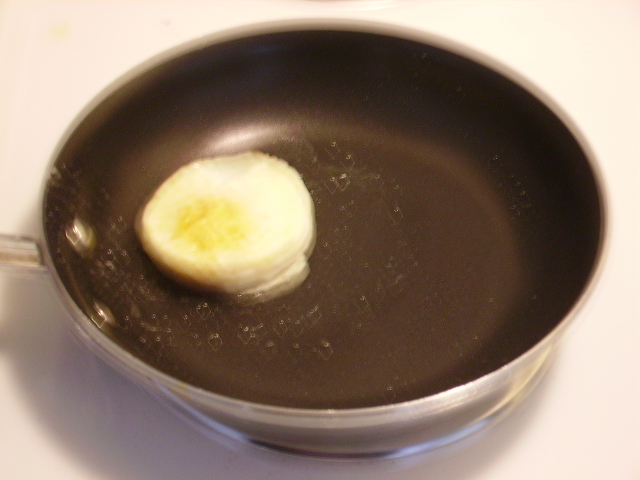
Break medium egg into ring, holding ring down briefly, to prevent egg liquids from escaping underneath ring. Reduce heat to medium-low and cook until it is half-cooked.

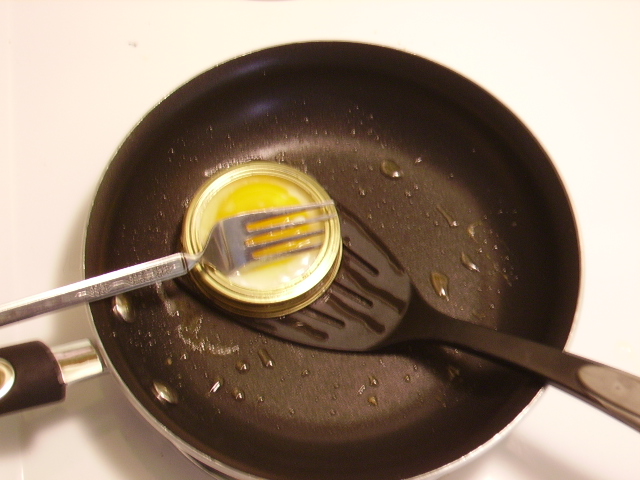
fork lift
Fork Lift

Use fork to help lift egg and ring onto spatula, and flip egg and ring together.

flipped
Flipped

Cook briefly on top side. Then flip again, to remove ring.

cooking top
Cooking Top

After removing ring, return to cooking top side until egg is done to your preference.

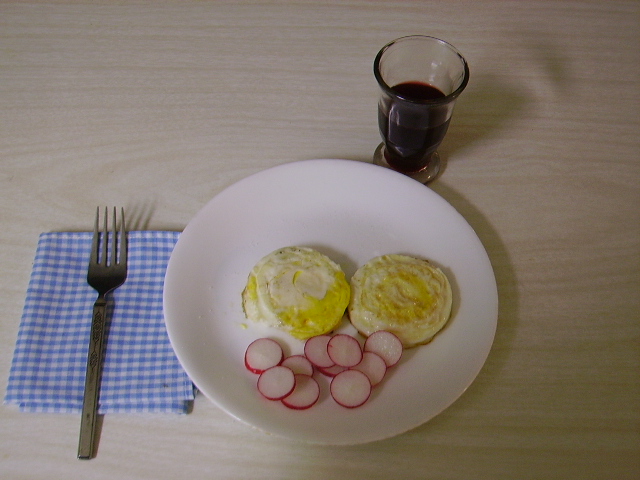
weekly photo challenge round
Weekly Photo Challenge Round

I had mine with several radish slices and salt. Served with 2 ounces pomegranate juice.

Next Monday, I hope to return to the old schedule with “Good Ol’ Bacon and Eggs”.

See ya’!