Posted in Blessings of Habit, Health, Inspiring, Pre-schoolers, Who's the mom here?, Wisdom

Huh? Oh. — Repeating as a Step in Learning New Habits

(302/365) Q W E R T YBe good.

Be quiet.

Be careful.

Behave.

Brush your teeth. Pick up your toys. Clean your plate. Wash your hands. Wear a hat. Feed the dog. Wipe your feet.

Haven’t we all said all those things, and many others, a hundred times, at least?

We should train our children in every habit of good, such as obedience, kindness, and cleanliness.

This produces good adults. We could use a few more good adults.

How do we instill habits into children? The three-stage process is not so hard and begins with repetition.

I can type, from memory, a list of all the countries in Southeast Asia:

Malaysia, Laos, Burma, Kampuchea, Brunei, Vietnam, Indonesia, Singapore, Thailand, Philippines.

I can type, from memory, a list of all the English auxiliary verbs:

Is, am, are, was, were, be, being, been, shall, will, should, would, may, might, must, can, could, do, does, did, have, has, had.

Formulas for geometry, rules of the road, conjugations of foreign verbs, Bible verses, State capitals, all still reside in my attic, ready for me to climb up there and retrieve them. I learned them through repeating. They may fade as I age, but that will not mean that the repetition I used to learn them was wasted.

Repetition has saved me trips to the reference section of the library. It saves me mistakes, it helps me be a better teacher and helpful person, and it is fun. It is especially fun if after 40 years, I hop on a bike or sit at a keyboard, and every skill is still in place. It makes me very glad for asdf jkl; asdf jkl; asdf jkl; .

Repetition is a great learning tool, one that we can teach our children to enjoy, if we do not mind making a little effort at helping with it — you know, songs, games, flashcards, etc. Our children’s future successes are worth more than a little effort, on our part, and on theirs.

Repeatedly asking the same question is one effort that works. Every time we went shopping, I would ask my children what was the rule. They knew. “If anyone but Mom touches merchandise, we all have to go back to the car.” I made it stick. They knew that, too. That repetition saved many a gift store. As they aged, the question changed: “Did you bring money? No? Then you are not shopping; you are just handling things that belong to the store manager, and not to you.” I thought they’d never learn, but they did.

This policy of repeating was a big part of our learning method throughout life. What is seven times eight? When do we feed the animals, and why? How do we know a tornado may be coming? What’s the first thing to remember in case of fire? What are friends for? Who loves you? Why do you exist? How do we spot a manipulator? What should you do if someone tells you not to tell your mom or dad? What does it actually mean to acknowledge Jesus Christ? What should you look for in a possible future spouse? What should you do if you’re in trouble? Your children can learn any important thing through repetition.

Then they won’t get burnt.

More tomorrow

_____________________

Photo credit: Sarah G…

Posted in Blessings of Habit, Home School, Inspiring, Pre-schoolers, Who's the mom here?, Wisdom

The OUCH Factor — Beginning a New Habit

Foto einer Glühbirne (an),

We do well compared to guppies.

The human brain thrives on habit, grows larger on a diet of routine. The memory inside a human brain is frighteningly complex and magnificently comforting, at the same time.

Our children can reap what God intended from good habits, if, by the time our babies are crawling, they’ve had the pleasure of our instilling good habits into them.

They test us all the time. Why?

TO BE SURE. To make positively sure this boundary will hold and self is safe.

For instance, we know that because of the inherent danger, we should keep them out of the cooking area, so we train them to stay out. Eventually they learn such comfort, but sometimes this is the first clash of wills between the darling babe and the soft mom. It can seem like war, if Mom doesn’t know how to make it happen:

  1. In the beginning, you must teach the child what “hot” means. Use a hot light bulb and tell him “NO—HOT!” Act like you’re preventing him, but let him touch it briefly. Ask if he wants to repeat. If you see unwillingness, it’s a sign the child knows what you mean. If he cries, keep telling him it’s hot.
  2. Anger and yelling do not help. They hinder. Anger has a place, but not in teaching. Yelling is for long distance, loud environments, or extreme emergencies.
  3. Consistent firmness is the key. If you do not have time to be consistent, use a playpen or highchair to confine the child, or enlist a helper. “No” must mean “no”. If you are too lazy to be consistent, think about burn scars on your baby. That should help.
  4. You must not cave in to crying. Crying sometimes is good, but crying to get one’s way is bad. Do not teach the child it is good by rewarding him with his own way.
  5. Draw the line where you want, and make it stick. In our kitchen, one cabinet was permissible, but the rest of the kitchen was off limits, during cooking. At crawling age, a child can grasp this.

We know we don’t want picky eaters and do want well-balanced diets for our children, so we train them to eat. This can be another war, a bigger one, again avoidable, if Mom knows what to do.

  1. Be sure you do not serve food your husband will not eat when he is present. Save it for when he is gone. Be sure he understands this is a time of training, both in obedience and in habit, and you need his backing.
  2. Make a new rule that every person will take at least a bite of every food on the table and eat it all gone, no exceptions.
  3. Anyone who complains about one bite, gets two bites.
  4. All food must be gone, not just pushed around, before getting any seconds or any dessert.

All their lives, my children will be careful around off-limit things and unafraid of green things on the plate. It will be good.

More tomorrow.

Posted in Blessings of Habit, Home School, Pre-schoolers

Do Your Kids Have Habitual Blessings?

“Hey! Turn that back on!”

I heard it bounding from the hallway one day. It had happened again.

We have taught our children, from the time they were young, to turn off lights as they leave a room. Someone had turned out the light while there was someone still in that room.

It was a clear case of what I lovingly call “good habit — bad timing”.

How amazing that the brain, once trained, knows what to do on its own! Eventually we no longer have to think about what to do and how to do it. How unaware we are of how many habits scoot us along our way, every moment!

Imagine if you had to reinvent tying your shoe, each time you did it.

We can turn off a light without thinking, even without looking at the switch. We can be thinking about the next task in the next room while we finish the task in the current one.

The mind is wonderful.

Stretching OutDuring a gym class, as a teen, I heard a phrase worth remembering: “That which is used, develops; that which is not used atrophies.” At that time, I did not know the meaning of the word “atrophy”, so I guessed it meant the opposite of “develop”. Since our family has a motto of knowing, instead of guessing, it bothered me I didn’t know for sure, so when I got home that evening, I looked it up.

Think of all the habits working in this experience:
1. That phrase, repeated in every gym class so I could never forget it, reminded me of the good of learning, repetition, and training.
2. Habitual use of English caused me to guess correctly at the meaning of a word in context.
3. The habit of exercise, itself, gave me a lifelong urge to keep moving, partly spurred on by dread of atrophy.
4. Our habit of accumulating new words and facts inspired me to bother with a dictionary.
5. A family habit of returning a thing to its place enabled me to find the dictionary.
6. A habit of working alphabetically caused me to turn immediately to the front of that huge book for the word “atrophy”.

How difficult it would have been for me to benefit from the experience had I not had all those habits! It takes 21 days for a disciplined person to form a good habit. I was not a self-disciplined person by nature. Nope.

Oh, the drill, supplied by faithful adults who insisted upon good habits in me!

The sad thing is that some children who lack faithful training might be learning to hate exercise instead of fearing atrophy. We have many such children living among us, these days, lacking drill in good habits, and this loss causes many problems. They never reap normal benefits from life’s normal experiences.

They become abnormal.

Our children do not have to be among them, though. The home is the perfect environment for instilling good habits. With 180 days in an average school year, the potential for 9 good habits per child per year presents itself.

Let’s go for it!

______________________

Photo credit: Tyne & Wear Archives & Museums

Posted in Good ol' days, Homemaking, Inspiring, Sayings, Womanhood

Saturday Sayings — Everyday Life

woman in housedress: madison + 41
woman in housedress

I cannot believe what I have seen, lately.

And that comment deserves an explanation.

The wedding wowed us all, and my son, no doubt, rejoices, now. We’ll talk about that later, I’m sure.

But what I realize suddenly, is that for the last 42 years, I have been co-existing with my kids. That thought barely fits inside my head. Just barely. For 42 years, I’ve had kids in my corner — whether pre-borns, school-aged, or 20-somethings, they were my kids and they were here.

Gradually, almost imperceptibly they have sought their niches and moved on to life as they envisioned it.

I wonder if they envisioned it accurately, any better than I did. I mean, I always wanted six children, but I never, even once, thought I would live with kids for 42 years. It makes me laugh because it sounds like I ran an orphanage. Often I jokingly said of my profession, that I helped my husband manage a home for children who would otherwise be homeless. I believed that, even while I laughed about it. I joke about someone else doing their laundry for a change, and I believe that, too, as I laugh.

The time arrives when all that work is over and I enjoy reaping grandkids and such. I re-arrange furniture in empty bedrooms, glad for the space, glad for a chance to access the under-bed areas with a broom and mop, daring not to allow the mixed emotions a venue, terrified of second thoughts, unable to admit missed chances, refusing to ponder the distance to check on these kids, allowing only the happy-thoughts.

I did it. They are raised and gone. Their rooms are again mine. I can have a sewing room and an office.

And more money for luxuries.

And more clean.

And more time.

And more quiet.

And my own way, more.

This brings me to the saying for Saturday, a chorus from an old song by Glen Campbell: Dreams of the Everyday Housewife

Such are the dreams of the everyday housewife
You see everywhere any time of the day
An everyday housewife
Who gave up the good life
For me.

However the writer of this song assumes the wife longs for the good ol’ pre-marriage days, it fails to realize what it juxtaposes:

Wrinkles vs. young men’s ridicule — give me wrinkles, any day.

Apron vs. dancing men waiting in line for her — really; that’s the good life.

Closet vs. photos, and dried flower crumbling — actually, I have many, many photos and flowers, none crumbling, and I could use another closet.

Housedress vs. mind-blowing gowns — the way I dress in the house is far more sensible and comfortable and desirable and if gowns are the “good life”, I’d give them up in a heartbeat for what I’d really like.

I’d really like to ride that “housewife” ride all over again.

(Photo credit: bondidwhat)

Posted in Coffee-ism, Photos, Rain

I Give Up!

If this post actually appears, it will be my last.

Until mid-September, that is.

I had ideas about what to say, here, but the skies are not friendly in the Deep South.

The local librarian tells me, “The clouds are crowded.” It’s her attempt at humor AND at explaining why even her computers are dysfunctional.

We keep getting the “can’t” page.

So the Internet has fallen down and scraped it’s knee and all it can do is boo hoo. Okay.

We’ll be totally busy here with our son’s wedding. That is a very good thing.

It’s finally raining on our world. That is a very good thing, too.

I have counseling notes to consolidate and a paper to compose — two more very good things.

All my floors are needing a good sweeping. It is a very good thing to have floors — many people in this world still do not.

The dryer is done. Very good on two counts: we now can put on socks and the electricity meter has stopped before going into orbit.

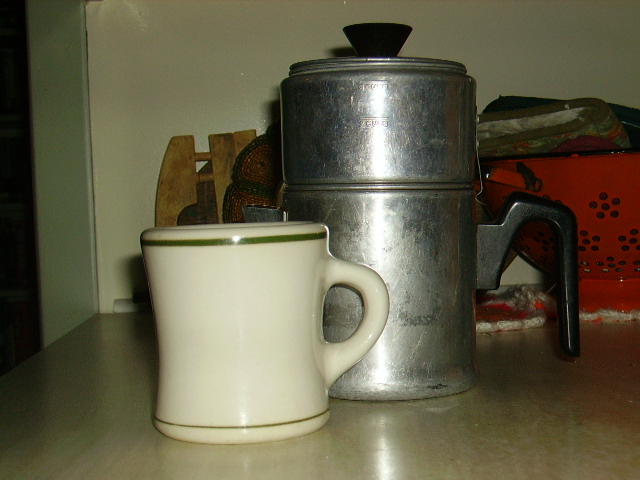
my mug
My Mug

I left my coffee mug by the stove and must get out of this seat for the next sip — glad I can walk, glad God made coffee.

‘Bye, now!

See ya in two weeks or so.

Or sooner, if the weekly photo challenge is too tempting.

Posted in Believe it or not!, Inspiring, Scripture

It Is Stupid to Hate Correction: a reblog of sorts

“To learn, you must love discipline; it is stupid to hate correction.” Proverbs 12:1 (NLT)

To learn I have to love discipline?

Who in their right mind loves discipline? I certainly don’t, but none the less, to hate correction is, as the Bible says, stupid.

Can the Bible say that? And the answer is, yes It did. I believe the Bible used such a powerful word here because it wanted to get the point across. It was meant to get our attention. . . .

Go here to read more.

This is a good article from a very good site. Enjoy!

Posted in Blessings of Habit, Good ol' days, Health, Homemaking, Inspiring, Photos, Wisdom, Womanhood

Ode to a Wringer Washer

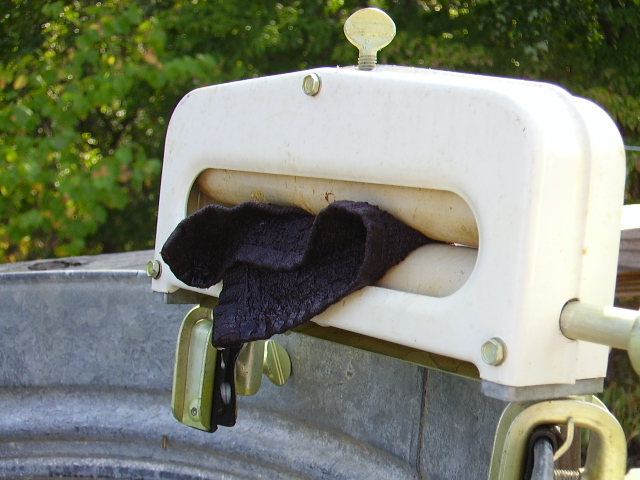
genuine Kenmore wringer on tub
Genuine Kenmore Wringer on Tub

The second-most-viewed post on my site. I cannot figure this, but have loved seeing nearly every week, someone else coming to read this.

Have fun.

My gramma had a laundry wringer. And for a while, so did my mom. I always loved these machines that squeezed the water out of clothing so graphically and intriguingly.

click to view water running off
Click to View Water Running Off

Back then, washing used only one load of soapy water, beginning clean, with white clothing, and proceeded to gradually dirtier and darker clothing and water, until the last thing washed was the dingy dungarees worn to protect the good clothing from animal chores.

no longer dripping
No Longer Dripping

After washing came rinsing, or some said, “wrenching,” which surely they thought referred to the old way of removing extra water, by hand wringing, making the arms and hands feel nearly wrenched out of socket. My gramma put bluing in rinse water to make whites look whiter. I never could understand this substance, bluer than a computer screen, that made things white.

Gramma used homemade soap on clothes. I mean: natural lye made from last winter’s wood ash combined with natural trimmings from natural meat, and yes, she made it herself, on the wood stove in her woodshed, and stacked it everywhere in there to cure. Then she grated it for flakes. It all smelled so fresh and good.

To this day, aroma from homemade soap makes me think of birds calling and locusts scritching combined with comfy sloshy sounds of laundry done during warm laundry days. And my gramma’s voice explaining . . .

The washer, and its accompanying rinse tubs on platforms, rolled creaking out onto the bumpy concrete porch around Gramma’s woodshed. A hose ran first to fill rinse tubs, and later to empty them onto the enormous strawberry patch.

Only large pots of scalding water went into the washer, itself, and yes, heated on that wood stove. All the concrete porches got a scrub-down with used laundry water splashed on, pure and natural.

There were manual and electric versions of the wringer. My gramma had the kind she had to crank and disdained the electric, which could swallow up an arm or break off buttons. She fished clothes out with a stick; the water was that hot. My auntie had one and I didn’t like the noise of it. Besides, cranking the wringer was an honored chore because you had to be old enough to reach and strong enough turn it without let-up.

The wringer and its tray were rotatable to provide also for two tubs of rinse water. Every article of clothing went through the agitation in soapy water, wringing, pouring and dribbling, to kerplunk into the first rinse, and then into the second, before finally being wrung into a laundry basket for hanging on the line.

It seems like so much work, and it was. No wonder laundering was an event with its own day set aside. Imagine dragging all that production outdoors on a daily basis for just one load! Yet, all this was such an improvement over lugging all the laundry to a stream, or boiling it in a huge pot over an open fire.

Yes, it was good, honest work, but that woodshed and that porch were my gramma’s gym and she stayed fit, even into old age. And although she belonged to a gene pool that proved a tendency to plumpness, she always remained trim.

Unlike me.