Do not merely listen to the word, and so deceive yourselves. Do what it says. Anyone who listens to the word but does not do what it says is like a man who looks at his face in a mirror and, after looking at himself, goes away and immediately forgets what he looks like. But the man who looks intently into the perfect law that gives freedom, and continues to do this, not forgetting what he has heard, but doing it–he will be blessed in what he does. James 1:22-25
When I was a child, I talked like a child, I thought like a child, I reasoned like a child. When I became a man, I put childish ways behind me. Now we see but a poor reflection as in a mirror; then we shall see face to face. Now I know in part; then I shall know fully, even as I am fully known. 1 Corinthians 13:11-12
We have not dwelt in this “neck of the woods” very long. However, when we first arrived, we learned of The Blue Mail Box.
Decorated with Love
The Blue Mail Box is an actual place, marked on some maps. People in many surrounding towns could drive you straight to it because they know exactly what you mean when you say, “The Blue Mail Box,” and they know exactly where it is.
Yes, The Blue Mail Box is an actual place you can drive to, but it is also a place in history, a place in the hearts of many local people. You see, it stands for so much more than mail, although it does include mail. It stands for trust, cooperation, and grit. It stands for love-thy-neighbor. It stands for “. . . the howdy and the handshake, the laughter and the tears, the dream that’s been . . . ”
Yes. The Blue Mail Box is a has-been. It still exists, but the lovely things it represents exist only in history, only in hearts, only in memories.
I am sure the first time The Blue Mail Box was vandalized, it brought shock or pain to its extended family of devotees.
Now days, it enjoys protection–it’s been vandalized that much–as a memento of an innocent age we wish we could resume.
But no mail.
Who would try, these days, what was common occurrence back then?
Who would allow all the mail from one community to be deposited in one box with no lock, to be sorted through by anyone who lived there? Who would trust a neighbor to bring him his mail, since he was going that way, anyway? Who would kindly take old Widow Smith her mail, then open and read it for her?
No one in his right mind, that’s who. Not now days. But The Blue Mail Box was all that and more, once upon a time. Friends who chanced to meet at The Blue Mail Box would linger and visit. Surely a few surreptitious meetings between lovers occurred there, too, under the guise of “collecting Mama’s mail”? Probably notes, without postage, sometimes waited inside The Blue Mail Box, for folks who did not have phones to communicate with their neighbors.
But those days are over.
Half of it is illegal, these days, anyway.
Now days, when someone hears of The Blue Mail Box for the first time, they greet it with laughter, as I did. But as we grow to know these people, we realize the love that stood behind all that trust with each other’s mail. Elderly ladies smile as they tell of hi-jinks from school days. They boast of good preachers from back then. They dream, starry-eyed, of past Christmas plays, spelling bees, weddings . . .
The Blue Mail Box is the stuff of real life, and we all should have something similar stuffed somewhere in the backs of our memories, for it once was the American way.
But we have allowed “them” to steal it from us and it is gone, isn’t it.
Except for the box.
We’ve thrown aside the gift and we’re playing with the box . . .
. . . the father said to his servants,”Quick! Bring the best robe and put it on him. Put a ring on his finger and sandals on his feet. Bring the fatted calf and kill it. Let’s have a feast and celebrate. For this son of mine was dead and is alive again; he was lost and is found. So they began to celebrate. –Luke 15:22-24
A girl I’ll call Sharon lived down the country road from our house, in a piece of rental property meant to be a hunters’ cabin. Drafty, leaky, and termite-infested, it at least provided some privacy for Sharon’s family: her unemployed parents and her 10-year-old baby sister.
When the church brought us meals after one of my children was born, and it was too much food for us, we shared it with Sharon and her family. I worried that they might not enjoy all those types of foods, but they assured us they loved all foods. Then they returned all those empty Cool-Whip cartons, carefully washed and dried. Only once did her mother ask for $25 for food, and when she had finished shopping, she brought me the change she had not needed.
Sharon was trying to finish high school and keep out of trouble, bless her. I enjoyed her calm and sure personality a lot. Although she was a teenager and I was near 30, she seemed bonded to me and would call me to chat, sometimes. Towards the end of each conversation she would mention some trouble she or a family member was having and we would discuss it for a few minutes. Only if I promised I would pray for her, would she end the conversation. That always touched me so.
Before long, she married and the young couple had their first child. She called me and asked me to come visit and see the house her teen husband had built for her. I was amazed at this building made of plywood, inside and outside, floors and ceilings, with the interior walls painted a pale blue. Sharon had actually used a feather duster dipped in paint to make fancy designs on the paint in the front room. A cast-iron wood stove in the center of the house cranked out more heat than I needed, but it was to keep the baby warm.
One day Sharon rang my doorbell and said she had a gift for me. She and her husband and baby were moving far away and it was her way of saying good-bye. There, on my porch stood a small table her husband had made. It was primitive, about on the order of a house made only of plywood, but it was sturdy and painted pale blue with feathery designs on it.
I could hardly believe that Sharon, in her poverty, would think to give anyone anything. It was so touching to me. I have cherished that little table for a long time, using it for a fern stand on the porch in summer and indoors in winter. It didn’t match a thing I had, but I wouldn’t think of parting with that incredible gift.
We write poems about it, take classes to learn it, build our houses to achieve it, take vacations to find it elsewhere, and even try screaming to see if we can’t get a little of it . . .
. . . “and QUIET!”
It’s more than the opposite of war. It cannot be bought for any price. In fact, some of the poorest people possess it. Some of the richest also possess it, along with some of the saddest and the happiest. It also knows no color, no rank, no age, and no gender.
It sounds indefinable, but it is not. It just passes all understanding.
The definition? Peace is a fruit of intimate communion with Jesus Christ.
Anything else that masquerades as peace is false, will fall, will fail, will fly away.
Facts are, constantly working hard to capture all the runaway part of your own self-manufactured peace and keep them somehow glued together is not a very peaceful existence.
Getting the Prince of Peace to do it for you is—umm—peaceful. He just gives us peace, His peace.
Of course, such a great gift would be wrapped and need to be unwrapped before we could use it, right?
The wrapping is Jesus, Himself, and the unwrapping is as easy as letting go—and as difficult.
Actually, this gift is a trade.
We give up our own peace and trade it to Him for His peace, as when we trade in a bent, sweaty token for a train ride–trade it for the ride, itself. And He paid for the ticket.
And our hands were what bent and soiled it.
So simple, some people let it insult them. Some people are so accustomed to a difficult peace that they disdain something so simple.
I used to live near a sweet and cheery lady named Joi. She and her husband were quite poor, he being a sacker in a grocery and both of them trying hard to earn college degrees, with four children in a two-bedroom house.Joi and I were friends and she was a constant amazement to me. She made every meal from scratch and did home canning. She crocheted doilies, sewed quilts, even ran soy beans through her blender to make soy milk. And then turned it into ice cream.
Somehow she had an abundance of cheer to compensate for all she did not have. Somehow, before the age of computers, she knew all about the health truth about oleo and butter. Before the age of herbal renaissance, she knew all about herbs. She played piano beautifully, taught piano lessons, and played for her church. I always felt somehow behind when I would visit her house.
Eventually she and her husband completed their degrees and moved to where the jobs were. I regret having lost touch with her, but in a way, I still feel the touch of Joi’s cheer in my life.
When it was my birthday, she visited me with a huge surprise. Humble and sweet, just like Joi, no gift could have made me happier that day. Wrapped in a towel was a huge loaf of warm, homemade bread. I had never seen any bread so big, and later learned she actually used the dough for two loaves and placed them into one bread pan. What a gift! Along with it, she brought a large bag of her own spinach, perfectly washed and grit-free.
We loved that sweet gift to pieces, literally. Every slice of the bread was a marvel of deliciousness and the spinach made a great addition to our supper that night. You may think it was an odd gift, but she knew what it means to think before you give something, and we recognized the rarity of it and the loving care that went into it. Imagine washing and washing all that spinach and then giving it away! Imagine the aromas of homemade bread floating through your house, but the bread going to someone else’s house.


 She was incredibly poor.
 It’s more than the opposite of war. It cannot be bought for any price. In fact, some of the poorest people possess it. Some of the richest also possess it, along with some of the saddest and the happiest. It also knows no color, no rank, no age, and no gender.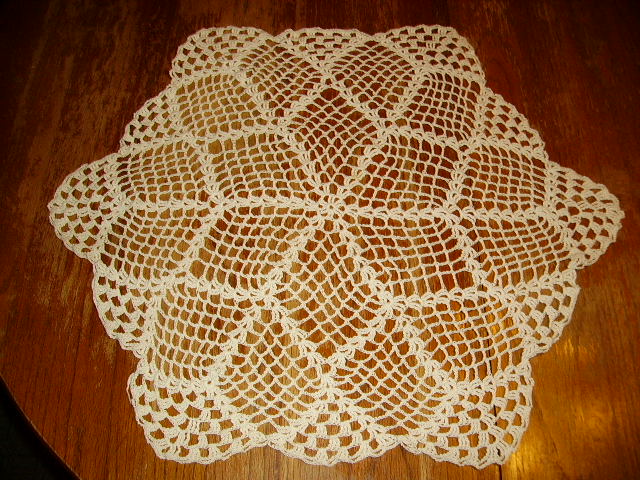
 Home's Cool!