Well, I did say low carbs, last week, didn’t I? Yet sometimes I get a hungering for the tastes of days gone by. I remember an egg and oatmeal dish from my youth called Golden Oats. When I looked it up, I found far more oat than egg, a sort of crumbly mix to which you add juice. Too many carbs! What do I do?
I eat oatmeal.
Of course, if I overdid it, I would ruin the diet, so I allow myself about one tablespoon of it. Are you confused, yet? Let’s just have the recipe and get on with it!
A-OK Oatmeal
1 T. uncooked oatmeal
1 T. butter
1 serving stevia powder
1 t. cinnamon
2 eggs
a dash of cream
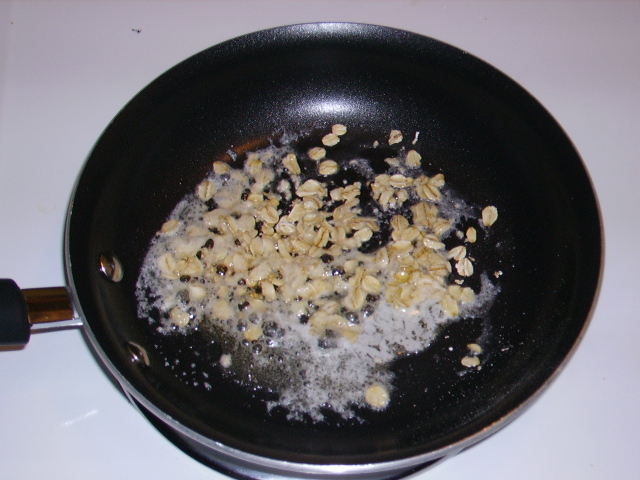
Brown the oatmeal in the butter lightly, over medium heat.
Frying Oatmeal
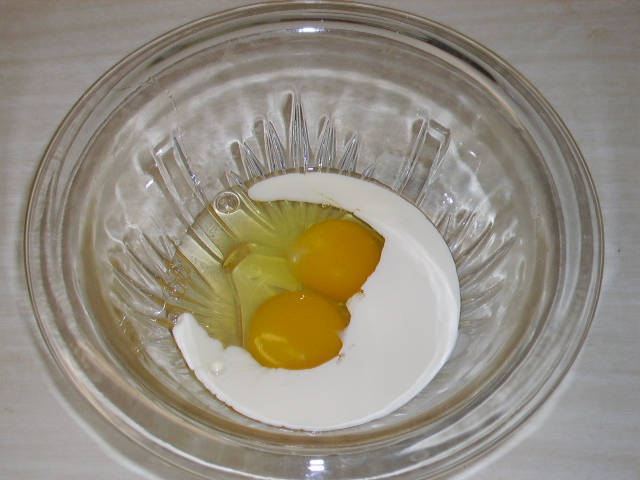
Whip eggs, cream, cinnamon, and stevia together thoroughly.
Eggs in Cream
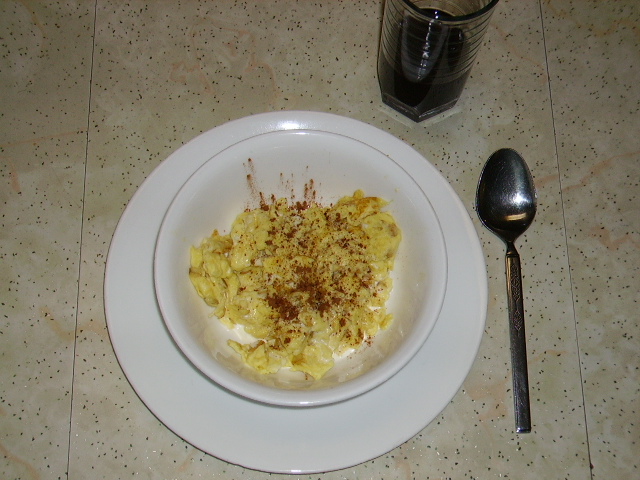
Pour over oatmeal in pan, stirring and chopping until eggs are set. Serve hot with additional cream, and a small serving of pomegranate juice, and/or coffee or tea.
A-Ok Oatmeal
Tastes a LOT like a bowl of oatmeal. No need to add sweetener. Of course, in this land of free speech, it is illegal to say the stevia adds sweetness, so I won’t say that!
The hardest thing about dieting, for me, is that the only way I can really lose weight and stay healthy is to cut carbohydrates. I dread that. I love chocolate-coated sugar bombs with milk and cream on them. I love pancakes with too much syrup. I love granola bars, instant milk stir ins, and smoothies.
The only way I can make myself follow a low-carb diet is to keep telling myself that sweet = poison. In a way, it is true, for me. Sugar sure is sweet and sure is poison. Most sugar substitutes are, also. Since I stopped allowing sugar past my lips, I have been tons healthier. I try hard to stick to only 10 grams of sugar per day, although I often go up to 15 or 20. Still, I try.
Now, lest we be confused, in my book, starch = sugar. If you paid attention in school, you learned that starch changes to sugar in the body, often as soon as while it is in the mouth. So–no sugar = no starch.
Exit: breakfast as we know it. Enter: eggs, the wonder-food.
Long ago when scientific empiricism ruled, children learned in school that eggs are nearly a perfect food. Soon after that, media sensationalism took over and we all became scared of the egg. Impossible! Now, surprise, surprise! the egg is coming back into vogue, probably because if we want, we can circumvent media tripe by watching the computer, instead, choosing to read the research for ourselves, instead of trusting the interpretation of those who have agendas.
Slowly it trickles down and grows to a deep sea of truth. The truth is, I cannot eat the average donut or cereal breakfast and lose. I ate that way for most of my life, and now, the part of me that processes sugar is worn out. It’s gotta be protein and greens for me.
I have learned, from long years of perfecting my breakfast menus, that I cannot tolerate egg after egg after egg, unless I do something drastic about the boredom. So I collect amazing egg recipes. Thinking others may be in the same boat, I have decided to share, every Monday, how I have beat egg boredom. (Yes, I know today is Wednesday. Minor glitch. Just think–you only have to wait five more days for the next installment.)
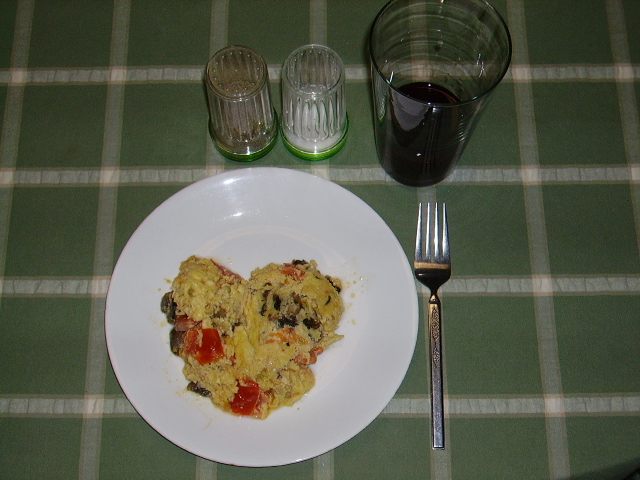
Today will be the Vegetable Frittata. It is so NOT breakfast-y, that it shocks the taste buds into sobriety while delivering tons of great nutrients to the fasting body, including one of the most easily digested protein sources, the lowly egg.
Here it is, in all its glory. Adjust it to meet your taste buds and your veggies on hand. Enjoy!
Vegetable Frittata
2 T. olive oil or butter
4″ sprig rosemary
1 or 2 green onions, chopped
1 clove garlic, pressed
1 or 2 mushrooms, sliced
1 small tomato, chunked
2 eggs
grated parmesan cheese (opt.)
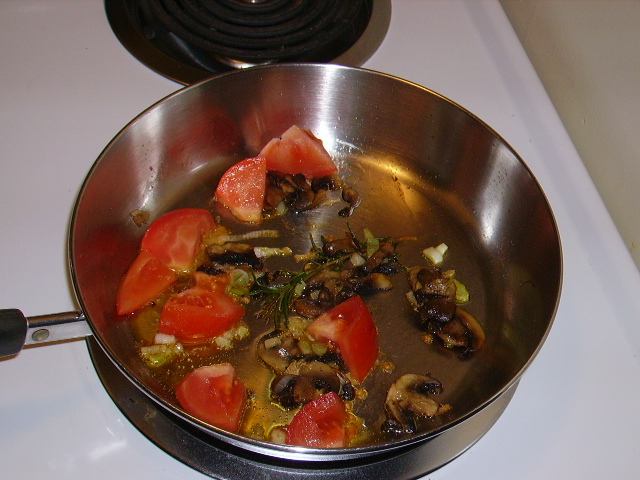
Warm oil with rosemary in covered saute pan for a minute. Add onion and garlic and saute briefly, stirring, until clear. Add mushrooms and increase heat slightly. Saute, stirring, until mushroom begins to shrink and brown. Onion should brown, also, and garlic should be nearly overdone. Increase heat slightly and add tomato. Stir and fry until tomato just begins to peel.
Just After Adding Tomato
Beat eggs with 1 teaspoon water and add to pan, stirring constantly until done. If desired, contents of pan may be pushed into interesting shapes before egg sets.
Prepared with Love
Sprinkle lightly with parmesan cheese, salt, and pepper, if desired, and serve with 2 ounces of pomegranate juice and/or 1 cup coffee or tea. Serves one.
Enjoy!
Okay, I know it’s a shock. Move to a sunny window, close your eyes, pretend you’re in Italy, and learn a new thing.
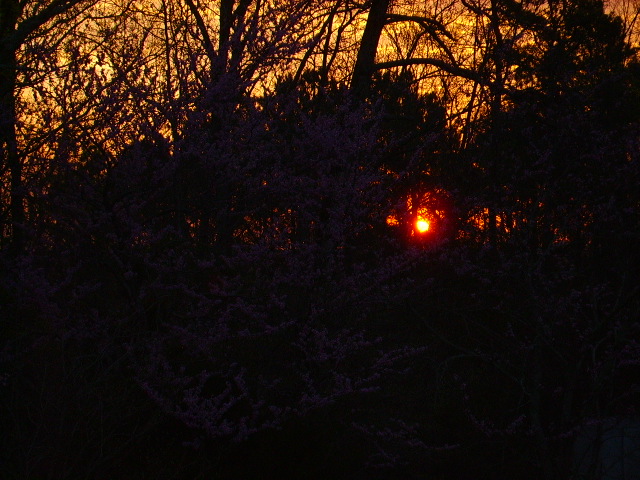
Look what my camera did to a perfectly sultry spring dawn!
Like a BridegroomComing Forth from His Pavilion
In the heavens He has pitched a tent for the sun, which is like a bridegroom coming forth from his pavilion . . . It rises at one end of the heavens and makes its circuit to the other; nothing is hidden from its heat. Psalm 19:4b-6
We are fighting a discouraging case of bronchitis here, but did have time to send a couple snaps of this glorious sunrise on this hot spring day. Enjoy!
From all the research that has been done, I think we might, might, might be able to make some progress solving the problems in governmental institutionalization of our children. It would take drastic change, though.
No matter what you are thinking, I meant more drastic than that.
English: Jewish Children with their Teacher in Samarkand. Early color photograph from Russia, created by Sergei Mikhailovich Prokudin-Gorskii as part of his work to document the Russian Empire from 1909 to 1915. (Photo credit: Wikipedia)
Most classrooms have far too many children in them.
Instead, each classroom would have to reduce to only around 5 children per adult. Many homes have something like that, and national research shows it is the best way to learn. It certainly would be more natural. Some high school children might make do with 10 to 12 per adult, if they were mature .
It’s how the ancient Greeks taught.
Most classrooms have all same-age children in them.
Bizarre! Instead, each child should be allowed to receive the gift of relationships with vastly different-aged others. Most homes have that and the learning potential is expanded when the students are of differing levels of learning. Especially the older ones would learn, truly learn the subjects if they were, in this more organic approach, occasionally in positions to help teach.
We do learn most when we teach, right?
Most classrooms labor under the false assumption that touch, being sexual and subject to lawsuit, should be prohibited.
Instead, we all should acknowledge what we instinctively know, and has been proven, that hugs and pats and other touch, including light corporal punishment, are part of socializing and leaving them out is wrong. Most homes have touch. Remember, orphans who are never touched die, whereas touched children are healthier and grow taller.
To protect the child from the occasional bad teacher, and the teacher from the occasional bad parent, of course video cameras in every room and every hall would be essential. That way, any teacher or child who doesn’t care about God, could realize that Big Brother is also up there.
We have the space, really. We are closing schools every day because we’ve aborted zillions of the children who could have filled them.
We do not have enough teachers, but how quickly they would come if they learned we’d solved the discipline problems, wouldn’t they!
It would take a large staff of volunteers, but what better place to volunteer! Lots of families have become single-income these days, so one spouse must be somewhat free. Then that parent could discover the joy of watching or even helping his or her own child learn things of great value, even about volunteerism. It would be a whole lot like home schooling, and might even get the better results of homeschooling, but would happen at the school.
Or, we could just send them all home, which would be lots more cost effective.
If there exists any type of divine design, then for argument’s sake, we must think that children were put into homes for a reason.
But even those who cannot swallow the idea of a God must consider why all creatures seem to have evolved to higher and higher plains while passing through a home- or family-type stage, and the higher the plain, the longer the prerequisite familial stage, with homo-sapiens needing a family for the longest time of all.
It is worth a thought.
Many who have given it a thought have withdrawn their children from the bedlam outside the home. Then—surprise!—their children begin auto-correcting their psyches, learning more, retaining more, doing more with it, and growing up to be more productive.
I am not making this up. It is heavily-researched scientific fact that no thinking person should ignore, especially if that person cares about children, about the state of his country, or about the future at all.
And before we continue, we must define a home: a set of parents who function adequately, with each other and with their children, as mom and dad. To use a broken, dysfunctional, or abusive home as a reason for schools is as fair as using a broken, dysfunctional, or abusive school as a reason for home schools.
But bad schools are not the reason to homeschool.
CHILDREN are the reason to homeschool.
If you have them, you should.
Today’s children are being destroyed in schools. They were not made to be in schools and do not thrive there. They are tormented daily, growing warped personalities we see depicted in the worst national headlines.
And they’re not allowed to pray
Putting children into a school is asking them to pass the socializing test before ever receiving any instruction, correction,or reinforcements about HOW to socialize. They encounter children even less trained than they are, with no chance of escape from this zoo.
Sink-or-swim is often a great way to drown a kid.
The typical classroom is sink-or-swim. When drowning, it is natural for the inexperienced to attempt survival by pushing down on other swimmers.
Just natural.
Empathy is the natural product of a home education. Each older child who cherishes the home’s newest infant later has patience with that same child doing wrong, cares if that sibling falls down, laughs with—not at—that little one.
Resilience is another natural product of a home education. Encouraging, even requiring social resilience, leads to practice in resilience. The old “get back on the horse” motto prevails and in time, becomes instilled. As the child matures, he develops the ability to keep going, no matter what, if only someone has taught him how.
Confidence is another natural product of a home education, and it is born of hope. A child who is dumped at the door of an antagonistic, institutionalized experience has no hope. A child who has a mommy who will keep everyone on a good social plane while they learn, just because she loves them, has hope and learns confidence.
Tomorrow, part 3 about how to fix the schools. See ya’!
Well after all the fun posting photos of snow, Spring has sprung, hasn’t it!
With Spring comes Spring fever. This is a malady that makes you feel like doing nothing. It attacks us, hand-in-hand with its old ally: hay fever. Hay fever makes us feel like yuck.
Itchy eyes, ears, nose, throat; runny eyes, nose; stuffy nose; and cough are just a few of the delights that visit us each year, if we are among the pollen afflicted.
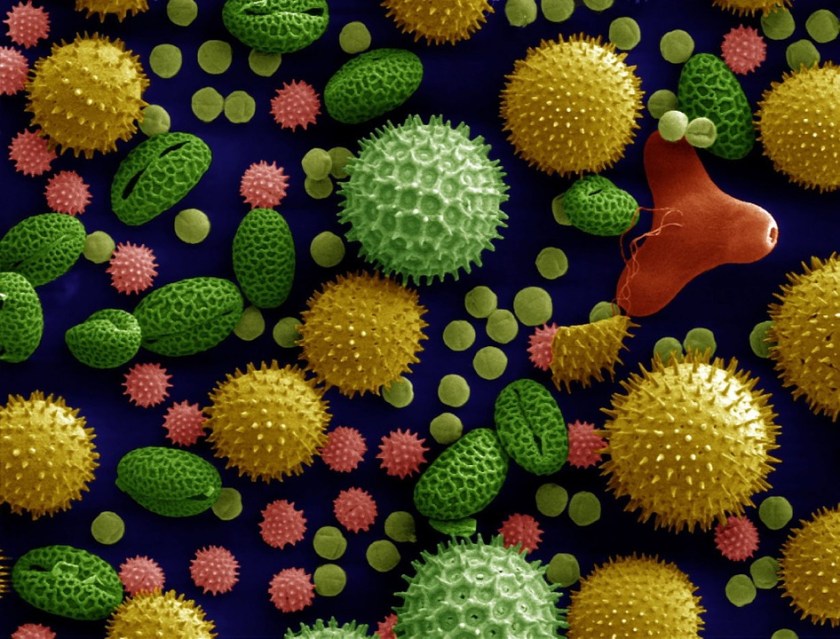
Pollen is so tiny, yet can cause such misery!
Outside of chemicalizing oneself half to death, what can a person do?
Spring pollens do not bother me, but I have found several ways to beat ragweed, which possibly would help with any other pollen problem. I’d love to share them with you!
The first thing I always do is eat honey all year long. Not just any honey will do. It must be raw, as in uncooked. If the label isn’t boasting, it probably isn’t. It also must be native, as in from near where I live. Honey contains miniscule flower parts in various forms, and eating about a teaspoon of it daily helps me beat my pollen allergies, like an immunization.
Outside of that tiny dose of honey, I avoid all sugars. Sugar kills immunities, especially the super-processed sugars.
I take vitamin C. A lot. Vitamin C is supposed to help with the body’s immunities, so it is what I need. I also find that for me, the things I’ve read about C acting as a mild antihistamine are true. They say you can tell if you’ve had too much when you develop diarrhea. They say to cut back a bit if that happens. I usually get by with taking 2000 milligrams per day.
I wash my face a lot. Every time I think the pollen is getting to me, I wash it off. Have you ever seen a magnified photo of pollen? It looks prickly like a cactus. No wonder it bothers the sensitive tissues of face, eyes, and nose. After washing, I apply a coating of some light hand lotion to my face. As it dries, it seems to make a barrier between my skin and the pollen prickles.
I stay indoors and keep windows shut. I know, some of you cannot do this, but those who can may find it helps. After all, the pollen is out there, not in here.
If I find that I am just simply miserable, I use heat on my face. I run a bowl of hot water, as hot as I’d ever want a bath, and dip water from it with a washcloth and hold this over my face, renewing as it cools. Or I stand in the shower with the water hot, spraying on my face. It takes about 10 or 15 minutes, but this wet heat draws out the histamines in my body. Histamines are what cause allergic reactions, and are what anti-histamines are supposed to circumvent.
Anyway, as the heat applied to my face draws out the histamines, my face is itchy and my nose grows stuffy. Oh, but—when that itching stops, it means all the histamines my body could produce are out. Most bodies cannot produce any more for several hours, like four to eight. Hours. Of no itching, sneezing, stuffy nose, runny eyes, etc. It’s plenty of time to take a nap or go to a restaurant or visit a friend like a normal person.
If I go so far as to become wheezy, I drink hot coffee. Coffee is supposed to be a good emergency substitute for asthma drugs. I don’t have asthma, but hot coffee helps me breathe when the pollen count is high.
There you have it, what I do instead of taking pills. Sometimes, when it really is tough outside, I have to add pills to my regime, but not often. I love not being tied to chemicals and I think you will, too.
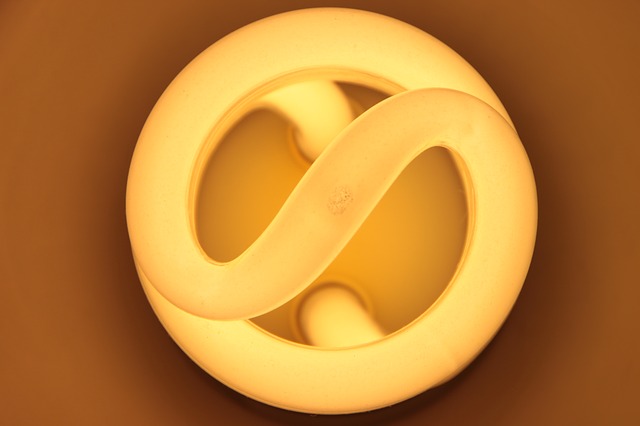
Have you ever broken one of the new twisty light bulbs? You know, the ones that cost so much you hate to break one? It is so easy to do because the glass is so delicate.
I don’t have any of those in my house because when real light bulbs started to become scarce, I bought up a bunch of them. Then, when folks began to squawk and they started making real ones over again, I bought a bunch more.
But I don’t mind using sunlight or oil lamps or candles–not at all.
those blinkin’ lights!
The main reason I will not install a fluorescent light in my house is that they blink.
Blinking light decreases your attention span and slows your reading. Think of them as a sort of “light pollution”, as are TVs and computer screens. They effect the ability to think. For some people, especially young children, this effect is drastic, shutting down straight-line thinking almost completely. No child should study under a fluorescent.
So, as a source of light in a homeschooling home, they are a failure, in the first place. The rooms in our house with long-bulb fluorescents installed by the builder were never used for children doing schoolwork. In fact, one of my children asked not to use that room, which woke me up to the real problems inherent here. (I had not been noticing, but he had.)
caution! poison!
The other reason is their toxicity. The bulbs contain powdered mercury, which can kill. Add to it the fact that these light bulbs are extremely easy to break–far easier than the old enormous tubes–and you have a recipe for disaster, something that definitely should be labeled “keep out of child reach”.
now for the safety rules:
If you have one, though, you must memorize a long list of protocol for how to survive the experience of breaking one, with your health intact. If you want, why not print this list and post inside your broom closet? Here is what you have to do and why:
Mostimportant: open a window for at least 15 minutes before beginning cleanup. The bulbs contain powdered mercury, which is extremely toxic, and we must not breathe it. Mercury poisoning can kill. Opening the windows is essential to safety, even during rain or cold weather. (Who knows what it does for the birds and butterflies?)
Do NOT handle the pieces with bare hands; wear disposable rubber or latex gloves. A cut from glass coated with this fine powder would also poison.
Place the pieces into a plastic bag, and then into another one, and use duct tape to pick up the tiny fragments. A paper bag could allow fine particles of mercury to escape.
Wipe the area clean with damp paper towel and place the towels in the bag, too. Damp toweling would most safely collect the finest particles, which might even be invisible but would probably cling to the damp towel.
If the bulb broke over carpet, you’ll have to vacuum the carpet, but you must immediately remove the vacuum bag (or empty and wash or wipe out the canister) and put the vacuum bag in with the other CFL trash.
Vacuuming is the only way to remove most of the fine mercury particles and remaining glass hazards from carpet (there is no way to remove all the mercury), but it is totally unsafe to breathe in the same room while you do so. Go outdoors to take deep breaths and then hold your breath, enter, and vacuum until you need to breathe again. Repeat. Vacuuming would be foolhardy on hard surfaces, and could easily spread the dust more, if using a multi-surface upright.
You also must not breathe while emptying the bag and wiping out the canister. Also, you should wipe out the insides of your vacuum even if you do have a bag to throw away. Of course, you should shower and shampoo thoroughly, afterwards. You probably should also immediately launder the clothing you are wearing, in a separate wash load and machine dry them, taking precautions that the dryer does not vent near any pets, children’s play areas, or edible plant materials.
Check with your trash company or recycling center for specific disposal directions. Usually, fluorescent bulbs can be put in the trash or taken to the dump if your state and local regulations allow, but please call your trash or recycling company. Do not ask them about your broken CFL; ask them about mercury toxic waste disposal or about recycling mercury. Few people, even professionals, make this connection, otherwise. If you receive permission to throw away your CFL, please label it clearly to avoid accidentally poisoning the trash pickup personnel.
There you have it: why I don’t use CFL’s and what to do if you do use them.



 Children need to be in homes.
 Home's Cool!