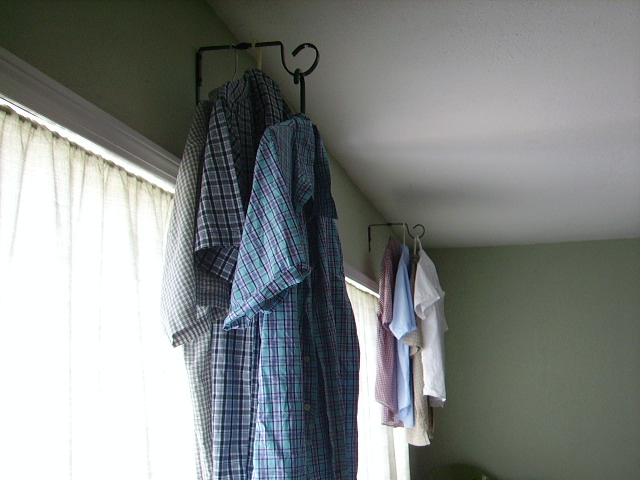

Did a bit of pioneering work today, and it was a fun challenge.
Basically, I had to haul water in a bucket to do laundry.
Oh, it’s not like it sounds. We have city water piped into our house and a faucet near the washing machine. But the hot water tank that feeds the washer goes out, now and then, and we find ourselves without hot water, back there, at inopportune times.
If we want to shower—our bath being connected to the laundry—we can use the guest bath, which has its own hot water. In fact, that bathroom is the only hot water source in the house during down times like this.
If I want to wash dishes, since the kitchen also is connected to the laundry, and I cannot use the dishwasher, I must haul hot water, from that other bathroom, to fill the sink and do dishes by hand. I was using a one-gallon pitcher. It takes about 2 ½ gallons to fill the sink nicely. It’s okay to rinse in cold.
However, I wanted to do laundry, so I found an old plastic scrub bucket that holds 2 gallons. That cut the trips in half. At first I thought of skipping laundry until tomorrow, but later, I asked myself, “How hard can it be? Millions of women have hauled water to do laundry, and that was uphill wearing long skirts.” I could do this.
The first trip across the house with a full bucket of hot water taught me balance. Heh heh.
When I dumped it into the washer, it all trickled to the space under the perforated drum that holds the clothing. What little bit that rose above that level quickly soaked into the clothes in the washer. It would take a lot more water.
I made about 8 trips with that bucket, across tiled and laminated floors. It was hard to feel patient and joyful, until I would remember those pioneer women and their long skirts, meandering trails, rocky paths strewn with slick leaves. Most of them were hauling cold water, too, that would need heating, next.
At least mine was already hot. At least mine was across a level surface. At least I did not have to wear all those billows of clothing.
After hauling the water I was in no hurry to drain it away. So I left the lid up and soaked that clothing for a while. I’m glad I did, for I got to thinking: That water was still hot and not dirty. If I could wring out the clothes in it, I could reuse it for the next load.
A familiar-looking basket of wrung-out clothing soon stood by my feet, and the next load was chugging along before I realized I was doing laundry the way my grandmother did before she got her wringer. I watched her when I was tiny, but I’d almost lost the memory.
Eventually I washed three small loads of clothing in one small load of hot water. What would have been sixty gallons of soapy water became only 20 or so.
I saw something, during this trial, namely, why my grandmother reused the water during laundry times. Even after all her laundry was done, there were still flower beds to water, and a porch to scrub.
She remembered hauling it up hill.
Read a great story that complements this idea, here.
______________________________
Image via wikipedia



 But my husband and my son were there. They were able to help Clarence’s family assimilate the truth and deal with the aftermath. This kind family who had opened their home to us during the previous Thanksgiving, now missing one member, were the needy ones. And although our plans were again foiled by the events around us, by troubles and tragedies around us, there was the blessing: We could be there for them.
 Home's Cool!